Advertisements
Advertisements
Question
Ethers can be prepared by Williamson synthesis in which an alkyl halide is reacted with sodium alkoxide. Di-tert-butyl ether can’t be prepared by this method. Explain.
Advertisements
Solution
In tert-butyl halides, elimination is favoured over substitution, so alkene is the only reaction product and ether is not formed.
\[\begin{array}{cc}
\phantom{....}\ce{CH3}\phantom{.........}\ce{CH3}\phantom{.......................................}\ce{CH3}\phantom{}\\
\phantom{.}|\phantom{.............}|\phantom{..........................................}|\phantom{}\\
\ce{CH3-C-Br + \overset{+}{N}a\overset{-}{O}C-CH3 -> CH3-C=CH2 + NaBr + CH3-C-OH}\\
\phantom{.}|\phantom{.............}|\phantom{..................}|\phantom{........................}|\phantom{}\\
\phantom{}\ce{\underset{(tert-butyl bromide)}{CH3}}\phantom{....}\ce{CH3}\phantom{..........}\ce{\underset{(2-methylprop-1-ene)}{CH3}}\phantom{..............}\ce{CH3}\phantom{...}
\end{array}\]
APPEARS IN
RELATED QUESTIONS
Give the equation of the following reaction:
Oxidation of propan-1-ol with alkaline KMnO4 solution.
Name the reagent used in the following reaction:
Oxidation of a primary alcohol to carboxylic acid.
Name the reagent used in the following reaction:
Oxidation of a primary alcohol to aldehyde.
Name the reagent used in the following reaction:
Benzyl alcohol to benzoic acid.
When 3-methylbutan-2-ol is treated with HBr, the following reaction takes place:
\[\begin{array}{cc}
\phantom{...................................}\ce{Br}\\
\phantom{..................................}|\\
\ce{CH3 - CH - CH - CH3 ->[HBr] CH3 - C - CH2 - CH3}\\
|\phantom{.........}|\phantom{...................................}|\phantom{...........}\\
\ce{CH3}\phantom{...}\ce{OH}\phantom{...............................}\ce{CH3}\phantom{.......}\\
\end{array}\]
Give a mechanism for this reaction.
(Hint: The secondary carbocation formed in step II rearranges to a more
stable tertiary carbocation by a hydride ion shift from 3rd carbon atom.)
Lucas reagent is ____________.
Lucas test is used for the detection of _____________.
Dehydration of 2-butanol yields:
Which of the following is not true in case of reaction with heated copper at 300°C?
Lucas test is done to differentiate between ____________.
Identify the secondary alcohols from the following set:
- \[\ce{CH3CH2CH(OH)CH3}\]
- \[\ce{(C2H5)3COH}\]
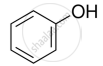

The process of converting alkyl halides into alcohols involves ______.
Mark the correct increasing order of reactivity of the following compounds with HBr/HCl.
| (a) | 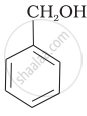 |
| (b) |  |
| (c) | 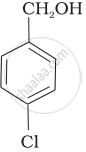 |
Explain why nucleophilic substitution reactions are not very common in phenols.
The correct geometry around oxygen in CH3OCH3 is
What happens when (CH3)3 C – OH is heated with Cu/573 K?
Write the chemical equation in support of your answer.
Which of the following observation is shown by 2-phenyl ethanol with Lucas Reagent?
Write the mechanism of acid dehydration of ethanol to yield ethene.
Write the mechanism of acid dehydration of ethanol to yield ethene.
