Advertisements
Advertisements
Question
What does the term ‘Frugivorous’ mean?
Advertisements
Solution
Frugivorous means fruit-eating organisms.
APPEARS IN
RELATED QUESTIONS
Short answer type question
Tropical regions exhibit species richness as compared to polar regions. Justify.
The 'rivet' in the rivet popper hypothesis is considered to represent the ______.
Extent of global diversity of invertebrates is shown in the pie diagram below. Choose the most appropriate alternative that the four portions (a-d) represent.
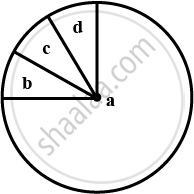
Maximum species richness is observed in the ______.
Species richness - area relationship is given by ______.
"Species richness increased with increased explored area but only a limit". This statement was given by.
Amongst the animal groups given below, which one appears to be more vulnerable to extinction?
The relation between species richness and area for a wide variety of taxa turns out to be a rectangular hyperbola. Give a brief explanation.
Lesser variation in biomass production over a period of time is called ______.
Distribution of diversity on earth shows that biodiversity from higher latitudes to lower latitudes ______.
The relation between species richness and area for a wide variety of taxa appears as ______.
Which of the following hypothesis suggests that ecosystems are like aeroplanes where flight safety (ecosystem functioning) may or may not be compromised, depending upon which species are being lost?
Tropical regions show greatest level of species richness because -
- Tropical latitudes have remained relatively undisturbed for millions of years, hence more time was available for species diversification.
- Tropical environments are more seasonal.
- More solar energy is available in tropics.
- Constant environments promote niche specialization.
- Tropical environments are constant and predictable.
Choose the correct answer form the options given below:
Match the scientist in column I with their contribution in column II and choose the correct option.
| Column I | Column II | ||
| i. | Alexander Van Humboldt | a. | Estimated 7 million species round the globe |
| ii. | Robert May | b. | Rivet popper hypothesis |
| iii. | David Tillman | c. | Species Area Relationship |
| iv. | Paul Ehrlich | d. | Productivity stability hypothesis |
Which of the following statements correctly describes the relationship between latitude and biodiversity?
What does the variable S represent in the species-area formula log S = log C + Z log A?
For smaller areas, what is the typical range of the Z value (slope) in the species-area relationship?
