Advertisements
Advertisements
Question
Which one of the following is not a major characteristic feature of biodiversity hot spots?
Options
Large number of species
Abundance of endemic species
Mostly located in the tropics
Mostly located in the polar regions
Advertisements
Solution
Mostly located in the polar regions
APPEARS IN
RELATED QUESTIONS
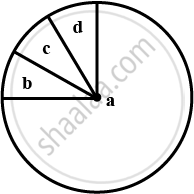
Extent of global diversity of invertebrates is shown in the pie diagram below. Choose the most appropriate alternative that the four portions (a-d) represent.
Latitudinal and altitudinal gradient is shown by which of the following habitat(s)?
All are true regarding graph showing species richness - area relationship, EXCEPT ______.
Which of the following is an observation of Alexander von Humboldt's documented pattern in ecology?
Species richness - area relationship is given by ______.
Which of the below mentioned regions exhibit lees seasonal variations?
The pattern of biodiversity is affected by ______.
Which of the following countries has the highest biodiversity?
A species-area curve is drawn by plotting the number of species against the area. How is it that when a very large area is considered the slope is steeper than that for smaller areas?
Lesser variation in biomass production over a period of time is called ______.
Alexander von Humboldt observed that, within a region species richness ______ with increasing explored area.
The altitudinal gradient describes a pattern where species diversity is greatest at which elevation?
Which of the following environmental conditions becomes harsher as altitude increases on a mountain slope?
Alexander von Humboldt developed observations leading to the discovery of which relationship in ecology?
What does the variable S represent in the species-area formula log S = log C + Z log A?
In the species-area relationship formula log S = log C + Z log A, what does the variable A represent?
For smaller areas, what is the typical range of the Z value (slope) in the species-area relationship?
