Advertisements
Advertisements
Question
Show that function f(x) = tan x is increasing in `(0, π/2)`.
Advertisements
Solution
Given, f(x) = tan x
f'(x) = sec2x
But sec2x > 0, ∀x∈ (0, π/2)
Hence f(x) = tan x is strictly increasing in (0, π/2).
APPEARS IN
RELATED QUESTIONS
Find the intervals in which the function f given by f(x) = 2x3 − 3x2 − 36x + 7 is
- Strictly increasing
- Strictly decreasing
Find the intervals in which the following functions are strictly increasing or decreasing:
−2x3 − 9x2 − 12x + 1
Show that y = `log(1+x) - (2x)/(2+x), x> - 1`, is an increasing function of x throughout its domain.
The interval in which y = x2 e–x is increasing is ______.
Water is dripping out from a conical funnel of semi-verticle angle `pi/4` at the uniform rate of `2 cm^2/sec`in the surface, through a tiny hole at the vertex of the bottom. When the slant height of the water level is 4 cm, find the rate of decrease of the slant height of the water.
Show that f(x) = \[\frac{1}{1 + x^2}\] decreases in the interval [0, ∞) and increases in the interval (−∞, 0] ?
Show that f(x) = \[\frac{1}{1 + x^2}\] is neither increasing nor decreasing on R ?
Find the interval in which the following function are increasing or decreasing f(x) = 2x3 − 12x2 + 18x + 15 ?
Find the interval in which the following function are increasing or decreasing f(x) = 2x3 + 9x2 + 12x + 20 ?
Find the interval in which the following function are increasing or decreasing f(x) = 6 + 12x + 3x2 − 2x3 ?
Find the interval in which the following function are increasing or decreasing f(x) = 2x3 − 24x + 107 ?
Find the interval in which the following function are increasing or decreasing \[f\left( x \right) = \frac{3}{2} x^4 - 4 x^3 - 45 x^2 + 51\] ?
Show that f(x) = cos2 x is a decreasing function on (0, π/2) ?
Show that f(x) = tan−1 (sin x + cos x) is a decreasing function on the interval (π/4, π/2) ?
Show that f(x) = x9 + 4x7 + 11 is an increasing function for all x ∈ R ?
Find the values of b for which the function f(x) = sin x − bx + c is a decreasing function on R ?
Let f defined on [0, 1] be twice differentiable such that | f (x) | ≤ 1 for all x ∈ [0, 1]. If f(0) = f(1), then show that | f'(x) | < 1 for all x ∈ [ 0, 1] ?
Find the values of 'a' for which the function f(x) = sin x − ax + 4 is increasing function on R ?
Write the interval in which f(x) = sin x + cos x, x ∈ [0, π/2] is increasing ?
In the interval (1, 2), function f(x) = 2 | x − 1 | + 3 | x − 2 | is
Function f(x) = ax is increasing on R, if
If x = cos2 θ and y = cot θ then find `dy/dx at θ=pi/4`
Prove that the function `f(x) = x^3- 6x^2 + 12x+5` is increasing on R.
Find the values of x for which the function f(x) = x3 – 12x2 – 144x + 13 (a) increasing (b) decreasing
Prove that y = `(4sinθ)/(2 + cosθ) - θ` is an increasing function if `θ ∈[0, pi/2]`
Show that f(x) = x – cos x is increasing for all x.
The total cost function for production of articles is given as C = 100 + 600x – 3x2, then the values of x for which the total cost is decreasing is ______
By completing the following activity, find the values of x such that f(x) = 2x3 – 15x2 – 84x – 7 is decreasing function.
Solution: f(x) = 2x3 – 15x2 – 84x – 7
∴ f'(x) = `square`
∴ f'(x) = 6`(square) (square)`
Since f(x) is decreasing function.
∴ f'(x) < 0
Case 1: `(square)` > 0 and (x + 2) < 0
∴ x ∈ `square`
Case 2: `(square)` < 0 and (x + 2) > 0
∴ x ∈ `square`
∴ f(x) is decreasing function if and only if x ∈ `square`
For which interval the given function f(x) = 2x3 – 9x2 + 12x + 7 is increasing?
Determine for which values of x, the function y = `x^4 – (4x^3)/3` is increasing and for which values, it is decreasing.
The interval in which the function f is given by f(x) = x2 e-x is strictly increasing, is: ____________.
In `(0, pi/2),` the function f (x) = `"x"/"sin x"` is ____________.
The function `"f"("x") = "log" (1 + "x") - (2"x")/(2 + "x")` is increasing on ____________.
Let h(x) = f(x) - [f(x)]2 + [f(x)]3 for every real number x. Then ____________.
Which of the following graph represent the strictly increasing function.
Function given by f(x) = sin x is strictly increasing in.
Find the interval in which the function `f` is given by `f(x) = 2x^2 - 3x` is strictly decreasing.
Let f(x) = tan–1`phi`(x), where `phi`(x) is monotonically increasing for `0 < x < π/2`. Then f(x) is ______.
If f(x) = x + cosx – a then ______.
Function f(x) = x100 + sinx – 1 is increasing for all x ∈ ______.
A function f is said to be increasing at a point c if ______.
Read the following passage:
|
The use of electric vehicles will curb air pollution in the long run. V(t) = `1/5 t^3 - 5/2 t^2 + 25t - 2` where t represents the time and t = 1, 2, 3, ...... corresponds to years 2001, 2002, 2003, ...... respectively. |
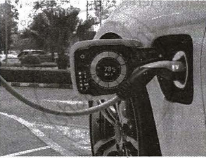
Based on the above information, answer the following questions:
- Can the above function be used to estimate number of vehicles in the year 2000? Justify. (2)
- Prove that the function V(t) is an increasing function. (2)
Find the interval in which the function f(x) = x2e–x is strictly increasing or decreasing.
As one moves from left to right on a graph, what does an increase in the \[y\]-values indicate?
After the domain has been divided into intervals, which quantity must be determined in each interval?
In the procedure for finding intervals, which conclusion is correct when \[f'(x)<0\]?
Which form shows that \[f'(x)=3x^2-6x+4\] is positive for every \[x\in\mathbf{R}\]?
