Advertisements
Advertisements
Question
Show that f(x) = cos x is a decreasing function on (0, π), increasing in (−π, 0) and neither increasing nor decreasing in (−π, π).
Advertisements
Solution
\[Here, \]
\[f\left( x \right) = \cos x\]
\[\text{Domain of cos x is}\left( - \pi, \pi \right).\]
\[ \Rightarrow f'\left( x \right) = - \sin x\]
\[\text{For x} \in \left( - \pi, 0 \right), \sin x < 0 \left[ \because \text{sine function is negative in third and fourth quadrant }\right]\]
\[ \Rightarrow - \sin x > 0\]
\[ \Rightarrow f'\left( x \right) > 0\]
\[So, \text{cos x is increasing in} \left( - \pi, 0 \right) . \]
\[\text{For x} \in \left( 0, \pi \right)),\sin x > 0 \left[ \because \text{sine function is positive in first and second quadrant }\right]\]
\[ \Rightarrow - \sin x < 0\]
\[ \Rightarrow f'\left( x \right) < 0\]
\[\text{So,f(x) is decreasing on}\left( 0, \pi \right).\]
\[\text{Thus,f(x) is neither increasing nor decreasing in}\left( - \pi, \pi \right).\]
APPEARS IN
RELATED QUESTIONS
The function f (x) = x3 – 3x2 + 3x – 100, x∈ R is _______.
(A) increasing
(B) decreasing
(C) increasing and decreasing
(D) neither increasing nor decreasing
Show that the function given by f(x) = 3x + 17 is strictly increasing on R.
Prove that the function f given by f(x) = x2 − x + 1 is neither strictly increasing nor strictly decreasing on (−1, 1).
Prove that the function f(x) = loga x is increasing on (0, ∞) if a > 1 and decreasing on (0, ∞), if 0 < a < 1 ?
Find the interval in which the following function are increasing or decreasing f(x) = −2x3 − 9x2 − 12x + 1 ?
Find the interval in which the following function are increasing or decreasing f(x) = x4 − 4x3 + 4x2 + 15 ?
Find the interval in which the following function are increasing or decreasing f(x) = x3 − 6x2 + 9x + 15 ?
Find the interval in which the following function are increasing or decreasing \[f\left( x \right) = \frac{3}{2} x^4 - 4 x^3 - 45 x^2 + 51\] ?
Show that f(x) = x − sin x is increasing for all x ∈ R ?
Show that f(x) = sin x is an increasing function on (−π/2, π/2) ?
Show that f(x) = (x − 1) ex + 1 is an increasing function for all x > 0 ?
Find the intervals in which f(x) = log (1 + x) −\[\frac{x}{1 + x}\] is increasing or decreasing ?
Prove that the following function is increasing on R f \[f\left( x \right) = 4 x^3 - 18 x^2 + 27x - 27\] ?
Find the interval in which f(x) is increasing or decreasing f(x) = sinx(1 + cosx), 0 < x < \[\frac{\pi}{2}\] ?
Find the set of values of 'b' for which f(x) = b (x + cos x) + 4 is decreasing on R ?
The function f(x) = xx decreases on the interval
If the function f(x) = kx3 − 9x2 + 9x + 3 is monotonically increasing in every interval, then
The function \[f\left( x \right) = \frac{\lambda \sin x + 2 \cos x}{\sin x + \cos x}\] is increasing, if
Find `dy/dx,if e^x+e^y=e^(x-y)`
The total cost of manufacturing x articles is C = 47x + 300x2 − x4. Find x, for which average cost is increasing.
The edge of a cube is decreasing at the rate of`( 0.6"cm")/sec`. Find the rate at which its volume is decreasing, when the edge of the cube is 2 cm.
Test whether the following functions are increasing or decreasing: f(x) = `x-(1)/x`, x ∈ R, x ≠ 0.
Find the values of x for which the following functions are strictly decreasing:
f(x) = 2x3 – 3x2 – 12x + 6
Find the value of x, such that f(x) is increasing function.
f(x) = x2 + 2x - 5
Find the value of x, such that f(x) is decreasing function.
f(x) = 2x3 – 15x2 – 84x – 7
Choose the correct alternative:
The function f(x) = x3 – 3x2 + 3x – 100, x ∈ R is
By completing the following activity, find the values of x such that f(x) = 2x3 – 15x2 – 84x – 7 is decreasing function.
Solution: f(x) = 2x3 – 15x2 – 84x – 7
∴ f'(x) = `square`
∴ f'(x) = 6`(square) (square)`
Since f(x) is decreasing function.
∴ f'(x) < 0
Case 1: `(square)` > 0 and (x + 2) < 0
∴ x ∈ `square`
Case 2: `(square)` < 0 and (x + 2) > 0
∴ x ∈ `square`
∴ f(x) is decreasing function if and only if x ∈ `square`
The sides of a square are increasing at the rate of 0.2 cm/sec. When the side is 25cm long, its area is increasing at the rate of ______
The function `1/(1 + x^2)` is increasing in the interval ______
Prove that the function f(x) = tanx – 4x is strictly decreasing on `((-pi)/3, pi/3)`
Function f(x) = `log(1 + x) - (2x)/(2 + x)` is monotonically increasing when ______.
If f(x) = `x/(x^2 + 1)` is increasing function then the value of x lies in ______.
Read the following passage:
|
The use of electric vehicles will curb air pollution in the long run. V(t) = `1/5 t^3 - 5/2 t^2 + 25t - 2` where t represents the time and t = 1, 2, 3, ...... corresponds to years 2001, 2002, 2003, ...... respectively. |
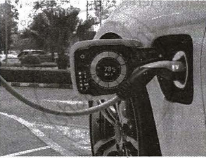
Based on the above information, answer the following questions:
- Can the above function be used to estimate number of vehicles in the year 2000? Justify. (2)
- Prove that the function V(t) is an increasing function. (2)
In which one of the following intervals is the function f(x) = x3 – 12x increasing?
Find the interval in which the function f(x) = x2e–x is strictly increasing or decreasing.
The function \[f(x)=x^3-3x^2+4x\], \[x\in\mathbf{R}\], is
For \[f(x)=4x^3-6x^2-72x+30\], which factorization of \[f'(x)\] is correct?
