Advertisements
Advertisements
प्रश्न
Show that f(x) = cos x is a decreasing function on (0, π), increasing in (−π, 0) and neither increasing nor decreasing in (−π, π).
Advertisements
उत्तर
\[Here, \]
\[f\left( x \right) = \cos x\]
\[\text{Domain of cos x is}\left( - \pi, \pi \right).\]
\[ \Rightarrow f'\left( x \right) = - \sin x\]
\[\text{For x} \in \left( - \pi, 0 \right), \sin x < 0 \left[ \because \text{sine function is negative in third and fourth quadrant }\right]\]
\[ \Rightarrow - \sin x > 0\]
\[ \Rightarrow f'\left( x \right) > 0\]
\[So, \text{cos x is increasing in} \left( - \pi, 0 \right) . \]
\[\text{For x} \in \left( 0, \pi \right)),\sin x > 0 \left[ \because \text{sine function is positive in first and second quadrant }\right]\]
\[ \Rightarrow - \sin x < 0\]
\[ \Rightarrow f'\left( x \right) < 0\]
\[\text{So,f(x) is decreasing on}\left( 0, \pi \right).\]
\[\text{Thus,f(x) is neither increasing nor decreasing in}\left( - \pi, \pi \right).\]
APPEARS IN
संबंधित प्रश्न
The side of an equilateral triangle is increasing at the rate of 2 cm/s. At what rate is its area increasing when the side of the triangle is 20 cm ?
Find the intervals in which the following functions are strictly increasing or decreasing:
(x + 1)3 (x − 3)3
Prove that the function f given by f(x) = x2 − x + 1 is neither strictly increasing nor strictly decreasing on (−1, 1).
The interval in which y = x2 e–x is increasing is ______.
Find the intervals in which the function `f(x) = x^4/4 - x^3 - 5x^2 + 24x + 12` is (a) strictly increasing, (b) strictly decreasing
Prove that the function f(x) = loge x is increasing on (0, ∞) ?
Find the interval in which the following function are increasing or decreasing f(x) = 2x3 − 9x2 + 12x − 5 ?
Find the interval in which the following function are increasing or decreasing f(x) = x3 − 6x2 + 9x + 15 ?
Show that f(x) = sin x is increasing on (0, π/2) and decreasing on (π/2, π) and neither increasing nor decreasing in (0, π) ?
Show that f(x) = log sin x is increasing on (0, π/2) and decreasing on (π/2, π) ?
Show that the function f(x) = sin (2x + π/4) is decreasing on (3π/8, 5π/8) ?
Prove that the function f(x) = x3 − 6x2 + 12x − 18 is increasing on R ?
Show that f(x) = x + cos x − a is an increasing function on R for all values of a ?
What are the values of 'a' for which f(x) = ax is decreasing on R ?
If g (x) is a decreasing function on R and f(x) = tan−1 [g (x)]. State whether f(x) is increasing or decreasing on R ?
Function f(x) = 2x3 − 9x2 + 12x + 29 is monotonically decreasing when
The radius r of a right circular cylinder is increasing uniformly at the rate of 0·3 cm/s and its height h is decreasing at the rate of 0·4 cm/s. When r = 3·5 cm and h = 7 cm, find the rate of change of the curved surface area of the cylinder. \[\left[ \text{ Use } \pi = \frac{22}{7} \right]\]
Find the intervals in which function f given by f(x) = 4x3 - 6x2 - 72x + 30 is (a) strictly increasing, (b) strictly decresing .
Test whether the following functions are increasing or decreasing : f(x) = x3 – 6x2 + 12x – 16, x ∈ R.
Find the values of x for which the following functions are strictly decreasing : f(x) = x3 – 9x2 + 24x + 12
show that f(x) = `3x + (1)/(3x)` is increasing in `(1/3, 1)` and decreasing in `(1/9, 1/3)`.
Let f(x) = x3 − 6x2 + 9𝑥 + 18, then f(x) is strictly decreasing in ______
State whether the following statement is True or False:
If the function f(x) = x2 + 2x – 5 is an increasing function, then x < – 1
In which interval is the given function, f(x) = 2x3 - 21x2 + 72x + 19 monotonically decreasing?
y = x(x – 3)2 decreases for the values of x given by : ______.
In case of decreasing functions, slope of tangent and hence derivative is ____________.
The function f(x) = tan-1 x is ____________.
If f(x) = sin x – cos x, then interval in which function is decreasing in 0 ≤ x ≤ 2 π, is:
Let f: [0, 2]→R be a twice differentiable function such that f"(x) > 0, for all x ∈( 0, 2). If `phi` (x) = f(x) + f(2 – x), then `phi` is ______.
If f(x) = `x/(x^2 + 1)` is increasing function then the value of x lies in ______.
A function f is said to be increasing at a point c if ______.
Read the following passage:
|
The use of electric vehicles will curb air pollution in the long run. V(t) = `1/5 t^3 - 5/2 t^2 + 25t - 2` where t represents the time and t = 1, 2, 3, ...... corresponds to years 2001, 2002, 2003, ...... respectively. |
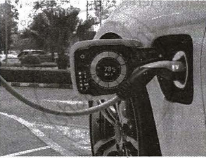
Based on the above information, answer the following questions:
- Can the above function be used to estimate number of vehicles in the year 2000? Justify. (2)
- Prove that the function V(t) is an increasing function. (2)
The interval in which the function f(x) = 2x3 + 9x2 + 12x – 1 is decreasing is ______.
If \[f'(x)>0\] throughout an interval, then \[f\] is
In the procedure for finding intervals, which conclusion is correct when \[f'(x)<0\]?
The critical points \[x=-2\] and \[x=3\] divide the real line into which three intervals?
