Advertisements
Advertisements
प्रश्न
If the function f(x) = 2 tan x + (2a + 1) loge | sec x | + (a − 2) x is increasing on R, then
पर्याय
a ∈ (1/2, ∞)
a ∈ (−1/2, 1/2)
a = 1/2
a ∈ R
Advertisements
उत्तर
\[f(x) = 2 \tan x + \left( 2a + 1 \right) \log_e \left| \sec x \right| + \left( a - 2 \right) x\]
\[\text { When }\sec x > 0 \Rightarrow \left| \sec x \right| = \sec x\]
\[\frac{d}{dx}\left\{ f\left( x \right) \right\} = 2 \sec^2 x + \left( 2a + 1 \right)\frac{1}{\sec x} \times \sec x \tan x + \left( a - 2 \right) \]
\[ = 2 \sec^2 x + \left( 2a + 1 \right)\tan x + \left( a - 2 \right) \]
\[\text { For f(x) to be increasing}, \]
\[2se c^2 x + \left( 2a + 1 \right)\tan x + \left( a - 2 \right) \geqslant 0\]
\[ \Rightarrow 2 + 2 \tan^2 x + \left( 2a + 1 \right)\tan x + a - 2 \geqslant 0\]
\[ \Rightarrow 2 \tan^2 x + \left( 2a + 1 \right)\tan x + a \geqslant 0\]
\[\text { Its discriminant } \leqslant 0 \left[ \because a x^2 + bx + c \geqslant 0 \Rightarrow b^2 - 4ac \leqslant 0 \right]\]
\[ \Rightarrow \left( 2a + 1 \right)^2 - 4 . 2 . a \leqslant 0\]
\[ \Rightarrow 4 a^2 - 4a + 1 \leqslant 0\]
\[ \Rightarrow \left( 2a - 1 \right)^2 \leqslant 0\]
\[ \left( 2a - 1 \right)^2 < 0 \text { cannot be possible } . \]
\[ \therefore \left( 2a - 1 \right)^2 = 0\]
\[ \Rightarrow a = \frac{1}{2}\]
\[\text { When } \sec x < 0 \Rightarrow \left| \sec x \right| = - \sec x\]
\[\frac{d}{dx}\left\{ f\left( x \right) \right\} = 2 \sec^2 x + \left( 2a + 1 \right)\frac{1}{- \sec x} \times \sec x \tan x + \left( a - 2 \right)\]
\[ = 2 \sec^2 x - \left( 2a + 1 \right)\tan x + \left( a - 2 \right) \]
\[\text { For f(x) to be increasing,} \]
\[2se c^2 x - \left( 2a + 1 \right)\tan x + \left( a - 2 \right) \geqslant 0\]
\[ \Rightarrow 2 + 2 \tan^2 x - \left( 2a + 1 \right)\tan x + a - 2 \geqslant 0\]
\[ \Rightarrow 2 \tan^2 x - \left( 2a + 1 \right)\tan x + a \geqslant 0 \]
\[\text { Its discriminant } \leqslant 0 \left[ \because a x^2 + bx + c \geqslant 0 \Rightarrow b^2 - 4ac \leqslant 0 \right]\]
\[ \Rightarrow \left\{ - \left( 2a + 1 \right) \right\}^2 - 4 . 2 . a \leqslant 0\]
\[ \Rightarrow 4 a^2 - 4a + 1 \leqslant 0\]
\[ \Rightarrow \left( 2a - 1 \right)^2 \leqslant 0\]
\[ \left( 2a - 1 \right)^2 < 0 \text { cannot be possible } . \]
\[ \therefore \left( 2a - 1 \right)^2 = 0\]
\[ \Rightarrow a = \frac{1}{2}\]
APPEARS IN
संबंधित प्रश्न
Find the intervals in which the following functions are strictly increasing or decreasing:
x2 + 2x − 5
Prove that the logarithmic function is strictly increasing on (0, ∞).
Prove that the function f given by f(x) = x2 − x + 1 is neither strictly increasing nor strictly decreasing on (−1, 1).
Find the least value of a such that the function f given by f (x) = x2 + ax + 1 is strictly increasing on [1, 2].
Let f be a function defined on [a, b] such that f '(x) > 0, for all x ∈ (a, b). Then prove that f is an increasing function on (a, b).
Without using the derivative, show that the function f (x) = | x | is.
(a) strictly increasing in (0, ∞)
(b) strictly decreasing in (−∞, 0) .
Find the interval in which the following function are increasing or decreasing f(x) = 10 − 6x − 2x2 ?
Find the interval in which the following function are increasing or decreasing f(x) = 6 − 9x − x2 ?
Find the interval in which the following function are increasing or decreasing f(x) = x4 − 4x ?
Find the interval in which the following function are increasing or decreasing f(x) = \[5 x^\frac{3}{2} - 3 x^\frac{5}{2}\] x > 0 ?
Find the interval in which the following function are increasing or decreasing \[f\left( x \right) = \frac{3}{2} x^4 - 4 x^3 - 45 x^2 + 51\] ?
Show that the function x2 − x + 1 is neither increasing nor decreasing on (0, 1) ?
Find the intervals in which f(x) = log (1 + x) −\[\frac{x}{1 + x}\] is increasing or decreasing ?
Prove that the following function is increasing on R f \[f\left( x \right) = 4 x^3 - 18 x^2 + 27x - 27\] ?
Find the value(s) of a for which f(x) = x3 − ax is an increasing function on R ?
Find the interval in which f(x) is increasing or decreasing f(x) = sinx(1 + cosx), 0 < x < \[\frac{\pi}{2}\] ?
If g (x) is a decreasing function on R and f(x) = tan−1 [g (x)]. State whether f(x) is increasing or decreasing on R ?
The function f(x) = x9 + 3x7 + 64 is increasing on
Find MPC ( Marginal propensity to Consume ) and APC ( Average Propensity to Consume ) if the expenditure Ec of a person with income I is given as Ec = ( 0.0003 ) I2 + ( 0.075 ) I when I = 1000.
Solve the following : Find the intervals on which the function y = xx, (x > 0) is increasing and decreasing.
Find the value of x, such that f(x) is increasing function.
f(x) = x2 + 2x - 5
Find the value of x, such that f(x) is decreasing function.
f(x) = 2x3 – 15x2 – 84x – 7
State whether the following statement is True or False:
The function f(x) = `"x"*"e"^("x" (1 - "x"))` is increasing on `((-1)/2, 1)`.
Show that f(x) = x – cos x is increasing for all x.
Show that the function f(x) = x3 + 10x + 7 for x ∈ R is strictly increasing
Test whether the following function f(x) = 2 – 3x + 3x2 – x3, x ∈ R is increasing or decreasing
The price P for the demand D is given as P = 183 + 120D − 3D2, then the value of D for which price is increasing, is ______.
The slope of tangent at any point (a, b) is also called as ______.
For every value of x, the function f(x) = `1/"a"^x`, a > 0 is ______.
Determine for which values of x, the function y = `x^4 – (4x^3)/3` is increasing and for which values, it is decreasing.
The function f(x) = mx + c where m, c are constants, is a strict decreasing function for all `"x" in "R"` , if ____________.
The interval in which the function f is given by f(x) = x2 e-x is strictly increasing, is: ____________.
Read the following passage:
|
The use of electric vehicles will curb air pollution in the long run. V(t) = `1/5 t^3 - 5/2 t^2 + 25t - 2` where t represents the time and t = 1, 2, 3, ...... corresponds to years 2001, 2002, 2003, ...... respectively. |
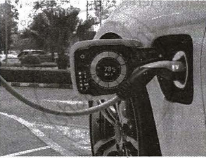
Based on the above information, answer the following questions:
- Can the above function be used to estimate number of vehicles in the year 2000? Justify. (2)
- Prove that the function V(t) is an increasing function. (2)
Let \[f\] be continuous on \[[a,b]\] and differentiable on \[(a,b)\]. If \[f'(x)\geq0\] for every \[x\in(a,b)\], what follows?
For \[f(x)=4x^3-6x^2-72x+30\], which factorization of \[f'(x)\] is correct?
The critical points \[x=-2\] and \[x=3\] divide the real line into which three intervals?
