Advertisements
Advertisements
Question
Prove that the function f : N → N, defined by f(x) = x2 + x + 1 is one-one but not onto. Find the inverse of f: N → S, where S is range of f.
Advertisements
Solution
The given function is
f : N → N
f(x) = x2 + x + 1
Let x1, x2 6N
So let f (x1) = f (x2)
`x_1^2 + x_1 + 1 = x_2^2 + x_2 + 1`
`x_1^2 - x_2^2 + x_1 - x_2 = 0`
(x1 - x2) (x1 + x2 + 1) = 0
∵ x2 = x1
or x2 = - x1 - 1
∵ x1 ∈ N
∴ x1 - 1 ∈ N
So x2 ≠ -x1 - 1
∵ f (x2) = f (x1) only for x1 = x2
So f(x) is one -one function.
∵ f (x) = x2 + x + 1
`"f" ("x") = ("x" + 1/2)^2 + 3/4`
Which is an increasing function.
f(1) = 3
∵ Range of f(x) will be {3, 7, .....} Which is a subset of N.
So it is an into function. i.e., f(x) is not an onto function.
let y = x2 + x + 1
x2 + x + 1 - y = 0
`"x" = (-1± sqrt((1 - 4 )(1 - "y")))/(2)`
`"x" = (-1 ± sqrt(4"y" -3))/(2)`
So two possibilities are there for `f^-1 ("x")`
`"f"^-1 ("x") = (-1 + sqrt(4"x" -3))/(2), (-1 - sqrt(4"x" -3))/(2)` and we know `"f"^-1 (3)` = 1 because `"f"(1) = 3`
so `"f"^-1 ("x") = (-1 + sqrt(4"x" - 3))/(2)`
RELATED QUESTIONS
The amount of pollution content added in air in a city due to x-diesel vehicles is given by P(x) = 0.005x3 + 0.02x2 + 30x. Find the marginal increase in pollution content when 3 diesel vehicles are added and write which value is indicated in the above question.
Find the intervals in which the following functions are strictly increasing or decreasing:
10 − 6x − 2x2
Prove that the logarithmic function is strictly increasing on (0, ∞).
The interval in which y = x2 e–x is increasing is ______.
Prove that f(x) = ax + b, where a, b are constants and a < 0 is a decreasing function on R ?
Find the interval in which the following function are increasing or decreasing f(x) = 6 − 9x − x2 ?
Show that the function f(x) = cot \[-\] l(sinx + cosx) is decreasing on \[\left( 0, \frac{\pi}{4} \right)\] and increasing on \[\left( 0, \frac{\pi}{4} \right)\] ?
Write the set of values of a for which f(x) = cos x + a2 x + b is strictly increasing on R ?
f(x) = 2x − tan−1 x − log \[\left\{ x + \sqrt{x^2 + 1} \right\}\] is monotonically increasing when
The function f(x) = x9 + 3x7 + 64 is increasing on
The price P for demand D is given as P = 183 + 120 D – 3D2.
Find D for which the price is increasing.
Test whether the following functions are increasing or decreasing : f(x) = x3 – 6x2 + 12x – 16, x ∈ R.
Find the values of x for which the following functions are strictly decreasing:
f(x) = 2x3 – 3x2 – 12x + 6
State whether the following statement is True or False:
The function f(x) = `"x"*"e"^("x" (1 - "x"))` is increasing on `((-1)/2, 1)`.
Let f(x) = x3 − 6x2 + 9𝑥 + 18, then f(x) is strictly decreasing in ______
Show that f(x) = x – cos x is increasing for all x.
The function f(x) = sin x + 2x is ______
If f(x) = x3 – 15x2 + 84x – 17, then ______.
The interval on which the function f(x) = 2x3 + 9x2 + 12x – 1 is decreasing is ______.
The function f(x) = mx + c where m, c are constants, is a strict decreasing function for all `"x" in "R"` , if ____________.
The function f(x) = tan-1 (sin x + cos x) is an increasing function in:
The function f: N → N, where
f(n) = `{{:(1/2(n + 1), "If n is sold"),(1/2n, "if n is even"):}` is
Let x0 be a point in the domain of definition of a real valued function `f` and there exists an open interval I = (x0 – h, ro + h) containing x0. Then which of the following statement is/ are true for the above statement.
Function given by f(x) = sin x is strictly increasing in.
If f(x) = x3 + 4x2 + λx + 1(λ ∈ R) is a monotonically decreasing function of x in the largest possible interval `(–2, (–2)/3)` then ______.
Function f(x) = `log(1 + x) - (2x)/(2 + x)` is monotonically increasing when ______.
Read the following passage:
|
The use of electric vehicles will curb air pollution in the long run. V(t) = `1/5 t^3 - 5/2 t^2 + 25t - 2` where t represents the time and t = 1, 2, 3, ...... corresponds to years 2001, 2002, 2003, ...... respectively. |
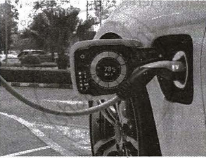
Based on the above information, answer the following questions:
- Can the above function be used to estimate number of vehicles in the year 2000? Justify. (2)
- Prove that the function V(t) is an increasing function. (2)
If \[f'(x)>0\] throughout an interval, then \[f\] is
As one moves from left to right on a graph, what do constant \[y\]-values indicate?
