Advertisements
Advertisements
Question
Ortho and para nitrophenols are more acidic than phenol. Draw the resonance structures of the corresponding phenoxide ions.
Advertisements
Solution

Resonance structures of o-nitrophenoxide ion

Resonance structures of p-nitrophenoxide ion
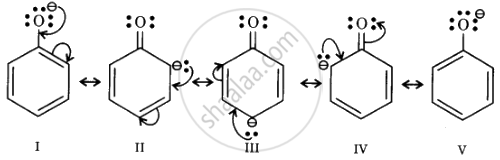
Resonance structures of phenoxide ion
In substituted phenols, electron-withdrawing groups such as the nitro group increase the acidic strength of phenol. This effect becomes more potent when such groups are present at the ortho and para positions. This is because of the effective delocalisation of the anion of the phenoxide ion. Hence, o- and p-nitrophenols are more acidic than phenol.
APPEARS IN
RELATED QUESTIONS
Write the mechanism of the following reaction:

Show how will you synthesize pentan-1-ol using a suitable alkyl halide.
Give the equation of the following reaction:
Oxidation of propan-1-ol with alkaline KMnO4 solution.
Write the mechanism of acid-catalysed dehydration of ethanol to yield ethene.
By which of the following methods alcohol can be prepared in excellent yield?
Lucas test is done to differentiate between ____________.
Which one of the following on oxidation gives a ketone?
\[\ce{CH3CH2OH}\] can be converted into \[\ce{CH3CHO}\] by ______.
Identify the secondary alcohols from the following set:
- \[\ce{CH3CH2CH(OH)CH3}\]
- \[\ce{(C2H5)3COH}\]
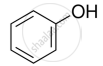

Mark the correct increasing order of reactivity of the following compounds with HBr/HCl.
| (a) | 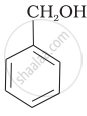 |
| (b) |  |
| (c) | 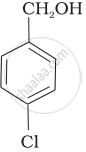 |
Ethers can be prepared by Williamson synthesis in which an alkyl halide is reacted with sodium alkoxide. Di-tert-butyl ether can’t be prepared by this method. Explain.
Why is the C – O – H bond angle in alcohols slightly less than the tetrahedral angle whereas the C – O – C bond angle in ether is slightly greater?
What is Lucas reagent?
Which of the following observation is shown by 2-phenyl ethanol with Lucas Reagent?
Write the mechanism of acid dehydration of ethanol to yield ethene.
Write the mechanism of acid dehydration of ethanol to yield ethene.
Write the mechanism of acid dehydration of ethanol to yield ethene.
Write the mechanism of acid dehydration of ethanol to yield ethene.
