Advertisements
Advertisements
Question
Interpret these phrases in the context of the essay
- Mist of protection
- At a crossroads
- It came with strings attached
Advertisements
Solution
Mist of protection: The phrase has been used by the author to signify that her childhood was very protective. Her parents always cared for her and kept watch over her. They tried to influence her in all her activities. She found this protection as something like a mist which covers our vision.
At a crossroads: At a cross roads refers to a situation when some one is not able to decide as to which path to chose. In the text the phrase is used by the author to describe her situation after completing the agriculture course when she was left with few job prospects.
It came with strings attached :
APPEARS IN
RELATED QUESTIONS
There were many reasons for Helen Keller's embittered childhood. What were they and how were they overcome?
Anne's father was close to her. What did she like about him? Why?
Attempt the following in 150-200 words.
Write a character sketch of Bishop Brooks as he appears in Helen Keller's − The Story of My Life.
With reference to ‘The Story of My Life’, describe how a teacher can positively impact a child’s life ?
Read the passage and complete the activities given below :
B1 Pick out
The correct answers from the statements given below:
B2 Fill in the gaps with the information given in the passage :
Read the following passage and do the given activities :
B1 Select :
Complete the following sentences by selecting the correct alternatives:
(i) It is more important to have _______ before rushing to work. (lunch, breakfast, dinner)
(ii) Skipping breakfast brings a higher risk of _______ (cancer, heart attack, brain attack)
(iii) An adequate _______ is provided by your meal. (energy, weight, height)
(iv) More than half of the people risk heart attack due to _______ eating. (early morning, afternoon, late night)
MEN WHO SKIP BREAKFAST FACE
27% HIGHER RISK OF HEART ATTACK
Late-Night Eaters at 55% risk. TNN.
London-Breakfast is widely acknowledged as the most important meal of the day. But now, there’s more reason to have that piece of toast before rushing to work: Skipping breakfast has for the first time been associated with an increase in heart attacks.
A study published in the American Heart Association journal circulation showed that men who skipped breakfast had a 27% higher risk of heart attack or death from coronary heart disease than those who didn’t.
“Skipping breakfast may lead to one or more risk factors, including obesity, high blood pressure, high cholesterol, and diabetes, which may, in turn, lead to a heart attack over time,” said Leah E. Cahill, lead author from the Harvard School of Public Health.
“Our study group has spent decades studying the health effects of diet quality and composition, and now this new data also suggests overall dietary habits can be important to lower risk of coronary heart disease,” said co-author Eric Rimm.
“Don’t skip breakfast,” Cahill said. “Eating breakfast is associated with a decreased risk of heart attacks. Incorporating many types of healthy foods into your breakfast is an essay way to ensure your meal provides adequate energy and a healthy balance of nutrients.
B2 Find:
Find the pieces of ‘advice’ from the passage and write.
B3 Antonyms :
Find out the antonyms for the following words from the passage and write:
(i) higher (ii) decrease
(iii) excluding (iv) low
B4 Reported Speech :
Complete the reported speech of the following sentences given indirect form:
(i) “Our study group has spent decades studying the health effects of diet quality and composition,” said co-author Eric Rimm.
Co-author Eric Rimm _________
(ii) “Dont’s skip breakfast,” Cahill said.
Cahill _______
B5 Personal Response :
How will you practice the message implied in the passage in your life?
Answer the following in 200-250 words :
Describe the relationship between Anne and Margot?
How is the father’s helplessness brought out in the poem?
|
The energy stored in coal and petroleum originally came to the earth from the sun. The bulk of the present-day supplies was laid down some 200 to 600 million years ago, when tropical conditions were widespread. Lush, swampy forests produced huge trees; warm coastal seas swarmed with microscopic forms of life. When these organisms died, much of their tissue was recycled as it is today — through scavenging and decay. But a significant amount of dead plant and animal material was covered with mud, which prevented complete decomposition. With the passage of time, layer upon layer of the fine sediment was deposited over the once-living material; the sheer weight turned the sediments to rock. Sandwiched between the layers, both coal and petroleum were produced and preserved under pressure. Coal was formed mostly of giant fern-like plants that have only small counterparts today. Coal may still be forming here and there on earth, but conditions are not right for the production of significant quantities. |
Underline the important words and phrases.
How do you distinguish between information gathering and insight formation?
What was the importance of the watch to the author?
Identify the common characteristics shared by tribal communities all over the world.
How does the poem emphasise the physical prowess of the Hawk?
Discuss the following in pairs or in small groups.
Kumudini Lakhia's life is an inspiring illustration of the emancipation of women.
Name the world-famous personality who reached great heights despite of humble circumstances.
Make sentence of your own using the following expression.
bargain:
Read the following words :
Brigadier, Commander, capture, evicting, enemy, defense
All these words are related to war affairs and war.
Find more such words from the passage.
Find proof from the poem for the following.
The colour imagery in the poem.
A bridge connects people on either side of a river or valleys in cities or villages. Discuss with your partner the importance of a bridge to both the cities and the villages and complete the table.
| Cities | Villages |
Say where . . . . . . .
______ do stars shine in the daytime?
Read the poem and complete the web about the activities the planners do.

Discuss in your class.
Name some gadgets and appliances that we use in day-to-day life?
Fill in the gap, choosing a word from the bracket to make an appropriate comparison.
(tall / quiet / humble / merry / busy / slippery / fast / sly / slow / big)
as ______ as a mouse.
What is described in the poem?
Find sentences from the play related to the given points.
The tension between different loyalties
- It’s little we get but abuse from the people, and no choice but to obey our orders.
- ________________________________
- ________________________________
- ________________________________
India is famous for its handloom fabrics. Write the story of a handloom kurta in your own words.
Give reasons :
Oberon and Titania fight for the custody of the Indian boy because - Oberon wants __________________.
Discuss the following question after you have seen a presentation of the ‘ad’.
What would happen if you ate proper meals like rice and dal or dal-roti?
Discuss the following question after you have seen a presentation of the ‘ad’.
Think of the people you like. Do you like them because they have a fair (white) skin or because of some other qualities? List those qualities.
Write the conditions that Portia put down to warn Shylock.
Read the following chains of words:
- fortune - fortunate - fortunately - unfortunately
- know - knowing - knowingly - unknowingly
- amaze - amazing - amazingly
- possible - impossible - impossibly
Complete the following sentence with reference to the passage:
To this day, we venerate this tree as ____________.
Imagine that there is a Mr Somebody who has to correct all the wrongs that are done by Mr Nobody. Write in the following table, what Mr Somebody will have to do.
| Mr Nobody’s Actions | Tasks for Mr Somebody |
| 1. The plate is broken / cracked | Mend the plate. / Throw it away carefully. |
| 2. The book is torn | ____________ |
| 3. The door is ajar. | ____________ |
| 4. The buttons are pulled from the shirt | ____________ |
| 5. The pins are scattered. | ____________ |
| 6. The door is still squeaking. | ____________ |
| 7. There are finger marks upon the door. | ____________ |
| 8. The ink has spilled over. | ____________ |
| 9. Boots are lying around. | ____________ |
| 10. ____________ | ____________ |
| 11. ____________ | ____________ |
Add a few more things to the list in the above table, using your own ideas and experience.
Put the following events in chronological order.
- The sword in the stone appeared in the churchyard.
- Lord Uther died.
- Lord Uther drove the barbarians away.
- The Lords and knights began to fight for the kingdom.
- Sir Kay left his sword behind at home.
- Merlin announced that Arthur was the son of Lord Uther.
- Arthur brought the sword from the churchyard.
- Ancient Britain was invaded by wild barbarians.
- Many knights tried to pull the sword out of the stone.
- Arthur grew up in Sir Ector’s house.
- Merlin entrusted a baby to Sir Ector.
Read the passage and name the following.
She was the wife of King Menelaus.
Complete the following sentence with reference to the passage.
It is believed that _________ Homer, who __________ and who ________ to all who __________________.
Using the information given in the passage, write a short note on the following in your mother tongue.
Gond art
Who said the following, to whom, and when?
“He dwells within a cave of Himalaya.”
Who said the following, to whom, and when?
“As you desire, Huzoor.”
Find out how the following game is played.
Table Tennis
List the characters in the play.
Human characters
Discuss what you can do to help other animals in your surroundings. Write down any three ideas you like from the discussion.
Who is wise according to you?
Answer the following question based on the reading of the story. Do not forget to go back to the passage whenever necessary to find and confirm the answer.
| Action | Effect |
| While you warm yourself | I will prepare the best tea. |
| I saved enough money | |
| Six hundred and two villages were destroyed. | |
| It was a terrible earthquake and it was felt | |
| I ran back to the village | |
| They lifted the door | |
| I went to thank the Army Officer |
How did Hamid’s friends enjoy the games in the fair?
What kind of a life do you want to lead in this world?
What made Grandfather plant saplings on the rocky island?
When the author returned from England to Dehradun, he found Grandfather's dream had come true because the______.
The wild boar got up from its daybed because it was disturbed by another boar.
The wild boar settled down scraping the hole into a ______ to have a good sleep.
Match the actions with the picture.
| mixes for community food service | 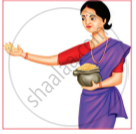 |
| sows the grain | 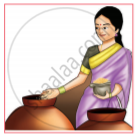 |
| feeds the birds | 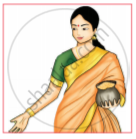 |
Vicky wanted a ______ to do all his work.
Choose the best answer.
Suddenly there was a______.
______ over heard her father’s talking on the phone about the robbery.
Meena’s father was a fisher man.
Do you think you treat everyone equally? Justify with an example.
Write the correct word.
| rooster, king, hen, tiger, queen, tigress. |
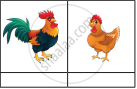
Why did Nasruddin take someone else’s name each time he missed the target?
What was different about the rabbit that Alice saw?
What is the poem about?
