English

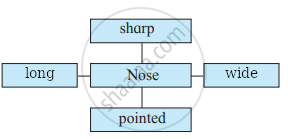
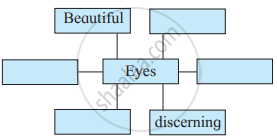
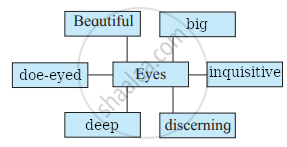
Complete the web with the help of adjectives used to describe eyes and nose in all respects. Two are done for you. - English

Advertisements
Advertisements

Question

Complete the web with the help of adjectives used to describe eyes and nose in all respects. Two are done for you.
Chart
Advertisements

Solution
shaalaa.com
Reading Skills
  Is there an error in this question or solution?
Chapter 2.5: Nose versus Eyes - Ice Breakers [Page 87]

APPEARS IN

Balbharati English Yuvakbharati [English] Standard 11 Maharashtra State Board
Chapter 2.5 Nose versus Eyes
Ice Breakers | Q 1 | Page 87

RELATED QUESTIONS

Read the passage given below and answer the questions that follow:

1. Air pollution is an issue which concerns us all alike. One can willingly choose or reject a food, a drink or a life comfort, but unfortunately there is little choice for the air we breathe. All, what is there in the air is inhaled by one and all living in those surroundings.

 2. Air pollutant is defined as a substance which is present while normally it is not there or present in an amount exceeding the normal concentrations. It could either be gaseous or a particulate matter. The important and harmful polluting gases are carbon monoxide, carbon dioxide, ozone and oxides of sulphur and nitrogen. The common particulate pollutants are the dusts of various inorganic or organic origins. Although we often talk of the outdoor air pollutions caused by industrial and vehicular exhausts, the indoor pollution may prove to be as or a more important cause of health problems.

 3. Recognition of air pollution is relatively recent. It is not uncommon to experience a feeling of 'suffocation' in a closed environment. It is often ascribed to the lack of oxygen. Fortunately, however, the composition of air is remarkably constant all over the world. There is about 79 per cent nitrogen and 21 per cent oxygen in the air − the other gases forming a very small fraction. It is true that carbon dioxide exhaled out of lungs may accumulate in a closed and over-crowded place. But such an increase is usually small and temporary unless the room is really air-tight. Exposure to poisonous gases such as carbon monoxide may occur in a closed room, heated by burning coal inside. This may also prove to be fatal.

 4. What is more common in a poorly ventilated home is a vague constellation of symptoms described as the sick-building syndrome. It is characterized by a general feeling of malaise, head-ache, dizziness and irritation of mucous membranes. It may also be accompanied by nausea, itching, aches, pains and depression. Sick building syndrome is getting commoner in big cities with the small houses, which are generally over-furnished. Some of the important pollutants whose indoor concentrations exceed those of the outdoors include gases such as carbon monoxide, carbon dioxide, oxides of nitrogen and organic substances like spores, formaldehydes, hydrocarbon aerosols and allergens. The sources are attributed to a variety of construction materials, insulations, furnishings, adhesives, cosmetics, house dusts, fungi and other indoor products.

 5. By-products of fuel combustion are important in houses with indoor kitchens. It is not only the brining of dried dung and fuelwood which is responsible, but also kerosene and liquid petroleum gas. Oxides of both nitrogen and sulphur are released from their combustion.

 6. Smoking of tobacco in the closed environment is an important source of indoor pollution. It may not be high quantitatively, but significantly hazardous for health. It is because of the fact that there are over 3000 chemical constituents in tobacco smoke, which have been identified. These are harmful for human health.

 7. Micro-organisms and allergens are of special significance in the causation and spread of diseases. Most of the infective illnesses may involve more persons of a family living in common indoor environment. These include viral and bacterial diseases like tuberculosis.

 8. Besides infections, allergic and hypersensitivity disorders are spreading fast. Although asthma is the most common form of respiratory allergic disorders, pneumonias are not uncommon, but more persistent and serious. These are attributed to exposures to allergens from various fungi, molds, hay and other organic materials. Indoor air ventilation systems, coolers, air-conditioners, dampness, decay, pet animals, production or handling of the causative items are responsible for these hypersensitivity − diseases.

 9. Obviously, the spectrum of pollution is very wide and our options are limited. Indoor pollution may be handled relatively easily by an individual. Moreover, the good work must start from one’s own house

(Extracted from the Tribune)

 (a) (i) What is an air pollutant? (1)

(ii) In what forms are the air pollutants present? (2)

(iii) Why do we feel suffocated in a closed environment? (1)

(iv) What is sick building syndrome? How is it increasing? (2)

(v) How is indoor smoking very hazardous? (1)

(vi) How can one overcome the dangers of indoor air pollution? (2)

(b) Find the words from the above passage which mean the same as the following: (3)

(i) giddiness (para 4)

(ii) constant (para 8)

(iii) humidity (para 8)


Read the extract given below and answer the questions that follow:        
Far far from gusty waves these children's faces.  
Like rootless weeds, the hair torn round their pallor;
The tall girl with her weighed-down head.
(a) Who are these children?
(b) Which figure of speech has been used in the first two lines?
(c) Why is the tall girl's head weighed down?
(d) What does the word, 'pallor' mean? 


Read the passage given below : 

1. Maharana Pratap ruled over Mewar only for 25 years. However, he accomplished so much grandeur during his reign that his glory surpassed the boundaries of countries and time turning him into an immortal personality. He along with his kingdom became a synonym for valour, sacrifice and patriotism. Mewar had been a leading Rajput kingdom even before Maharana Pratap occupied the throne. Kings of Mewar, with the cooperation of their nobles and subjects, had established such traditions in the kingdom, as augmented their magnificence despite the hurdles of having a smaller area under their command and less population. There did come a few thorny occasions when the flag of the kingdom seemed sliding down. Their flag once again heaved high in the sky thanks to the gallantry and brilliance of the people of Mewar.
 
2. The destiny of Mewar was good in the sense that barring a few kings, most of the rulers were competent and patriotic. This glorious tradition of the kingdom almost continued for 1500 years since its establishment, right from the reign of Bappa Rawal. In fact, only 60 years before Maharana Pratap, Rana Sanga drove the kingdom to the pinnacle of fame. His reputation went beyond Rajasthan and reached Delhi. Two generations before him. Rana Kumbha had given a new stature to the kingdom through victories and developmental work. During his reign, literature and art also progressed extraordinarily. Rana himself was inclined towards writing and his works are read with reverence even today The ambience of his kingdom was conducive to the creation of high-quality work of art and literature. These accomplishments were the outcome of a longstanding tradition sustained by several generations.
 
3. The life of the people of Mewar must have been peaceful and prosperous during the long span of time; otherwise, such extraordinary accomplishment in these fields would not have been possible. This is reflected in their art and literature as well as their loving nature. They compensate for the lack of admirable physique by their firm but pleasant nature. The ambience of Mewar remains lovely thanks to the cheerful and liberal character of its people.
 
4. One may observe astonishing pieces of workmanship not only in the forts and palaces of Mewar but also in public utility buildings. Ruins of many structures which are still standing tall in their grandeur are testimony to the fact that Mewar was not only the land of the brave but also a seat of art and culture. Amidst aggression and bloodshed, literature and art flourished and creative pursuits of literature and artists did not suffer. Imagine, how glorious the period must have been when the Vijaya Stambha which is the sample of our great ancient architecture even today, was constructed. In the same fort, Kirti Stambha is standing high, reflecting how liberal the then administration was which allowed people from other communities and kingdoms to come and carry out construction work. It is useless to indulge in the debate whether the Vijaya Stambha was constructed first or the Kirti Stambha. The fact is that both the capitals are standing side by side and reveal the proximity between the king and the subjects of Mewar.
 
5. The cycle of time does not remain the same Whereas the reign of Rana Sanga was crucial in raising the kingdom to the acme of glory, it also proved to be his nemesis. History took a turn. The fortune of Mewar – the land of the brave, started waning. Rana tried to save the day with his acumen which was running against the stream and the glorious traditions for some time.
 
On the basis of your understanding of the above passage answer each of the questions given below with the help of options that follow :
 
(a) Maharana Pratap became immortal because :
(i) he ruled Mewar for 25 years.
(ii) he added a lot of grandeur to Mewar.
(iii) of his valour, sacrifice and patriotism.
(iv) both (ii) and (iii)

(b) Difficulties in the way of Mewar were :
(i) lack of cooperation of the nobility.
(ii) ancient traditions of the kingdom.
(iii) its small area and small population.
(iv) the poverty of the subjects.
 
(c) During thorny occasions :
(i) the flag of Mewar seemed to be lowered.
(ii) the flag of Mewar was hoisted high.
(iii) the people of Mewar showed gallantry.
(iv) most of the rulers heaved a sigh of relief.

(d) Mewar was lucky because :
(i) all of its rulers were competent.
(ii) most of its people were competent.
(iii) most of its rulers were competent.
(iv) only a few of its people were incompetent.
 
Answer the following questions briefly:
(e) Who is the earliest king of Mewar mentioned in the passage?
(f) What was Rana Kumbha's contribution to the glory of Mewar?
(g) What does the writer find worth admiration in the people of Mewar?
(h) How could art and literature flourish in Mewar?
(i) How did the rulers show that they cared for their subjects?
(j) What does the erection of Vijaya Stambha and Kirti Stambha in the same fort signify?
(k) Find words from the passage which mean the same as each of the following:
(i) surprising (para 4)
(ii) evidence (para 4)

Read the passage and complete the activities given below
B1 Complete the table :
A few facts about the Mehendi rituals during marriage ceremonies are given below :
Write them into appropriate columns :
(i) A simple family affair.
(ii) Song and dance performances accompanied by lavish food and entertainment.
(iii) Creative family members, apply Mehendi to the bride.
(iv) Beauticians are appointed to apply Mehendi to the bride.
Fill in the table as :

Yesteryears Present times
(i) (i)
(ii) (ii)

Mehendi enjoys special attention during the wedding. In India, the day before the wedding is devoted exclusively to the elaborate ritual of applying Mehendi on the hands and feet of the bride. This practice is followed in Arab countries as well, except that it is held a few days prior to the wedding day. Songs are woven around the healing properties and lucky omens associated with mehndi are sung by the bride’s family and friends. An age-old belief handed down to generations lays great emphasis on the color of the bride’s Mehendi – a darker color suggests bountiful love and affection from the future in-laws and husband, and for this reason, brides take the pain to ensure that only the best quality henna is used for her wedding day.

The ritual of adorning the bride with henna is a sacred one and in some communities requires the initiation by the mother-in-law. A popular game during marriage function is the search for their names, by the bride and groom hidden within the elaborate pattern on the bride’s hands.

In certain parts of India, the bridegroom has his hands decorated with henna. The Mehendi function during marriages has evolved from simple family affairs of yesteryears to elaborate events of today. A lavish spread of food and entertainment in the form of song and dance performances have transformed it from a small function to a gala prelude. In earlier days, the task of applying Mehendi on the bride was the sole prerogative of creative family members. The demand for intricate and different style now, sees this job outsourced to beauticians skilled in this art. Beauty salons charge according to the style and complexity of pattern desired by the clients.

B2 What is the age-old belief related to the bride’s Mehendi color and its significance?

B3 Find the words :

Find the words from the passage :

The first letter of each word is given as a clue :
(i) Nowadays a lot of e .......... is given to the use of Information Technology in school.
(ii) Temples and mosques exhibit i .......... carving on their walls.
(iii) The minister announced the i .......... of the National Polio Eradication Programme.
(iv) Villages have t .......... to towns.
 
B4 Complete the table : 
Noun Verd Adjectives
(i) attention attend _______________
(ii) creation _________________ creative
Select any one word and use it meaningfully in a sentence of your own.
 
B5 Personal Response :
A lot of money is spent nowadays on marriage ceremonies. What is your opinion about it? 

'Luck is necessary for success in life'.


What are the criteria that Ruskin feels that readers should fulfil to make themselves fit for the company of the Dead?


How does Forster use the analogy of Scheherazade to establish his point ?


Bring out the parallel suggested between the predatory instincts of the bird and human behaviour.


The title, 'Refugee Blues' encapsulates the theme of the poem. Comment.


How does the poet bring out the immortality of the bird?


' Kummi', ' ghumar' and 'dandia' are some dance forms mentioned in the text. Make an inventory of folk dance forms in the different regions of the country.


There are different types of short stories. Use a dictionary/internet and find out what each of the following types refers to.

  1. fable:
  2. anecdote:
  3. fairy tale:
  4. parable:
  5. tragedy:
  6. humorous story:
  7. detective story:
  8. myth: 

Answer the given question in your own words.

What decision did the Swallow finally make? Was it a wise one? Comment.


In Gujarat, the kite - festival is celebrated to welcome the Spring.


For preparing questions based on the poem, an overall understanding of the poem is a must. Discuss with your partner and prepare a set of five questions.

For example:

  1. What is the name of the bridge?
  2. ________________________________
  3. ________________________________
  4. ________________________________
  5. ________________________________
  6. ________________________________

When a poet/writer attempts to describe something in words, so that it appeals to our five senses (sight, smell, hearing, touch, taste) he/she has used a device called Imagery.

For example: ‘a host of golden daffodils’.
‘to a chasm, deep and vast and wide’.

Go through other poems in your textbook or other books and find outlines that contain Imagery. Write them down along with the name of the poem and line/stanza number.


Out of all names of birds and animals given in the poem, pick out 4 names that are similar in English as well as in Hindi/Marathi or your Mother's tongue.


Read the lesson and name the following.

A sack around the heart ______


Write in short about what your parents/guardians feel when they send you to school. 


On any one page, note against the speech of every character what feelings it should show to bring out the meaning best. For example, joy, fear, anger, nervousness, friendliness, dislike, surprise, wonder, excitement, politeness, rudeness, cunning, curiosity. 


Draw word webs for the following. Begin with the given word and go on writing as many other words associated with it, as you can. Use these words to write other related words to form a word web.


Read the passage and answer the following:

Why is the tollbooth called a ‘phantom’ tollbooth?


What do the following events/actions tell us about the characters? Discuss.

Sir Ector kneeled before Arthur.


Be a poet. Try to complete the following poem with words that rhyme with each other.

I’d love to live a life that’s ______
Relax under a shady t______
And fall into a dreamy s______p,
With no strict hours, forced to k______
And sing aloud a merry ______,
Untrodden paths, as I walk a______g.
You ask me what I’d get to ______?
Fruits and nuts and berries sw______
You ask me with whom I’d get to p______
Birds and animals, happy and g______
And if a woodcutter put a c______p
Firmly, I would put a st______
So that’s the life I’d like l______d
Free from worries, free from gr______d

Say whether you agree or disagree.

The children showed disinterest even in the bachelor’s story-telling, throughout.


Did Gopal Bhand have a field?


An announcement can be made in every class, orally. Or, it can be put up on the school notice-board. Discuss and decide what method should be used for the announcement given here.

Oral aanouncement


What was the businessman looking for? Why?


Find two examples of the following from the lesson.

An Exclamation 


List the insects, birds, trees and plants mentioned in the poem.


Gilson asked the narrator to buy a tie.


Answer the following question based on the reading of the story. Do not forget to go back to the passage whenever necessary to find and confirm the answer.

Action Effect
While you warm yourself I will prepare the best tea.
I saved enough money  
  Six hundred and two villages were destroyed.
It was a terrible earthquake and it was felt  
I ran back to the village  
They lifted the door  
I went to thank the Army Officer  

Why did Shepherd-Barron reduce the PIN number from six digits to four?


Write the name of the toy against the picture.


“Was it just the wind?”– What do you think Usha thought it was? Why?


Learning About Nature

Learn about caterpillars and butterflies. Read a book about a caterpillar turning into a butterfly. You can get one from the library or go online and find information with pictures.


Which mode of transport did Fogg choose?


Fill in the table

Problems Faced By Mr. Fogg And His Team Solution
The train stopped in the middle of the forest.  
They couldn’t hire the elephant.  
They were in need of an elephant driver.  

Describe the elephant driver in your own words.


Vasantha made a lot of noise because ______


What are the two reasons the author gives for the plants moving towards grandfather?


What does ‘charges along like troops in a battle’ mean?


What word could best replace ‘charges’ in the poem - marches, rushes or pushes?


Where were the boys taken to?


Try your own.


Recite the poem 'My Robot' with correct intonation.


The old man helped ______ and ______.


Fortune knocks with its best who _______ for their guest.


The hen-pigeon returned home when it started to _______.


Look at the picture and tick choose the correct word.


Divide the following word.

hotel


The official and his wife liked______.


Choose the word with same meaning.

Kingdom- ______


Choose the correct one.

Rooster


Match the rhyming words.

1. earn day
2. fend learn
3. glow end
4. play slow

What did Nasruddin boast about?


Who fell down and down and down?


Find words from the passage which mean the same as the following.

  1. a malevolent desire for revenge (para 1)
  2. tactful (para 2)
  3. despise (para 3)

Match the following items from column-A with those column-B:

Column 'A' Column 'Non-Textual'
(a) Geoffrey Chaucer (i) Trinidad
(b) Daniel Defoe (ii) Wuthering Heights
(c) V.S. Naipaul (iii) Robinson Crusoe
(d) Emile Bronte (iv) The Canterbury Tales

Bertha was very good but very proud too.


Share
Notifications

Englishहिंदीमराठी


      Forgot password?
Use app×