Advertisements
Advertisements
Question
Find the interval in which the following function are increasing or decreasing f(x) = 6 − 9x − x2 ?
Advertisements
Solution
\[\text { When }\left( x - a \right)\left( x - b \right)>0 \text { with} a < b, x < a \ or \ x>b.\]
\[\text { When } \left( x - a \right)\left( x - b \right)<0 \text { with } a < b, a < x < b .\]
\[f\left( x \right) = 6 - 9x - x^2 \]
\[f'\left( x \right) = - 2x - 9\]
\[\text { For }f(x) \text { to be increasing, we must have }\]
\[f'\left( x \right) > 0\]
\[ \Rightarrow - 2x - 9 > 0\]
\[ \Rightarrow - 2x > 9\]
\[ \Rightarrow x < \frac{- 9}{2}\]
\[ \Rightarrow x \in \left( - \infty , \frac{- 9}{2} \right)\]
\[\text { So,}f(x)\text { is increasing on } \left( - \infty , \frac{- 9}{2} \right) . \]
\[\text { For }f(x) \text { to be decreasing, we must have }\]
\[f'\left( x \right) < 0\]
\[ \Rightarrow - 2x - 9 < 0\]
\[ \Rightarrow - 2x < 9\]
\[ \Rightarrow x > \frac{- 9}{2}\]
\[ \Rightarrow x \in \left( \frac{- 9}{2}, \infty \right)\]
\[\text { So,}f(x)\text { is decreasing on }\left( \frac{- 9}{2}, \infty \right).\]
APPEARS IN
RELATED QUESTIONS
Show that the function `f(x) = x^3 - 3x^2 + 6x - 100` is increasing on R
Find the intervals in which the function f given by f(x) = 2x3 − 3x2 − 36x + 7 is
- Strictly increasing
- Strictly decreasing
Prove that the function f given by f(x) = log cos x is strictly decreasing on `(0, pi/2)` and strictly increasing on `((3pi)/2, 2pi).`
Prove that the function f(x) = loge x is increasing on (0, ∞) ?
Find the interval in which the following function are increasing or decreasing \[f\left( x \right) = \frac{3}{10} x^4 - \frac{4}{5} x^3 - 3 x^2 + \frac{36}{5}x + 11\] ?
Find the interval in which the following function are increasing or decreasing f(x) = \[5 x^\frac{3}{2} - 3 x^\frac{5}{2}\] x > 0 ?
Find the interval in which the following function are increasing or decreasing \[f\left( x \right) = \frac{3}{2} x^4 - 4 x^3 - 45 x^2 + 51\] ?
Show that f(x) = e1/x, x ≠ 0 is a decreasing function for all x ≠ 0 ?
Show that f(x) = sin x is increasing on (0, π/2) and decreasing on (π/2, π) and neither increasing nor decreasing in (0, π) ?
Show that the function f(x) = cot \[-\] l(sinx + cosx) is decreasing on \[\left( 0, \frac{\pi}{4} \right)\] and increasing on \[\left( 0, \frac{\pi}{4} \right)\] ?
Prove that the function f given by f(x) = log cos x is strictly increasing on (−π/2, 0) and strictly decreasing on (0, π/2) ?
Prove that the function f(x) = cos x is:
(i) strictly decreasing in (0, π)
(ii) strictly increasing in (π, 2π)
(iii) neither increasing nor decreasing in (0, 2π).
Find the interval in which f(x) is increasing or decreasing f(x) = x|x|, x \[\in\] R ?
Find the interval in which f(x) is increasing or decreasing f(x) = sinx(1 + cosx), 0 < x < \[\frac{\pi}{2}\] ?
What are the values of 'a' for which f(x) = ax is increasing on R ?
Write the set of values of 'a' for which f(x) = loga x is decreasing in its domain ?
Write the interval in which f(x) = sin x + cos x, x ∈ [0, π/2] is increasing ?
The function \[f\left( x \right) = \frac{\lambda \sin x + 2 \cos x}{\sin x + \cos x}\] is increasing, if
Find `dy/dx,if e^x+e^y=e^(x-y)`
Show that f(x) = cos x is a decreasing function on (0, π), increasing in (−π, 0) and neither increasing nor decreasing in (−π, π).
If the demand function is D = 50 - 3p - p2, find the elasticity of demand at (a) p = 5 (b) p = 2 , Interpret your result.
Find the values of x for which f(x) = `x/(x^2 + 1)` is (a) strictly increasing (b) decreasing.
Show that f(x) = x – cos x is increasing for all x.
Show that y = `log (1 + x) – (2x)/(2 + x), x > - 1` is an increasing function on its domain.
For manufacturing x units, labour cost is 150 – 54x and processing cost is x2. Price of each unit is p = 10800 – 4x2. Find the values of x for which Revenue is increasing.
Show that function f(x) =`3/"x" + 10`, x ≠ 0 is decreasing.
The price P for the demand D is given as P = 183 + 120D − 3D2, then the value of D for which price is increasing, is ______.
State whether the following statement is True or False:
The function f(x) = `3/x` + 10, x ≠ 0 is decreasing
Show that f(x) = tan–1(sinx + cosx) is an increasing function in `(0, pi/4)`
The function f(x) = tanx – x ______.
In case of decreasing functions, slope of tangent and hence derivative is ____________.
The function f (x) = 2 – 3 x is ____________.
The function f(x) = x3 + 6x2 + (9 + 2k)x + 1 is strictly increasing for all x, if ____________.
If f(x) = x3 + 4x2 + λx + 1(λ ∈ R) is a monotonically decreasing function of x in the largest possible interval `(–2, (–2)/3)` then ______.
Function f(x) = x100 + sinx – 1 is increasing for all x ∈ ______.
If f(x) = `x/(x^2 + 1)` is increasing function then the value of x lies in ______.
Read the following passage:
|
The use of electric vehicles will curb air pollution in the long run. V(t) = `1/5 t^3 - 5/2 t^2 + 25t - 2` where t represents the time and t = 1, 2, 3, ...... corresponds to years 2001, 2002, 2003, ...... respectively. |
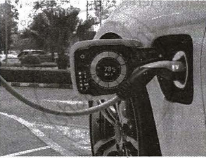
Based on the above information, answer the following questions:
- Can the above function be used to estimate number of vehicles in the year 2000? Justify. (2)
- Prove that the function V(t) is an increasing function. (2)
Let \[f\] be continuous on \[[a,b]\] and differentiable on \[(a,b)\]. If \[f'(x)\geq0\] for every \[x\in(a,b)\], what follows?
For \[f(x)=4x^3-6x^2-72x+30\], which factorization of \[f'(x)\] is correct?
