Advertisements
Advertisements
Question
Do you know any other language? Do you know a joke in English? Tell your friends.
Advertisements
Solution
Do it yourself.
APPEARS IN
RELATED QUESTIONS
Prepare a speech in about 80-100 words for the morning assembly, stressing on the importance of games and sports in ensuring a healthy body and mind.
Identify the character or speaker of the following line.
‘What has that got to do that with it?’
I have never visited ______.
GL Home Appliances have introduced a product to purify salt water. The CEO of the company has agreed to meet the press to launch their new product.
A road map is given below. Answer the questions that follow with the help of the road map. Work in pairs and discuss to give directions to get to one place from another.

- You are at the market. You need directions to go to the pharmacy.
- You are in a book shop. Ask your partner to direct you to the Art Gallery.
- Give your partner the directions to go from the Bank to the hotel.
- Direct your partner from the post office to the market.
- Your partner wants to go to the library from school. Give suitable directions.
Give a review of a book that has interested you a lot.
Imagine that you are going to interview one of the survivors of the Pan Am Hijack. Discuss with your partner and write down the conversation. Then one of you play the role of the interviewer and other the survivor. You can use the sample questions given below.
- Do you have any information regarding the suspects of the hijack?
- Which countries did the hijackers belong?
- What are the details of the hijacked flight?
- How many passengers were aboard?
- What happened in the last few minutes of the hijack drama?
- Do you have information regarding the victims?
- Was there any recorded communication to/from the plane during the hijacking?
- How many terrorists were there?
- How did you feel when you were in the flight?
- Can you recall Neerja’s role in safeguarding the passengers?
Join in one of the two groups. Choose one character, speak two sentences for and against it.
| I support Kaliyan because ______ |
| I oppose the rich man because ______ |
What’s your lunch today?

Write the full form for the following.
she’ll - ______
Answer these questions about yourself.
- What is your name?
- What languages do you speak?
- How old are you?
- Which is your favourite food?
- Where did you go yesterday?
- Which country do you belong to?
- When do you go to sleep?
- Why do you drink milk?
In groups of five discuss what you would do if you were caught in the following situations.
- Your friend falls in the playfield and is hurt…

- You are trapped in a fire...
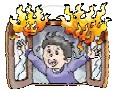
- You are stuck in a traffic jam…
Pick out the names of the games mentioned in the story.

What are the things your mother asks you to do?
| Things you like to do | Things you do not like to do |
How do you think you can help children who cannot see?
Use words beginning with 'h' sound like -
hat, house, hen, hide, horse, heart, hand etc.
Make a pair of words, one a ‘describing word’ and one a ‘naming word’.
Happy Hiawatha, hungry hippopotamus, high horse, heavy hand.
Why should we not cut trees?
Build a conversation of eight to ten sets of exchanges , with your grandmother, discussing the incidents that happened in your school that day.
On the occasion of World Environment Day, you have been asked to deliver a speech during morning assembly on the importance of tree planting. Write the speech in about 100 – 150 words.
- Introduction
- Suggested value points Pollution control – Medicine – Necessary for wildlife – Cause rainfall
- Conclusion
Shakespeare describes the characteristics of the various stages of man. You are in the second stage of life. What do you think of your roles and responsibilities at this stage? Discuss with your partner and share your ideas with the class
