Advertisements
Advertisements
Question
Define the following term:
Camouflage
Advertisements
Solution
Camouflage, also called cryptic colouration, is a defense mechanism or tactic that organisms use to disguise their appearance, usually to blend in with their surroundings. Organisms use camouflage to mask their location, identity, and movement.
RELATED QUESTIONS
Apart from being a part of the food chain, predators play other important roles. Mention any two such roles supported by examples.
State Gause’s competitive exclusion principle.
Name important defence mechanisms in plants against herbivory.
How is mutualism different from commensalism?
Name the two intermediate hosts which the human liver fluke depends on to complete its life cycle so as to facilitate parasitization of its primary host.
Define the Stenothermal organisms.
Answer the following question.
Mention the term used to describe a population interaction between an orchid growing on a forest tree.
Association between sea anemone and Hermit crab in gastropod shell is that of.
With the help of a suitable diagram, describe the logistic population growth curve.
What is ESS?
What is Mortality? What are its two types?
Define Niche.
The interaction in nature, where one gets to benefit on the expense of other is _________.
Predation and parasitism are which type of interactions?
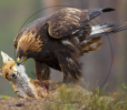
Identify the interspecific interaction depicted in the following figure.
Which of the following is NOT an example of mutualism?
Lichens showing relationship between alga and fungus is an example of ____________ type of interaction.
Which one of the following is an example of predation?
A protozoan living in the digestive tract of a flea that lives on a dog is an example of ______
Musk deer is an example of ______
A population has more young individuals compared to the older individuals. What would be the status of the population after some years?
Observe the set of 4 figures A, B, C and D and, answer the following questions
- Which one of the figures shows mutualism?
- What kind of association is shown in D?
- Name the organisms and the association in C.
- What role is the insect performing in B?
 Fig. (A) |
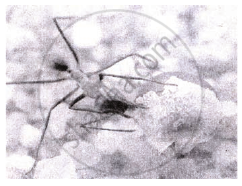 Fig. (B) |
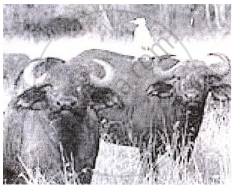 Fig. (C) |
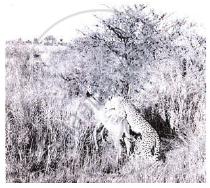 Fig. (D) |
While living in and on the host species, the animal parasite has evolved certain adaptations. Describe these adaptations with examples.
Give one example for the following:
An organism which can conform
Write the observations made at the end of Connell's field, experiment on barnacles on the rocky sea coasts of Scotland.
Name any two categories of organisms that in general are adversely affected by competition.
Complete the following chart regarding population interaction and re-write:
| Sr. No. | Name of interaction | Interaction between |
| 1. | ? | Plasmodium and Man |
| 2. | ? | Leopard and Lion |
| 3. | ? | Clownfish and Sea-anemone |
In which interaction of species, both the species are at a loss?
Some orchids live on the branches of mango trees. Name the type of interaction that exists between the mango tree and the orchid.
Give one example of camouflage.
Which one of the following statement INCORRECT regarding competition?
Which of the following best describes intraspecific interaction?
When two plant species in the same field compete for sunlight, water, and minerals, which type of population interaction is occurring?
What is the sign convention for the predation interaction?
What does amensalism involve?
What is the sign convention for amensalism?
