Advertisements
Advertisements
प्रश्न
Define the following term:
Camouflage
Advertisements
उत्तर
Camouflage, also called cryptic colouration, is a defense mechanism or tactic that organisms use to disguise their appearance, usually to blend in with their surroundings. Organisms use camouflage to mask their location, identity, and movement.
संबंधित प्रश्न
An orchid plant is growing on the branch of a mango tree. How do you describe this interaction between the orchid and the mango tree?
Define the following term:
Commensalism
Answer the following question.
Mention the term used to describe a population interaction between an orchid growing on a forest tree.
Name the type of association:
Clownfish and sea anemone
How absolute Natality differs from Realized Natality
Explain different population interactions with examples.
What is population interaction? Explain the interactions in Mutualism and Competition.
The interaction in nature, where one gets to benefit on the expense of other is _________.
Differentiate between predator and prey.
Two species competing for the same resources, avoid competition by choosing different times for feeding, also known as ______
Mutualism can be represented as the interaction between ____________.
Statement I: If one or two species are lost, it may not affect proper functioning of ecosystem.
Statement II: Loss of key species causes serious threat to functioning of ecosystem. Choose the correct alternative with reference to the above statements
The correct description for the interspecific interaction shown in the given figure is ______

Match the Columns.
| Column A | Column B | ||
| i. | Lice on humans | a. | Endoparasites |
| ii. | Ectoparasites on marine fishes | b. | Grows on hedge plants |
| iii. | Cuscuta | c. | Ectoparasites |
| iv. | Plasmodium and humans | d. | Copepods |
Mycorrhizae are the example of ______.
An interaction favourable to both population but no obligatory to either is ______.
Amensalism can be represented as ______
A population has more young individuals compared to the older individuals. What would be the status of the population after some years?
What is commensalism?
What is homeostasis?
What is brood parasitism? Explain with the help of an example.
Lianas are vascular plants rooted in the ground and maintain erectness of their stem by making use of other trees for support. They do not maintain direct relation with those trees. Discuss the type of association the lianas have with the trees.
Give one example for the following type.
Biological control agent
Fill in the blanks
| Species A | Species B | Type of Interaction | Example |
| + | - | ______ | ______ |
| + | + | ______ | ______ |
| + | 0 | Commensalism | ______ |
Observe the set of 4 figures A, B, C and D and, answer the following questions
- Which one of the figures shows mutualism?
- What kind of association is shown in D?
- Name the organisms and the association in C.
- What role is the insect performing in B?
 Fig. (A) |
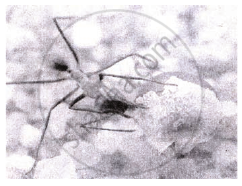 Fig. (B) |
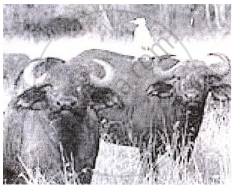 Fig. (C) |
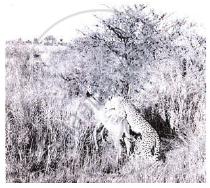 Fig. (D) |
Discuss the various types of positive interactions between species.
In an aquarium two herbivorous species of fish are living together and feeding on phytoplanktons. As per the Gause’s Principle, one of the species is to be eliminated in due course of time, but both are surviving well in the aquarium. Give possible reasons.
Name any two categories of organisms that in general are adversely affected by competition.
The interaction between cattle egret and the buffalo is ______.
"Cattle and goats do not browse the Calotropis plant." Justify the statement giving reasons.
Observe the graph given below.
|
The graph represents inter-specific interaction between two species of Paramecia competing for the same resource in a culture medium. Paramecium caudatum and Paramecium aurelia were grown in separate cultures as well as in mixed cultures. It was found that each species grew in numbers according to the logistic equation.
|

a) Which species is competitively superior? Support it with the data provided in the graph.
b) State the underlying principle for the above result and name the scientist associated with this principle.
c) Explain the mechanism in which two or more species competing with each other can co-exist.
OR
Graphs A and B shown below depict interaction of two species. Which graph indicates Mutualism? Give reason.
 |
 |
| A | B |
Some orchids live on the branches of mango trees. Name the type of interaction that exists between the mango tree and the orchid.
Association between clown fish and sea anemone is ______.
Parasitism is an interaction between two organisms in which ______.
Statement I - Calotropis growing in abandoned fields is never consumed by cattle and goats.
Statement II - Calotropis produces highly poisonous cardiac glycosides.
In light of above statements, select the most appropriate answer from the option given below.
In the sign convention for population interactions, what does the symbol '+' represent?
In predation, what is the relationship between the predator and prey?
What is the sign convention for commensalism?
