Advertisements
Advertisements
प्रश्न
Why do clown fish and sea anemone pair up? What is this relationship called?
Advertisements
उत्तर
Clown fish maintains a commensalistic relation with the sea anemone. In this interaction, one species benefits and the other is neither harmed nor benefited. Sea anemone has stinging tentacles that provide protection to clown fish from predators. The anemone does not appear to derive any benefit from the clown fish.
APPEARS IN
संबंधित प्रश्न
Answer the following question.
Mention the term used to describe a population interaction between an orchid growing on a forest tree.
What is commensalism? Explain it with a suitable example.
The relationship between sucker fish and shark is _________.
Two species competing for the same resources, avoid competition by choosing different times for feeding, also known as ______
Lichens showing relationship between alga and fungus is an example of ____________ type of interaction.
With the decline in the population of fig species it was noticed that the population of wasp species also started to decline. What is the relationship between the two and what could be the possible reason for decline of wasps?
Amensalism can be represented as ______
Which of the following is a partial root parasite?
Observe the set of 4 figures A, B, C and D and, answer the following questions
- Which one of the figures shows mutualism?
- What kind of association is shown in D?
- Name the organisms and the association in C.
- What role is the insect performing in B?
 Fig. (A) |
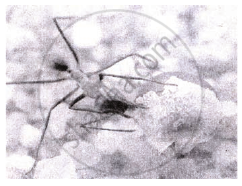 Fig. (B) |
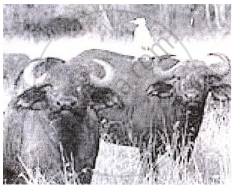 Fig. (C) |
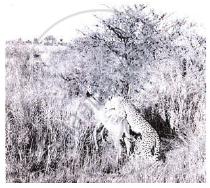 Fig. (D) |
Complete the following chart regarding population interaction and re-write:
| Sr. No. | Name of interaction | Interaction between |
| 1. | ? | Plasmodium and Man |
| 2. | ? | Leopard and Lion |
| 3. | ? | Clownfish and Sea-anemone |
