Advertisements
Advertisements
प्रश्न
Which of the following is a partial root parasite?
पर्याय
Sandal wood
Mistletoe
Orobanche
Ganoderma
Advertisements
उत्तर
Sandal wood
APPEARS IN
संबंधित प्रश्न
Which day is observed as ‘World Environment Day’?
During .............. typs of interaction, both organisms are benefited
- mutualism
- competition
- commensalism
- parasitism
Explain mutualism with the help of any two examples.
Name the two intermediate hosts which the human liver fluke depends on to complete its life cycle so as to facilitate parasitization of its primary host.
Differentiate between predator and prey.
Which of the following is TRUE for amensalism?
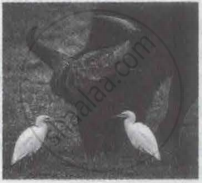
In the given picture, identify the type of interspecific interaction.
Parasitism can be conectly represented as ____________.
Which one of the following is NOT an example of mutualism?
Musk deer is an example of ______
Substantiate by giving two reasons as to why a holistic understanding of the flora and fauna the cropland is required before introducing an appropriate biocontrol method.
Which one of the following is one of the characteristics of a biological community?
Amensalism is an association between two species where ______.
Discuss the various types of positive interactions between species.
Sea Anemone gets attached to the surface of the hermit crab. The kind of population interaction exhibited in this case is ______.
Match the Column I with Column II.
| Column I | Column II |
| A. Lichen | (i) Commensalism |
| B. Shark and Pilot fish | (ii) Mutualism |
| C. Barnacles on the back of a whale | (iii) Symbiotic obligatory relationship |
| D. Sharks and dolphins | (iv) Competition |
"Cattle and goats do not browse the Calotropis plant." Justify the statement giving reasons.
In predation, what is the relationship between the predator and prey?
In parasitism, which organism derives nourishment from the other?
What does amensalism involve?
