Advertisements
Advertisements
प्रश्न
Define the following term:
Camouflage
Advertisements
उत्तर
Camouflage, also called cryptic colouration, is a defense mechanism or tactic that organisms use to disguise their appearance, usually to blend in with their surroundings. Organisms use camouflage to mask their location, identity, and movement.
संबंधित प्रश्न
Write what do phytophagous insects feed on.
Define the following term:
Commensalism
Answer the following question.
Mention the term used to describe a population interaction between an orchid growing on a forest tree.
With the help of a suitable diagram, describe the logistic population growth curve.
Community is defined as ______.
In Logistic growth curve lag phase shows______.
Define Absolute Mortality.
What is population ecology?
Define mutualism.
Competition between species leads to ________.
Define the following term:
Parasitism
Which principle/theory states that 'Two closely related species competing for the same resources cannot co-exist indefinitely and the competitively inferior will be eliminated eventually.'?
Identify the interspecific interaction depicted in the following figure.
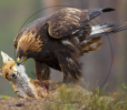
Identify the interspecific interaction which one species is benefited and other is neither banned nor benefited.
Type of interspecific interaction wherein one organism is benefited and other is harmed is called ____________.
In the given picture, identify the type of interspecific interaction.
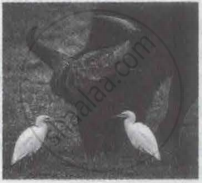
Which one of the following pair does NOT show commensalism?
Rafflesia an arnoldii is an example of ______.
An interaction favourable to both population but no obligatory to either is ______.
Which type of interaction is represented by the given figure?
Define ectoparasite and endoparasite and give suitable examples.
Give one example for the following type.
Chemical defense agent
Pick out the appropriate association representing brood parasitism.
Between which among the following, the relationship is not an example of
?
Carnivorous animals-lions and leopards, occupy the same niche but lions predate mostly larger animals and leopards take smaller ones. This mechanism of competition is referred to as ______.
Interaction between clown fish living among the stinging tentacles of sea anemone is an example of ______.
Many copepods live on the body surface of marine fish. This relationship is an example of ______.
Write a note on parasitism.
Mention the scientific name of protozoan parasite that causes Amoebiasis.
Statement I: Gause’s competitive exclusion principle states that two closely related species competing for different resources cannot exist indefinitely.
Statement II: According to Gause’s principle, during competition, the inferior will be eliminated. This may be true if resources are limiting.
In the light of the above statements, choose the correct answer from the options given below:
Statement I: Gause’s ‘Competitive Exclusion Principle states that two closely related species competing for the same resources cannot co-exist indefinitely and competitively inferior one will be eliminated eventually.
Statement II: In general, carnivores are more adversely affected by competition than herbivores.
In the light of the above statements, choose the correct answer from the options given below:
When two plant species in the same field compete for sunlight, water, and minerals, which type of population interaction is occurring?
