Advertisements
Advertisements
प्रश्न
What is the ecological principle behind the biological control method of managing with pest insects?
Advertisements
उत्तर
The principles of predation and parasitism are used in biological pest management. These are based on the ability of the predator to regulate the prey population.
APPEARS IN
संबंधित प्रश्न
Which day is observed as ‘World Environment Day’?
An orchid plant is growing on the branch of a mango tree. How do you describe this interaction between the orchid and the mango tree?
Define the following term:
Interspecific competition
Mention any two examples where the organisms involved are commercially exploited in agriculture.
How is mutualism different from commensalism?
Name the two intermediate hosts which the human liver fluke depends on to complete its life cycle so as to facilitate parasitization of its primary host.
Answer the following question.
Mention the term used to describe a population interaction between an orchid growing on a forest tree.
Give one example of interspecific competition.
Name the type of association:
Clownfish and sea anemone
Distinguish between the following: Parasitism and Mutualism.
Explain any three important characteristics of population.
In the given picture, identify the type of interspecific interaction.
Lichens showing relationship between alga and fungus is an example of ____________ type of interaction.
Rafflesia an arnoldii is an example of ______.
Which of the following is not an example of commensalism?
Amensalism is an association between two species where ______.
Define stenohaline species.
What is homeostasis?
What is brood parasitism? Explain with the help of an example.
Give one example for the following type.
Camouflaged animal
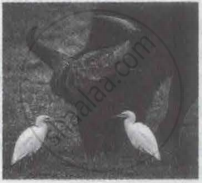
Observe the set of 4 figures A, B, C and D and, answer the following questions
- Which one of the figures shows mutualism?
- What kind of association is shown in D?
- Name the organisms and the association in C.
- What role is the insect performing in B?
 Fig. (A) |
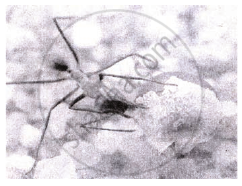 Fig. (B) |
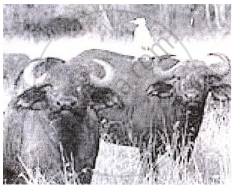 Fig. (C) |
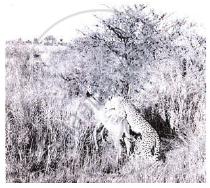 Fig. (D) |
Write the observations made at the end of Connell's field, experiment on barnacles on the rocky sea coasts of Scotland.
Name any two categories of organisms that in general are adversely affected by competition.
Between which among the following, the relationship is not an example of
?
In which interaction of species, both the species are at a loss?
Which of the following best describes intraspecific interaction?
Lichen is an example of which type of population interaction?
Rabbits and deer sharing the same forest is an example of which population interaction?
