Advertisements
Advertisements
प्रश्न
What is the ecological principle behind the biological control method of managing with pest insects?
Advertisements
उत्तर
The principles of predation and parasitism are used in biological pest management. These are based on the ability of the predator to regulate the prey population.
APPEARS IN
संबंधित प्रश्न
Apart from being a part of the food chain, predators play other important roles. Mention any two such roles supported by examples.
Define the following term:
Interspecific competition
Answer the following question.
Mention the term used to describe a population interaction between an orchid growing on a forest tree.
Give one example of mutualism.
With the help of a suitable diagram, describe the logistic population growth curve.
The cattle egret and grazing cattle in close association is a classic example of ______.
Explain different population interactions with examples.
Match the following and choose the correct combination from the options given below.
| Column I | Column II |
| Mutualism | Lion and deer |
| Commensalism | Round worm and man |
| Parasitism | Birds compete with squirrels for nuts |
| Competition | Sea anemone on hermit crab |
| Predation | Barnacles attached to Whales |
Differentiate between predator and prey.
Identify the interspecific interaction in which species A is harmed and species B is unaffected.
Brood parasitism is best explained by the example of ____________.
In the given picture, identify the type of interspecific interaction.
Which population interaction can be represented by'+''-'?
Which one of the following is NOT an example of commensalism?
A protozoan living in the digestive tract of a flea that lives on a dog is an example of ______
Musk deer is an example of ______
With the decline in the population of fig species it was noticed that the population of wasp species also started to decline. What is the relationship between the two and what could be the possible reason for decline of wasps?
Rafflesia an arnoldii is an example of ______.
The presence or interference of one species leads to reduction in feeding efficiency of other species is termed as
A population has more young individuals compared to the older individuals. What would be the status of the population after some years?
In a pond, we see plants which are free-floating; rooted–submerged; rooted emergent; rooted with floating leaves; Write the type of plant against the following examples.
| Plant Name | Type | |
| a. | Hydrilla | ______ |
| b. | Typha | ______ |
| c. | Nymphaea | ______ |
| d. | Lemna | ______ |
| e. | Vallisneria | ______ |
Give one example for the following type.
Predator animal
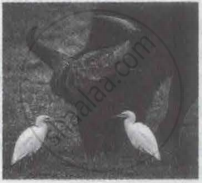
Observe the set of 4 figures A, B, C and D and, answer the following questions
- Which one of the figures shows mutualism?
- What kind of association is shown in D?
- Name the organisms and the association in C.
- What role is the insect performing in B?
 Fig. (A) |
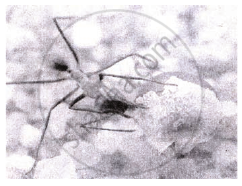 Fig. (B) |
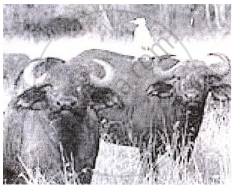 Fig. (C) |
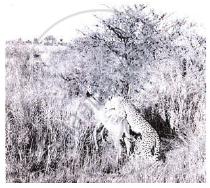 Fig. (D) |
Give one example for the following:
An organism which can conform
Sea Anemone gets attached to the surface of the hermit crab. The kind of population interaction exhibited in this case is ______.
"Cattle and goats do not browse the Calotropis plant." Justify the statement giving reasons.
Given below are two statements.
Statement I - The amount of energy available in an ecosystem increases at each successive trophic level.
Statement II - Transfer of energy from one trophic level to the other follows 10% law.
In light of the above statements, select the correct option given below.
Which interaction type is characterized by both species being benefited?
Cuscuta growing on a host plant is an example of which population interaction?
What is the sign convention for commensalism?
