Advertisements
Advertisements
प्रश्न
With the help of a suitable diagram, describe the logistic population growth curve.
Advertisements
उत्तर १

Logistic growth curve of population
- Resources like food and space are not always unlimited. There may be plenty initially, but as the population density increases, competition for those resources starts, resulting in a slowdown in the rate at which the original population grows. This results in a logistic or sigmoid growth curve.
- Competition for limited resources will weed out the ‘weaker’ ones. Only the ‘fittest’ individuals will survive and reproduce.
- A given habitat has enough resources to support a maximum possible number, beyond which no further growth is possible. This limit can be called nature’s carrying capacity for that species in that habitat.
- A population growing in a habitat with limited resources initially shows a lag phase, followed by acceleration and deceleration phases, and finally an asymptote when the population density reaches the carrying capacity.
- A plot of population density in relation to time results in a sigmoid curve. This type of population growth is called Verhulst-Pearl Logistic Growth.
- Since resources for the growth of most animal populations are finite and become limiting sooner or later, the logistic growth model is considered a more realistic model.
उत्तर २
In nature, no species population has unlimited resources available to allow for exponential growth. This phenomenon leads to competition between individuals for limited resources. Eventually, the ‘fittest’ individual will survive and reproduce. In nature, a given habitat has enough resources to support the maximum possible number, beyond which no further growth is likely. Let us call this limit nature’s carrying capacity (K) for the species in that habitat.

A population growing in a habitat with limited resources initially shows a lag phase. The population then experiences acceleration and deceleration, culminating in an asymptote phase. Population density, feeding capacity, and type of population growth are called Verhulst-Pearl Logistic Growth. The following equation represents it:
`(dN)/(dt) = rN ((K - N)/K) = rN (1 - N/K)`
where `(dN)/(dt)` = rate of change in population size
N = population density at time t,
r = rate of natural increase,
K = feeding capacity
Since resources for population growth are finite and become limiting, the logistic growth model is considered more realistic.
संबंधित प्रश्न
Explain mutualism with the help of any two examples.
An orchid plant is growing on the branch of a mango tree. How do you describe this interaction between the orchid and the mango tree?
What is the ecological principle behind the biological control method of managing with pest insects?
Define the following term:
Interspecific competition
Name and explain the interaction that is seen between clownfish and sea anemones.
Give one example of interspecific competition.
Name the type of association: Hummingbirds and host flowering plants
Give one example of mutualism.
Define Niche.
Match the following and choose the correct combination from the options given below.
| Column I | Column II |
| Mutualism | Lion and deer |
| Commensalism | Round worm and man |
| Parasitism | Birds compete with squirrels for nuts |
| Competition | Sea anemone on hermit crab |
| Predation | Barnacles attached to Whales |
Using '-' to depict inhibition and '+' to depict benefit, mutualism between two species can be represented as ____________.
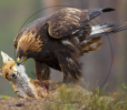
Identify the interspecific interaction depicted in the following figure.
Brood parasitism is best explained by the example of ____________.
Match the Columns.
| Column A | Column B | ||
| i. | Lice on humans | a. | Endoparasites |
| ii. | Ectoparasites on marine fishes | b. | Grows on hedge plants |
| iii. | Cuscuta | c. | Ectoparasites |
| iv. | Plasmodium and humans | d. | Copepods |
Which of the following is NOT an example of mutualism?
Which one of the following is an example of predation?
Which one of the following pair does NOT show commensalism?
Which one of the following is NOT an example of mutualism?
Exarch xylem is found in:
There are two optional ways of exploitation one way is parasitism. Which is the other one ______.
Lichens are association of ______.
What is commensalism?
Define ectoparasite and endoparasite and give suitable examples.
What is brood parasitism? Explain with the help of an example.
In an association of two animal species, one is a termite which feeds on wood and the other is a protozoan Trichonympha present in the gut of the termite. What type of association they establish?
Observe the set of 4 figures A, B, C and D and, answer the following questions
- Which one of the figures shows mutualism?
- What kind of association is shown in D?
- Name the organisms and the association in C.
- What role is the insect performing in B?
 Fig. (A) |
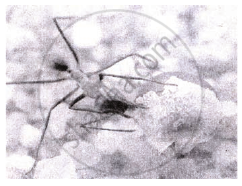 Fig. (B) |
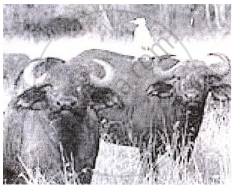 Fig. (C) |
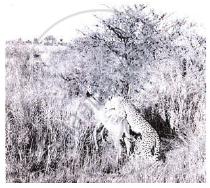 Fig. (D) |
In an aquarium two herbivorous species of fish are living together and feeding on phytoplanktons. As per the Gause’s Principle, one of the species is to be eliminated in due course of time, but both are surviving well in the aquarium. Give possible reasons.
The interaction between cattle egret and the buffalo is ______.
Carnivorous animals-lions and leopards, occupy the same niche but lions predate mostly larger animals and leopards take smaller ones. This mechanism of competition is referred to as ______.
A bird laying its egg in the nest of another bird is the type of ______.
A Tight one-to-one relationship between many species of fig tree and certain wasps is an example of ______.
"Cattle and goats do not browse the Calotropis plant." Justify the statement giving reasons.
Many copepods live on the body surface of marine fish. This relationship is an example of ______.
Describe mutualism.
What happens to an inferior competitor if a superior competitor is present in the same environment?
In the sign convention for population interactions, what does the symbol '+' represent?
What is the sign convention for amensalism?
