Advertisements
Advertisements
प्रश्न
Explain different population interactions with examples.
Advertisements
उत्तर
The various types of interactions are classified as per the nature of these interactions to one or both the species for e.g. mutualism, competition, parasitism, predation, commensalism, amensalism, etc.
i. Mutualism: The type of interaction in which both the species are benefitted is called as mutualism.
- This interaction is obligatory and interdependent.
- In this type of interaction, both species - alga and lichen are benefited.
ii. Competition: Competition is the type of interaction where both the species are harmed.
- Totally unrelated species may compete for the same resource e.g. in shallow creeks on the west coast of Mumbai, visiting flamingos and resident fish compete for their common food, the zooplankton.
- However, resources need not always be limiting for competition to occur. In competition, the feeding efficiency of one species is reduced due to the interference or inhibitory presence of the other species, even if resources (food and space) are abundant, e.g. Leopards do not hunt in close proximity of lion pride.
iii. Parasitism: It is a relationship where one species (the parasite) benefits at the expense of the other (the host).
- In parasitism, only one species (parasite) is benefited and the interaction is detrimental to other species (host).
- Parasitism has evolved in so many taxonomic groups from plants to higher vertebrates.
iv Commensalism:
- It is a relationship where one species benefits and the other is neither harmed nor helped.
- Example: Barnacles on whales. The barnacles benefit by gaining mobility and access to nutrient-rich waters, while the whale is unaffected.
v. Predation:
- It involves one species (the predator) feeding on another species (the prey).
- Example: Lions hunting zebras; the lion benefits by obtaining food, while the zebra is killed. Predation helps regulate prey populations in ecosystems.
vi. Amensalism:
- It is a relationship where one species is inhibited or harmed, while the other species remains unaffected.
- Example: Penicillium mold releasing penicillin, which kills surrounding bacteria. The bacteria are harmed, but the Penicillium mold is unaffected.
vii. Neutralism:
- It occurs when two species coexist without directly affecting each other.
- Example: Butterflies and deer in the same forest; both species may interact with the environment independently, without directly affecting one another.
APPEARS IN
संबंधित प्रश्न
What is mutualism?
State Gause’s competitive exclusion principle.
With the help of a suitable diagram, describe the logistic population growth curve.
Statement I: If one or two species are lost, it may not affect proper functioning of ecosystem.
Statement II: Loss of key species causes serious threat to functioning of ecosystem. Choose the correct alternative with reference to the above statements
Which one of the following is an example of predation?
Observe the set of 4 figures A, B, C and D and, answer the following questions
- Which one of the figures shows mutualism?
- What kind of association is shown in D?
- Name the organisms and the association in C.
- What role is the insect performing in B?
 Fig. (A) |
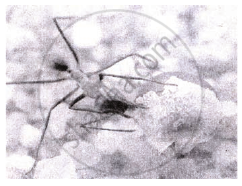 Fig. (B) |
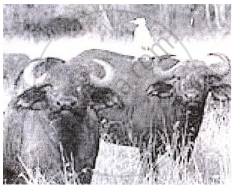 Fig. (C) |
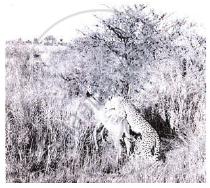 Fig. (D) |
Write the observations made at the end of Connell's field, experiment on barnacles on the rocky sea coasts of Scotland.
Carnivorous animals-lions and leopards, occupy the same niche but lions predate mostly larger animals and leopards take smaller ones. This mechanism of competition is referred to as ______.
Some orchids live on the branches of mango trees. Name the type of interaction that exists between the mango tree and the orchid.
What is the sign convention for neutralism?
