Advertisements
Advertisements
प्रश्न
Amensalism is an association between two species where ______.
विकल्प
one species is harmed and other is benefitted
one species is harmed and other is unaffected
one species is benefitted and other is unaffected
both the species are harmed
Advertisements
उत्तर
Amensalism is an association between two species where one species is harmed and other is unaffected.
Explanation:
Amensalism is an interspecific association where one species suffers harm while the other species remains unaffected. This means that one species is negatively impacted, for example, by the release of toxic substances, while the other species does not benefit nor get harmed in any way. This is different from other types of species interactions, where both may benefit (mutualism) or one benefits while the other is harmed (parasitism) or unaffected (commensalism).
APPEARS IN
संबंधित प्रश्न
Apart from being a part of the food chain, predators play other important roles. Mention any two such roles supported by examples.
State Gause’s competitive exclusion principle.
Name important defence mechanisms in plants against herbivory.
Name the two intermediate hosts which the human liver fluke depends on to complete its life cycle so as to facilitate parasitization of its primary host.
Name and explain the interaction that is seen between clownfish and sea anemones.
Name the type of association:
Clownfish and sea anemone
What is the ecological process behind the biological control method of managing pest insects?
Name important defense mechanisms in plants against herbivores.
The cattle egret and grazing cattle in close association is a classic example of ______.
The number of deaths under ideal conditions is known as ______.
Explain any three important characteristics of population.
Explain different population interactions with examples.
Match the following and choose the correct combination from the options given below.
| Column I | Column II |
| Mutualism | Lion and deer |
| Commensalism | Round worm and man |
| Parasitism | Birds compete with squirrels for nuts |
| Competition | Sea anemone on hermit crab |
| Predation | Barnacles attached to Whales |
Which principle/theory states that 'Two closely related species competing for the same resources cannot co-exist indefinitely and the competitively inferior will be eliminated eventually.'?
Type of interspecific interaction wherein one organism is benefited and other is harmed is called ____________.
Parasitism can be conectly represented as ____________.
Cattle egrets always foraging close to the grazing cattle is an example of ____________.
Mycorrhizae are the example of ______.
______ in birds is an interesting example of parasitism in which the parasitic bird lays its eggs in the nest of its host and the host incubates them.
What is mycorrhiza?
In a pond, we see plants which are free-floating; rooted–submerged; rooted emergent; rooted with floating leaves; Write the type of plant against the following examples.
| Plant Name | Type | |
| a. | Hydrilla | ______ |
| b. | Typha | ______ |
| c. | Nymphaea | ______ |
| d. | Lemna | ______ |
| e. | Vallisneria | ______ |
Observe the set of 4 figures A, B, C and D and, answer the following questions
- Which one of the figures shows mutualism?
- What kind of association is shown in D?
- Name the organisms and the association in C.
- What role is the insect performing in B?
 Fig. (A) |
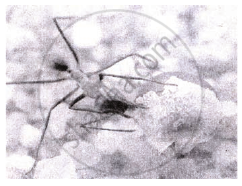 Fig. (B) |
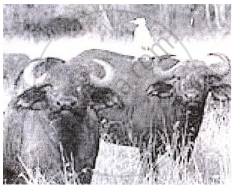 Fig. (C) |
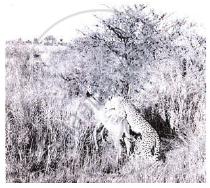 Fig. (D) |
Complete the following chart regarding population interaction and re-write:
| Sr. No. | Name of interaction | Interaction between |
| 1. | ? | Plasmodium and Man |
| 2. | ? | Leopard and Lion |
| 3. | ? | Clownfish and Sea-anemone |
Interaction between clown fish living among the stinging tentacles of sea anemone is an example of ______.
"Some species of insects and frogs have evolved with various specific features that help them from being detected."
- Justify the statement giving reasons.
- Mention any two such features.
Which one of the following statement INCORRECT regarding competition?
Association between clown fish and sea anemone is ______.
Which interaction type is characterized by both species being benefited?
