Advertisements
Advertisements
प्रश्न
In a pond, we see plants which are free-floating; rooted–submerged; rooted emergent; rooted with floating leaves; Write the type of plant against the following examples.
| Plant Name | Type | |
| a. | Hydrilla | ______ |
| b. | Typha | ______ |
| c. | Nymphaea | ______ |
| d. | Lemna | ______ |
| e. | Vallisneria | ______ |
Advertisements
उत्तर
| Plant Name | Type | |
| a. | Hydrilla | Submerged |
| b. | Typha | Rooted emergent |
| c. | Nymphaea | Rooted with floating leaves |
| d. | Lemna | free – floating |
| e. | Vallisneria | Rooted Submerged |
APPEARS IN
संबंधित प्रश्न
Competition and Mutualism.
In Logistic growth curve lag phase shows______.
Define Absolute Mortality.
Define the term population interactions. State its two types.
Differentiate between predator and prey.
Parasitism can be conectly represented as ____________.
Which population interaction can be represented by'+''-'?
Which one of the following is NOT an example of commensalism?
Which one of the following is NOT an example of mutualism?
______ in birds is an interesting example of parasitism in which the parasitic bird lays its eggs in the nest of its host and the host incubates them.
In an association of two animal species, one is a termite which feeds on wood and the other is a protozoan Trichonympha present in the gut of the termite. What type of association they establish?
Observe the set of 4 figures A, B, C and D and, answer the following questions
- Which one of the figures shows mutualism?
- What kind of association is shown in D?
- Name the organisms and the association in C.
- What role is the insect performing in B?
 Fig. (A) |
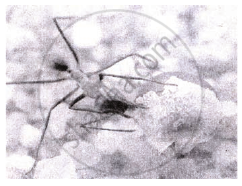 Fig. (B) |
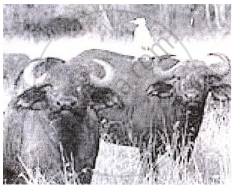 Fig. (C) |
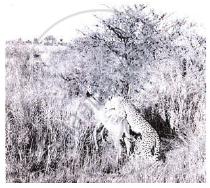 Fig. (D) |
Discuss the various types of positive interactions between species.
Pick out the appropriate association representing brood parasitism.
Match the Column I with Column II.
| Column I | Column II |
| A. Lichen | (i) Commensalism |
| B. Shark and Pilot fish | (ii) Mutualism |
| C. Barnacles on the back of a whale | (iii) Symbiotic obligatory relationship |
| D. Sharks and dolphins | (iv) Competition |
Describe mutualism.
Some orchids live on the branches of mango trees. Name the type of interaction that exists between the mango tree and the orchid.
When two plant species in the same field compete for sunlight, water, and minerals, which type of population interaction is occurring?
Rabbits and deer sharing the same forest is an example of which population interaction?
