Advertisements
Advertisements
Question
State Gause’s competitive exclusion principle.
Advertisements
Solution
Gause’s competitive exclusion principle states that two closely related species competing for the same resources cannot co-exist indefinitely, and the competitively inferior species will be eliminated eventually.
APPEARS IN
RELATED QUESTIONS
Explain mutualism with the help of any two examples.
Define the following term:
Commensalism
Association between sea anemone and Hermit crab in gastropod shell is that of.
Define community.
Define the term population interactions. State its two types.
Identify the interspecific interaction in which species A is harmed and species B is unaffected.
Type of interspecific interaction wherein one organism is benefited and other is harmed is called ____________.
Parasitism can be conectly represented as ____________.
Which one of the following is NOT an example of commensalism?
Amensalism is an association between two species where ______.
What is mycorrhiza?
Give one example for the following type.
Phytophagous animal
Observe the set of 4 figures A, B, C and D and, answer the following questions
- Which one of the figures shows mutualism?
- What kind of association is shown in D?
- Name the organisms and the association in C.
- What role is the insect performing in B?
 Fig. (A) |
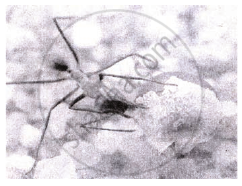 Fig. (B) |
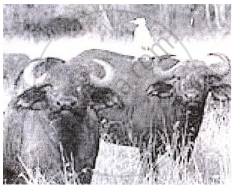 Fig. (C) |
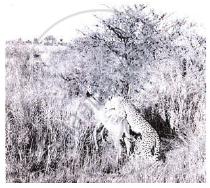 Fig. (D) |
Complete the following chart regarding population interaction and re-write:
| Sr. No. | Name of interaction | Interaction between |
| 1. | ? | Plasmodium and Man |
| 2. | ? | Leopard and Lion |
| 3. | ? | Clownfish and Sea-anemone |
A bird laying its egg in the nest of another bird is the type of ______.
"Cattle and goats do not browse the Calotropis plant." Justify the statement giving reasons.
Some orchids live on the branches of mango trees. Name the type of interaction that exists between the mango tree and the orchid.
Which one of the following statement INCORRECT regarding competition?
Lichen is an example of which type of population interaction?
