Advertisements
Advertisements
Question
Observe the set of 4 figures A, B, C and D and, answer the following questions
- Which one of the figures shows mutualism?
- What kind of association is shown in D?
- Name the organisms and the association in C.
- What role is the insect performing in B?
 Fig. (A) |
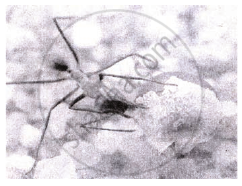 Fig. (B) |
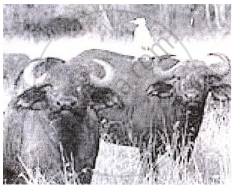 Fig. (C) |
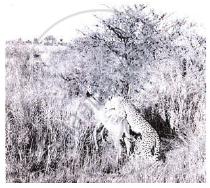 Fig. (D) |
Advertisements
Solution
- Figure ‘A’ shows’ mutualism (plant-animal relationship).
- Figure ‘D’ shows predation (leopard killing deer and eating it)
- Figure ‘C’ shows commensalism (cattle egret and grazing cattle)
- Figure ‘B’ insect is phytophagous that feed on sap of the flower.
APPEARS IN
RELATED QUESTIONS
Describe the mutual relationship between fig tree and wasp and comment on the phenomenon that operates in their relationship.
Name the type of association: Crow feeding the hatchling of Koel
In Logistic growth curve lag phase shows______.
Two species competing for the same resources, avoid competition by choosing different times for feeding, also known as ______
Identify the type of negative interaction.
Which of the following is not an example of commensalism?
Lichens are association of ______.
In a pond, we see plants which are free-floating; rooted–submerged; rooted emergent; rooted with floating leaves; Write the type of plant against the following examples.
| Plant Name | Type | |
| a. | Hydrilla | ______ |
| b. | Typha | ______ |
| c. | Nymphaea | ______ |
| d. | Lemna | ______ |
| e. | Vallisneria | ______ |
In an association of two animal species, one is a termite which feeds on wood and the other is a protozoan Trichonympha present in the gut of the termite. What type of association they establish?
Give one example for the following type.
Camouflaged animal
Give one example for the following type.
Predator animal
The interaction between cattle egret and the buffalo is ______.
Between which among the following, the relationship is not an example of
?
Complete the following chart regarding population interaction and re-write:
| Sr. No. | Name of interaction | Interaction between |
| 1. | ? | Plasmodium and Man |
| 2. | ? | Leopard and Lion |
| 3. | ? | Clownfish and Sea-anemone |
A Tight one-to-one relationship between many species of fig tree and certain wasps is an example of ______.
Write a note on parasitism.
Some orchids live on the branches of mango trees. Name the type of interaction that exists between the mango tree and the orchid.
When two plant species in the same field compete for sunlight, water, and minerals, which type of population interaction is occurring?
Tiger feeding on deer is an example of which population interaction?
