Advertisements
Advertisements
प्रश्न
Observe the set of 4 figures A, B, C and D and, answer the following questions
- Which one of the figures shows mutualism?
- What kind of association is shown in D?
- Name the organisms and the association in C.
- What role is the insect performing in B?
 Fig. (A) |
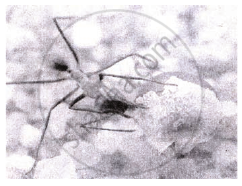 Fig. (B) |
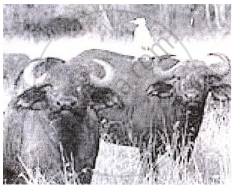 Fig. (C) |
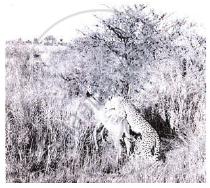 Fig. (D) |
Advertisements
उत्तर
- Figure ‘A’ shows’ mutualism (plant-animal relationship).
- Figure ‘D’ shows predation (leopard killing deer and eating it)
- Figure ‘C’ shows commensalism (cattle egret and grazing cattle)
- Figure ‘B’ insect is phytophagous that feed on sap of the flower.
APPEARS IN
संबंधित प्रश्न
How is mutualism different from commensalism?
Answer the following question.
Mention the term used to describe a population interaction between an orchid growing on a forest tree.
Name the type of association: Hummingbirds and host flowering plants
Which principle/theory states that 'Two closely related species competing for the same resources cannot co-exist indefinitely and the competitively inferior will be eliminated eventually.'?
The correct description for the interspecific interaction shown in the given figure is ______

Select the CORRECT match:
| I | II | ||
| i. | Competition | a. | Lichen |
| ii. | Commensalism | b. | Sea anemone and clownfish |
| iii. | Mutualism | c. | Lions and Leopards |
Which population interaction can be represented by'+''-'?
Identify the type of negative interaction.
Which one of the following is NOT an example of mutualism?
An interaction favourable to both population but no obligatory to either is ______.
Amensalism can be represented as ______
Lichens are association of ______.
What is homeostasis?
Give one example for the following type.
Biological control agent
Give one example for the following type.
Chemical defense agent
The interaction between cattle egret and the buffalo is ______.
Which one of the following statement INCORRECT regarding competition?
Lichen is an example of which type of population interaction?
When two plant species in the same field compete for sunlight, water, and minerals, which type of population interaction is occurring?
