Advertisements
Advertisements
Question
Fill in the blanks
| Species A | Species B | Type of Interaction | Example |
| + | - | ______ | ______ |
| + | + | ______ | ______ |
| + | 0 | Commensalism | ______ |
Advertisements
Solution
| Species A | Species B | Type of Interaction | Example |
| + | - | Predation | Rabbit and lion |
| + | + | Mutualism | Lichen |
| + | 0 | Commensalism | Egrets and cattle |
APPEARS IN
RELATED QUESTIONS
Write what do phytophagous insects feed on.
Describe the mutual relationship between fig tree and wasp and comment on the phenomenon that operates in their relationship.
Competition and Mutualism.
Define the following term:
Camouflage
Define population.
Community is defined as ______.
What is population ecology?
What is ESS?
The interaction in nature, where one gets to benefit on the expense of other is _________.
Define the following term:
Parasitism
Which principle/theory states that 'Two closely related species competing for the same resources cannot co-exist indefinitely and the competitively inferior will be eliminated eventually.'?
Match the Columns.
| Column A | Column B | ||
| i. | Lice on humans | a. | Endoparasites |
| ii. | Ectoparasites on marine fishes | b. | Grows on hedge plants |
| iii. | Cuscuta | c. | Ectoparasites |
| iv. | Plasmodium and humans | d. | Copepods |
Which one of the following is NOT an example of commensalism?
Rafflesia an arnoldii is an example of ______.
An interaction favourable to both population but no obligatory to either is ______.
Define ectoparasite and endoparasite and give suitable examples.
Observe the set of 4 figures A, B, C and D and, answer the following questions
- Which one of the figures shows mutualism?
- What kind of association is shown in D?
- Name the organisms and the association in C.
- What role is the insect performing in B?
 Fig. (A) |
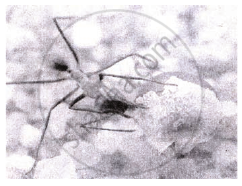 Fig. (B) |
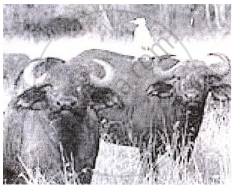 Fig. (C) |
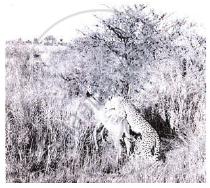 Fig. (D) |
Give one example of commensalism.
Explain one type of mutualism.
