Advertisements
Advertisements
Question
Distinguish between the following: Parasitism and Mutualism.
Distinguish Between
Advertisements
Solution
| Parasitism | Mutualism | |
| i. |
In parasitism, only one species (parasite) is benefited and the interaction is detrimental to other species (host). |
In mutualism, both species are benefited. |
| ii. | The parasite needs a host, but the host does not need the parasite. | Both species need the presence of each other. |
| E.g. | Cuscuta, a parasitic plant commonly found growing on hedge plants. | Lichen represents the mutualistic relationship between a fungus and photosynthetic algae or cyanobacteria. |
shaalaa.com
Is there an error in this question or solution?
APPEARS IN
RELATED QUESTIONS
Explain mutualism with the help of any two examples.
Mycorrhizae are the example of ______.
Which one of the following is one of the characteristics of a biological community?
Amensalism is an association between two species where ______.
What is commensalism?
What is brood parasitism? Explain with the help of an example.
Observe the set of 4 figures A, B, C and D and, answer the following questions
- Which one of the figures shows mutualism?
- What kind of association is shown in D?
- Name the organisms and the association in C.
- What role is the insect performing in B?
 Fig. (A) |
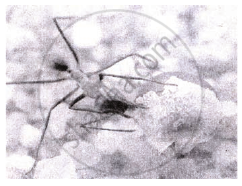 Fig. (B) |
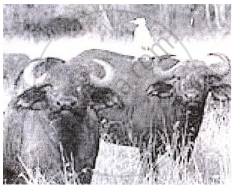 Fig. (C) |
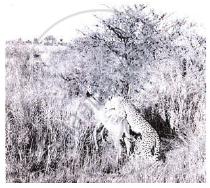 Fig. (D) |
Interspecific interaction could be ______.
Give one example of parasitism.
Cuscuta growing on a host plant is an example of which population interaction?
