Advertisements
Advertisements
Question
Discuss the various types of positive interactions between species.
Advertisements
Solution
The interspecific interaction is of three types positive or beneficial, negative or antagonistic and last neutral interaction. Some positive interactions are scavenging, commensalism, protocooperation and mutualism.
Mutualism this interaction confers benefits on both the interacting species, e.g.,
- Lichens represent an intimate mutualistic relationship between a fungus and photosynthesising algae or cyanobacteria.
- The mycorrhizae are associations between fungi and the roots of higher plants. The fungi help the plant in the absorption of essential nutrients from the soil while the plant in turn provides the fungi with energy-yielding carbohydrates.
- Plants offer nectar, juicy and nutritious fruits to animals that help pollinate their flowers and disperse their seeds.
Commensalism This is the interaction in which one species benefits without affecting the other, e.g.,
- An orchid growing as an epiphyte on a mango branch.
- Barnacles growing on the back of a whale.
- The cattle egret goraging close to the cattle that stir up and flush out insects from the vegetation.
- Sea anemone that has stinging tentacles and the clown fish that lives among them to get protection from predators.
Scavenging is the act of feeding by scavengers like bacteria and fungi on the remain of dead animals.
Protocooperation is the type of relationship in which both partners mutually obtain benefits. But they associate purely to benefit from each other and can live without each other.
APPEARS IN
RELATED QUESTIONS
Mention any two examples where the organisms involved are commercially exploited in agriculture.
Define community.
The cattle egret and grazing cattle in close association is a classic example of ______.
The number of deaths under ideal conditions is known as ______.
Competition between species leads to ________.
Tabulate and analysis of two species population interaction.
Two species competing for the same resources, avoid competition by choosing different times for feeding, also known as ______
An interaction favourable to both population but no obligatory to either is ______.
Lianas are vascular plants rooted in the ground and maintain erectness of their stem by making use of other trees for support. They do not maintain direct relation with those trees. Discuss the type of association the lianas have with the trees.
Give one example for the following type.
Biological control agent
Fill in the blanks
| Species A | Species B | Type of Interaction | Example |
| + | - | ______ | ______ |
| + | + | ______ | ______ |
| + | 0 | Commensalism | ______ |
Observe the set of 4 figures A, B, C and D and, answer the following questions
- Which one of the figures shows mutualism?
- What kind of association is shown in D?
- Name the organisms and the association in C.
- What role is the insect performing in B?
 Fig. (A) |
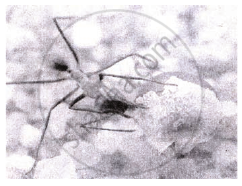 Fig. (B) |
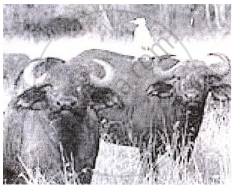 Fig. (C) |
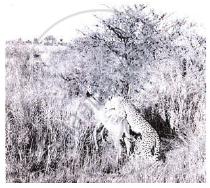 Fig. (D) |
Write the observations made at the end of Connell's field, experiment on barnacles on the rocky sea coasts of Scotland.
The value of 'Z' (regression coefficient) lies in the range of ______ regardless of the taxonomic group or the region.
What happens to an inferior competitor if the superior competitor is removed from the environment?
Parasitism is an interaction between two organisms in which ______.
Tiger feeding on deer is an example of which population interaction?
In parasitism, which organism derives nourishment from the other?
