Advertisements
Advertisements
प्रश्न
Which metal is used to make the filament of an electric bulb?
Advertisements
उत्तर
Tungsten metal is used to make the filament of an electric bulb.
APPEARS IN
संबंधित प्रश्न
Why are the conductors of electric heating devices, such as bread-toasters and electric irons, made of an alloy rather than a pure metal?
How does the resistance of a wire vary with its area of cross-section?
An electric room heater draws a current of 2.4 A from the 120 V supply line. What current will this room heater draw when connected to 240 V supply line?
Why is a series arrangement not used for connecting domestic electrical appliances in a circuit?
Write down the formula for the heat produced when a current I is passed through a resistor R for time t.
A resistance of 25 Ω is connected to a 12 V battery. Calculate the heat energy in joules generated per minute.
Name the material which is used for making the filaments of an electric bulb.
The heat produced by passing an electric current through a fixed resistor is proportional to the square of:
(a) magnitude of resistance of the resistor
(b) temperature of the resistor
(c) magnitude of current
(d) time for which current is passed
The elements of electrical heating devices are usually made of:
(a) tungsten
(b) bronze
(c) nichrome
(d) argon
Three heaters each rated 250 W, 100 V are connected in parallel to a 100 V supply. Calculate:
- the total current taken from the supply
- the resistance of each heater and
- the energy supplied in kWh to the three heaters in 5 hours.
Give Scientific reasons.
In the electric equipment producing heat e.g. iron, electric heater, boiler, toaster etc, an alloy such as Nichrome is used, not pure metals.
Why does tungsten metal used to make solenoid type coil in an electric bulb?
Rewrite the following statement by selecting the correct option:
1 A = ____________ mA.
The ‘live’ and the ‘neutral’ wires have potential difference of _______.
In an electric bulb, coil of _______ metal is used.
The electricity bill specifies the usage in _______.
A coil of an alloy _______ is used in electric heater cooker as a resistor.
Which of the following substance contracts on heating?
Find the odd one out and give its explanation.
Write scientific reason.
A coil made up of alloy Nichrome is used in the electric heater cooker as a resistor.
Explain the application of heating effect of electric current in an electric bulb with a diagram.
Define fuse.
Heating effect of current is called ______
Mark the correct choice
- Assertion: Electric appliances with a metallic body have three wire connections.
- Reason: Three-pin connections reduce the heating of the connecting wires.
An electric iron draws a current of 4 A when connected to 220 V mains. Its resistance must be:
Assertion: Bending of wire decreases the resistance of the electric wire.
Reason: The resistance of a conductor depends on length, thickness, nature of material and temperature of the conductor.
An electric kettle consumes 1 kW of electric power when operated at 220 V. A fuse wire of what rating must be used for it?
How does use of a fuse wire protect electrical appliances?
What are the uses of electromagnets?
______ wire is used in the filament of the bulbs.
Match the following
| 1. | Bulb | a. | Conductor |
| 2. | Electroplating | b. |
Insulator |
| 3. | Pure water | c. | Heating effect of current |
| 4. | Salt solution | d. | Chemical effect of current |
The electric fuse works on the Joule heating principle.
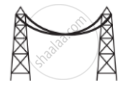
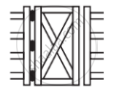
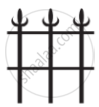
In which of the following applications of Iron, rusting will occur most? Support your answer with valid reason.
| A | B | C | D |
 |
 |
 |
 |
