Advertisements
Advertisements
प्रश्न
What impressions of Shahid do you gather from the piece?
Advertisements
उत्तर
A model answer has been provided for students' reference.
It is strongly recommended that students prepare the answer on their own.
As the text is a very brief description of Agha Shahid Ali, we can never judge his character completely. However, it can be said from the text that, even after he realised that he was dying, Shahid remained an extremely lucid person and didn't lack enthusiasm of life. Just like any other normal man, he was afraid of dying. He ignored reassurances given by people and lived his life fully till his last breath. He was a man who wanted to stay alive in people's memories not through spoken recitatives of friendship but of written word. Even when he reached a very serious stage of his illness, Shahid did not let his illness impede the progress of the friendship between him and the author. He had the extra-ordinary ability to transmute the mundane into the magical. He was very fond of company. His social live included festivity at home every day. He could be awarded for his prowess in the kitchen. He was a believer of exactitude and authenticity and thus, could not tolerate any deviation from the traditional methods of cooking. Shahid worked his way through poetry in almost all spheres of his life.
संबंधित प्रश्न
Anne's father was close to her. What did she like about him? Why?
This play, written in the 1950s, is a humorous and satirical depiction of the status of the mother in the family.
What are the issues it raises?
We 'draw up a deed'. Complete the following phrase with an appropriate word.
________ends meet
Read the extract and state whether the following statement is true or false. Correct the false statement.
The author wanted to grow the desi variety of rice.
Rearrange the letters to make meaningful words, occurring in the poem.
- clearmis ____________
- sowmid ____________
- gearuoc ____________
- rissupser ____________
- tabyue ____________
- madres ____________
- laveu ____________
- downre ____________
Think and answer in your own words.
What exactly does the speaker in the poem crave for?
Find evidence from the lesson and write in your own words.
Indians respect the freedom of others.
Pick out some sentences from the lesson that convey a general truth.
Kite - flying in Gujarat, is a competitive sport - cum - festival.
Using points from the lesson, give the details of the following in a short paragraph.
Different types of kites.
Behrman did not know anything about the last leaf on the ivy.
Find at least five other Akbar and Birbal stories and share them with your friends. Make a list of the stories collected by the entire class. Put your list in alphabetical order.
The word 'Review' is different from summarizing and appeal writing. Choose the correct statements of the following.
What can you do to show your love, respect, and support to the soldiers who fight for the country? Discuss this in the classroom. You can send greeting cards to them on various occasions, with the help of your teacher.
Define drama.
How many of them are personal articles? How many of them are used for the beautification of your home? How many of them are meant for utility (to fulfill a useful function in the household)?
Write the following in short:
What the young lawyer pleaded.
An activity:
Speak fast, think faster ! Form groups of 4-6. Discuss each of the following topics. Then each person in the group should choose a topic and speak about it for one minute. Try to say as many sentences as you can in that time.
What may happen...
I may study... A bird may fly into the classroom. The Principal may call me... It may rain... A dog may chase a cat... A king may lose his kingdom... My friend may give me a storybook to read... Mother may make idlis today...’ etc.
An activity:
Speak fast, think faster! Form groups of 4-6. Discuss each of the following topics. Then each person in the group should choose a topic and speak about it for one minute. Try to say as many sentences as you can in that time.
Imagine you are watching a scene. For example, someone learning to ride a bicycle; or a cricket match. Give a running commentary on what you see.
‘Monu is sitting on the bicycle. It has side wheels. Monu tries to push the pedal down - No - he stops. His uncle holds the seat in one hand and the handle in the other hand. He says, ‘Come on, Monu’... etc.
Discuss what makes the following sentences funny.
- Your wasted time will be refunded.
- There was no highway attached to the booth.
A parody is a playful, comic imitation of a writer’s style. A parody is like a verbal cartoon. Compare the original poem and its parody given on page 35 using the following points:
|
How doth the little busy bee |
How doth the little crocodile (parody) |
| Choice of a subject (an animal) | __________________ |
| __________________ | __________________ |
| Number of lines and stanzas | __________________ |
| __________________ | __________________ |
| Same or similar constructions | __________________ |
| __________________ | __________________ |
| Tone of the poem | __________________ |
| __________________ | __________________ |
Form groups of 4-5. Read the following sentences aloud. Using your imagination and with the help of group discussion, write other situations in which the sentences can be used.
- The outcome: disappointment and anger.
- The hour of battle had sounded
- What a chase!
- This was our chance, .........
What do you notice about the following pairs of words?
- act naturally
- liquid gas
- open secret
- sound of silence
- sweet sorrow
- original copy
- only choice
- growing smaller
Present any one of these announcements yourself, orally.
Write what the following do, with the help of the poem.
ripples
Use this passage to play the game. You can collect information on other famous personalities and play too.
Charlie Chaplin was born on April 16, 1889, in London England. His birth name was Charles Spencer Chaplin, though he had many nicknames growing up such as Charlie, Charlot, and The Little Tramp. His father, Charles Chaplin, and his mother, Hannah Chaplin, were inducted into the music hall of fame, leading the way to his exposure even as a young boy. His first onstage moment was when he was 5 years old; he sang a song that was intended to be sung by his own mother; she had become ill at the time of the performance, so little Charlie Chaplin stood instead and performed for his mother.
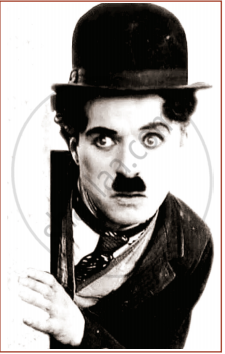
Charlie Chaplin came to the United States in 1910, at the age of 21. He was brought to New York, which was known to be a great place to start out for anyone trying to become a professional actor. Two years later, in 1913, Chaplin signed his very first contract at Keystone and it was no time before he headed to Hollywood. His first movie premiered in 1914, “Making a Living,” and went on to make over 35 movies total in that year alone. Charlie Chaplin grew to become one of the most popular and successful actors of all time. The moment that really kicked off his long career was in 1921 when he starred in, and produced, his first full-length film called “The Kid.” From then on, most people all over the world knew Charlie Chaplin and loved his movies. He had a great career and life, dying on December 25, 1977, in Vevey, Switzerland. He had apparently died of natural causes in his sleep from old age.
Activity
It’s fun to help out in the kitchen. You can even practice reading aloud when reading the recipe. And you can learn a little math by figuring out how to measure. Here are a few fun items to make that are “Alice” themed.
Work in pairs and answer the following.
Pick out the rhyming words.
They all stood around the little jewel of blue means______.
In this story, what happened to the Earth?
Work in groups. Discuss and have a debate on life in bustling cities and life in calm towns.
It is used in the fisher’s _____.
How do we keep our integrity?
Find the rhyming word from the poem.
Language - ______.
How does it welcome all?
Choose the odd one out.
Look at the picture and Choose the correct word.

Look at the picture and Choose the correct word.

Why did the old man need someone?
Write the rhyming word.
Tree - ______.
They would rest on the tree.
Some words sound the same but their spelling and meaning are different. Such words are called homophones. There are many homophones.
How did he lose his hand?
Match the rhyming words.
| mars | crime |
| bed | cars |
| time | head |
Match the rhyming words.
| pale | knows |
| boat | gale |
| goes | goat |
Choose and write the adverbs to complete the sentence.

The lion fought _____.
Why did Meena call the official 'Appa'? Do you think we need to be a family to care for others?
______ lies stretching in the river.
When does the world become green?
What did Rani want to become?
At the end of the festival , Kamali and Senthil saved______.
Read the passage and colour one bag each time you read.
There lived a poor but an honest farmer in a village. He supported himself, his wife and seven children using his small piece of land.
One day while he was walking in his field, he found a bag of gold.
He took it home and showed it to his wife. His wife told him to keep some of the gold. He told his wife that honesty is the best policy. He tried to find the person who lost it. At last, he found that the owner of the bag and gave it back. The rich man took the bag and thanked him.

Write the word with same meaning.

post- ______
Match the following rhyming words.
| 1. | earn | glow |
| 2. | fend | day |
| 3. | slow | learn |
| 4. | play | end |
Write the correct word.
| rooster, king, hen, tiger, queen, tigress. |

Do you think Nasruddin was good at archery?
How did Alice reach Wonderland?
Here is an amazing news item on how the qualities of duty and devotion is not restricted to humans alone but shared by animals. Read the passage and answer the questions that follow.
Caesar, the Hero of Mumbai on 26/11
- Mumbai: Caesar, the last surviving hero of his kind, died of a heart attack on Thursday. Caesar, a Labrador Retriever, was covered with tri-color and given an emotional farewell from the city Police Force. The Mumbai Police Commissioner too marked the passing of the hero with a tweet.
- Caesar, who was 11 years old was the sole survivor among the dogs of Mumbai Police who took part in bomb detection operations during the terrorist attack on Mumbai that began on November 26, 2008. He died of a heart attack at a farm in Virar where he and his three canine buddies had been sent after retirement. During the terror attack in Mumbai, Caesar saved several lives when he sniffed out the hand grenades left by the terrorists at the busy CST railway station.
- Caesar was also a part of the search team at Nariman House, where terrorists were holed up for three days. Earlier he was also pressed into service for bomb search operation after the 2006 serial train blasts and July 2017 blast in Mumbai. The Mumbai police officials also tweeted their grief saying, “Services of retired members of Dog Squad during 26/11 will be unforgettable. We will remember our heroes forever.”
Answer the following questions.
- The Labrador Retriever was covered with tri-color. What does this signify?
- How did Caesar save several lives at the CST railway station?
- Which word in the third paragraph of the passage means the same as ‘forced’?
- “Services of retired members of Dog Squad during 26/11 will be unforgettable”. Mention three services rendered by Caesar.
- Caesar is a Labrador breed of dogs. Name a few other native breeds that are used by the Police Force.
- Try to rewrite the news item in your mother tongue without losing the spirit and flavour of the text. Give a suitable title to the translated version.
Pick out word which mean the same as
stop doing something (para 1)
