Advertisements
Advertisements
प्रश्न
Notice these expressions in the text. Infer their meaning from the context.
-
blow-by-blow account
-
morale booster
-
relegated to
-
political acumen
-
de facto
-
astute
-
doctored accounts
-
gave vent to
Advertisements
उत्तर
-
blow-by-blow account: detailed account. In the text “The Adventure” this expression occurs in the context of Gangadharpant trying to understand the outcome of the Battle of Panipat by reading a book on the topic.
-
morale booster: anything that serves to increase morale or confidence. The expression occurs in the text 'Adventure' where it is told that the Marathas emerged victorious in the Battle of Panipat which increased their morale or confidence in establishing their supremacy all over the country.
-
Relegated to: assigned to a lower rank or position. In the text, it is said how Dadasaheb, a Maratha Chieftain was assigned to a lower rank after the Battle of Panipat.
-
political acumen: political shrewdness with keen insight. In the text 'The Adventure' the expression is used to convey how Madhavrao and Vishwasrao because of their shrewdness could expand their influence all over India.
-
de facto: existing in fact whether with lawful authority or not. In the text 'Adventure' the Peshwas is regarded as de facto rulers as they kept the Mughal regime alive in Delhi.
-
astute: marked by practical hardheaded intelligence. In the text “The Adventure” this word is used to convey that the Peshwas were very intelligent to recognise the importance of technological age dawning in Europe.
-
doctored accounts: manipulation of accounts. This expression conveys that the Bakhars were not providing historical facts but manipulated accounts of history.
-
give vent to: to express one's feelings and ideas. Professor Gaitonde expressed his ideas in the public lecture on the Battle of Panipat.
APPEARS IN
संबंधित प्रश्न
Answer the following question in 200-250 words:
What is the main theme of 'The Diary of a Young Girl'?
The story revolves around characters who belong to a tribe in Armenia. Mourad and Aram are members of the Garoghlanian family. Now locate Armenia and Assyria on the atlas and prepare a write-up on the Garoghlanian tribes. You may write about people, their names, traits, geographical and economic features as suggested in the story.
What do you understand of the natures of Ramanand and Azam Khan from the episode described?
Explain the phrase.
Time's fool
How is the idyllic juxtaposed with the pedestrian in the poem?
The poem has a literal level and a figurative level. Why has the poet chosen 'tigers' and 'sheep' to convey his message?
Read the extract 'Being Neighborly' and complete the following statement:
Jo entered the old stone house carrying _______________.
Make sentence of your own using the following expression.
put up with:
Say why the speaker of the poem wishes to be a -
watchman
Who said to whom and when / why?
| Who said | To whom? | When / why? | |
| ......the world is full of inequalities. | |||
| I want to do something interesting. | |||
| It is against the will of God. | |||
| Our home is full of love....... | |||
| ...... we can affirm along with United Nations that men and women are equal. |
Trees are revered because:
- They give us joy.
- _________________
- _________________
- _________________
- _________________
The two best things the servants brought to God were gold and jewel stones.
In Gujarat, the kite - festival is celebrated to welcome the Spring.
A past student of your school has cleared his UPSC examination and being an IAS officer has been appointed as a Collector of your district. Write a formal letter to invite him to your school to share the story of his success, at a special function.
Find what Hirabai tells the traveller by reading her words from right to left.
Guess the meaning of the following from the context.
Dawn wakes the starling.
Read the passage and answer the following:
Why is the tollbooth called a ‘phantom’ tollbooth?
Form groups. Discuss the first two paragraphs. Try to present their content in the form of a series of conversations among the volunteers.
Prepare similar word chains using the following ideas.
size - small _______________.
Read the passage and name the following.
He led the defense of Troy for nine years.
Fill in the table.
| Period | Way of Addressing a Mother | Boy’s Costume | Lady’s Costume | Daily Chores | Games |
| The 1950s | silk saree | ||||
| 1910 | Kurta pajama and cap | ||||
| The 1800s | |||||
| The 1500s | |||||
| 1000 | |||||
| 100 AD | feed poultry tend sheep keep away birds plaster the yard | ||||
| 3000 BC | Chaupar |
Write out a few things that you would really miss about your home if you were to stay away from it for long.
Find the meaning of the following word.
adorning
In what season does the story take place?
How did the bird try to reach its parents without having to fly?
Read the incident again and answer the following question.
What is the humour element in the above incident?
The author left the ties in the taxi.
An Anagram is a word or a phrase formed by rearranging the letters of a different word or phrase, typically using all the original letters exactly once.
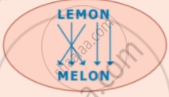
Now try to solve these anagrams
| 1. | ELBOW | |
| 2. | SECTION | |
| 3. | VIEWER | |
| 4. | RIPPLES | |
| 5. | NEEDLESS |
When and where was the first ATM installed?
Write the name of the toys against each picture.

Write the name of the toys against each picture.

The eggs of an Olive Ridley are in the shape and size of a cricket ball.
Who is Muthu?
What did Raj buy?
Mithali is one of the women players to score seven consecutive 50s.
Describe the beauty of the blue mountain.
What word could best replace ‘charges’ in the poem - marches, rushes or pushes?
Why does the child clamber and scramble?
Complete the sentence given below with word/phrase.
The hole became ______ and ______.
Why do the soldiers (people) die? When will it stop?
_______ broke out in the near by villages.
What were Anandhan and Yazhini watching in the television?
What is Amar Jawan Jyoti?
Vicky’s father decided to change his son’s character.
Choose the odd one out.
Write the rhyming word.
one
Match the rhyming words.
| 1. | flow | know |
| 2. | grow | week |
| 3. | seek | blow |
Why relationships are more important than wealth?
Meena went to ______ her father.
What is the main idea of the text?
______ had made Math easy for Bala.
Bala's home doesn't have ______.
Why was his father unable to sleep?
What subject did he like the most?
What was different about the rabbit that Alice saw?
Who was burning with curiosity?
How did he challenge everybody?
Who according to Gandhi, can fight against evil and how?
What should parents do to ensure the safety of children in cyber space?
