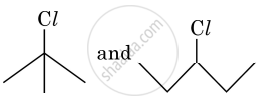
An SN1 reaction occurs through the formation of a carbocation intermediate. Alkyl halide (I) is tertiary (3°), whereas (II) is secondary (2°). As a result, (I) forms a tertiary carbocation, while (II) forms a secondary carbocation. Since the rate of an SN1 reaction increases with carbocation stability, and a tertiary carbocation is more stable than a secondary carbocation, compound (I), i.e., 2-chloro-2-methylpropane, undergoes the SN1 reaction faster than compound (II), i.e., 3-chloropentane.
Advertisements
Advertisements
प्रश्न
In the following pair of halogen compounds, which compound undergoes a faster SN1 reaction?

In the following pair of halogen compounds, which compound undergoes SN1 reaction faster and why?
लघु उत्तर
Advertisements
उत्तर १
The activity of halogen compounds in SN1 reaction depends on the stability of the carbocation formed due to ionization. The order of stability is tertiary > secondary > primary. Hence, 3° alkyl chloride is more active than 2° alkyl chloride. Hence,3° alkyl chloride is more active in the SN1 reaction.
The compound which react faster is:

The carbocation, which will be more stable and responsible for the faster reaction, is:

shaalaa.com
उत्तर २
shaalaa.com
Notes
Students should refer to the answer according to their questions.
या प्रश्नात किंवा उत्तरात काही त्रुटी आहे का?
पाठ 6: Haloalkanes and Haloarenes - Intext Question [पृष्ठ १८६]
APPEARS IN
संबंधित प्रश्न
Write the structure of the major product in each of the following reaction :

Write the structure of the major organic product in the following reaction:
\[\ce{CH3CH2Br + KCN ->[aq{.} ethanol]}\]
The treatment of alkyl chlorides with aqueous KOH leads to the formation of alcohols but in the presence of alcoholic KOH, alkenes are major products. Explain.
Which of the following is optically inactive?
SN2 mechanism proceeds through intervention of ____________.
Which of the following is a chiral compound?
SN1 reaction of alkyl halides lead to ___________.
Identify X and Y in the following sequence:
\[\ce{C2H5Br ->[X] Product ->[Y] C3H7NH2}\]
Which of the following compounds will give a racemic mixture on nucleophilic substitution by OH ion?
1-Bromoethane, 1-Bromopropane, 1-Bromobutane, Bromobenzene
Which of the following statements are correct about the kinetics of this reaction?

(i) The rate of reaction depends on the concentration of only (b).
(ii) The rate of reaction depends on concentration of both (a) and (b).
(iii) Molecularity of reaction is one.
(iv) Molecularity of reaction is two.
Which of the compounds will react faster in SN1 reaction with the –OH ion?
\[\ce{CH3-CH2-Cl}\] or \[\ce{C6H5-CH2-Cl}\]
Why are aryl halides less reactive towards nucleophilic substitution reactions than alkyl halides?
Which of the following is the definition of chirality?
CCl4 is insoluble in water because:-
Give reason for the following:
The product formed during SN1 reaction is a racemic mixture.
In which reaction mechanism carbocation is formed?
The decreasing order of reactivity of the following compounds towards nucleophilic substitution (SN2) is ______.

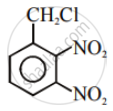

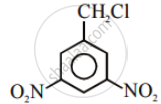
Give the mechanism of the following reaction:
\[\ce{CH3CH2OH ->[H2SO4][413 K] CH3CH2-O-CH2CH3 + H2O}\]
Acetic anhydride from acetic acid
