Advertisements
Advertisements
प्रश्न
Identify instances in the story that show the business acumen of Ramanand.
Advertisements
उत्तर
Ramanand was a shrewd man who had great business acumen. He was nothing if he was not amenable, having built up his business on the maxim that the customer is always right. When Azam came to him, Ramanand did agree to low his moustache gave Azam money against his wife's trinkets. However, Azam noticed after trading that the other end of Ramanand's moustache was still up. It was wise of Ramanand to turn down his moustache to keep his customer happy, however, he saved his pride as well by letting the other moustache up which made Azam, who lived in his false ego, to trade more gold to make him turn down Ramanand's moustache. The whole game did save the honour of Azam to which he lived, but it actually made him a pauper to have traded his everything to satisfy his pride, while Ramanand gained taking advantage of Azam's foolishness.
APPEARS IN
संबंधित प्रश्न
Attempt a character sketch of Squire Cass.
The school system often curbs individual talents. Discuss.
Both Ramanand and Azam Khan seem to have very fixed views. How does Ramanand score over Azam Khan towards the end of the story?
We 'draw up a deed'. Complete the following phrase with an appropriate word.
________a loan
How does the poem capture the elusive nature of the peacock?
How is colour highlighted in the poem and why? List all the words in the poem that suggest colour.
Discuss in pairs or in small groups
What does a novel do?
How is the idyllic juxtaposed with the pedestrian in the poem?
The significance of reading an autobiography lies in drawing lessons from another life. What is the significance of Kumudini's account for us as readers?
Arrange the following set of words in the alphabetical order in your notebook.
ship, small, successful, scoldings, stone, saving, someone, stood, streets, still, screamed, sat, seemed, saint, share.
Using a good dictionary, find the shade of difference in the following:
‘Profession’ refers to ____________
Write down any two Slogans on 'Gender Equality'.
Trees are revered because:
- They give us joy.
- _________________
- _________________
- _________________
- _________________
Correct the following statement.
Sue ignored Johnsy completely.
Discuss in your group and write down the most important reason, why Pediatrician and Veterinarians have, a tougher job to diagnose their patients' illnesses.
Read the expression:
‘the blueprint of our past’s tomorrow’. Consider in a group why the poet has not mentioned ‘the present’. It is because of the planners who have possessed our ‘present’ in order to change ‘our past’ into the ‘future’ they desire. Go through the poem and write the lines which support this thought.
- The buildings are in alignment with the roads which meet at desired points.
- ____________________________________________
- ____________________________________________
- ____________________________________________
- ____________________________________________
- ____________________________________________.
The emperor-bee supervises the building of ______.
Use the following word/phrase to make a sentence of your own.
enthusiasm
Answer the following question in short.
On what condition did Tenali Raman agree to take up the challenge?
Write about how your family supports you to go to school.
Read aloud the account of how Flying Officer Nirmal Jit Singh Sekhon sacrificed his life to defend our country.
Think carefully for a minute.
Jog your memory and recall all the things/objects on which you have seen wheels. Write them down
How was the committee formed?
Draw word webs for the following.
Begin with the given word and go on writing as many other words associated with it, as you can.
Use these words to write other related words to form a word web.

What characteristics of Mr. Nobody do we learn about from this poem?
Find the meaning of the following word.
thee
Complete the following sentence with reference to the passage.
Epics are long poems that ______________________.
Present these points in the form of a review, and give it a suitable title.
Read ‘The Story of the Amulet’ by E. Nesbit.
Write the symbol that is used in the poem to represent the following idea.
Some other time.
Write in your own words.
How should that person sing?
Imagine the following and write about it in your own words:
What the world looks like to a baby.
Find out how the following game is played.
Badminton
Note that we say 'its appetite', 'its manners' and not 'it’s appetite' or 'it’s manners’. It’s means 'It is' and its means 'belonging to it'.
How did the parents support and encourage the young seagull’s brothers and sister?
What prompted the young seagull to fly finally?
Share a memorable trip from your life
Were the policemen willing to leave the house?
Write the name of the toys against each picture.

Hamid’s friends enjoyed the ride in the merry-go-round. But Hamid didn’t go on it. Why?
Teach me to appreciate ______.
- nature
- destruction
- small creatures
What do you infer about speaking with others from this poem?
Identify the character/speaker.
Wake up. You've been sleeping for too long.
Learning About Nature
Learn about caterpillars and butterflies. Read a book about a caterpillar turning into a butterfly. You can get one from the library or go online and find information with pictures.
He exercised with Louise every day.
What is as sharp as a blade?
Narrate the story based on the story map
Gulliver managed to reach the land as he was______.
Why does the poet fly out of the universe?
How can we make our nation proud?
Vicky’s father decided to change his son’s character.
Where is the key?
The bird catcher’s clothes were dry.
Did she give up the fight?
Teddy took his pillow as a sign of ______ them.
Which quality makes 'world is one and human is one'?
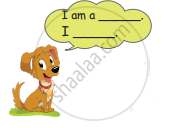
Name the animal and sound it makes.
Who was Hiawatha?
Read the passage given below and answer the questions that follow
Humans have long been fascinated by fiction. We experience excitement in assigning supernatural power to imaginary characters in fictional stories – and so we have Spider man, Batman, He–man, Titans and many more. The ‘Cyborg’ was an offshoot of such wild imagination of humans to invest our species with superhuman powers. Today, the Cyborg is no more an imaginary organism. We are living in a world where a sizeable population of humans have merged their bodies with technological implants. The term ‘Cyborg’, short for ‘cybernetic organism’, was coined to describe a man, whose body is implanted with technological devices to supplement and substitute body functions.
Cyborgs include people with cardiac pacemakers, contact lenses, bionic ears and eyes, prosthetics and so on. In other words, a cyborg is partly human and partly machine. The technological innovations in the field of medicine and healthcare augment humans with machines, producing a beta version of the human body. The advent of brain machine interfaces is certain to blur the boundary between humans and machines. Scientists are working hard to find a technique for age reversal too. People do not want to die, so mankind is striving to get to the final frontier, which is development of machines and devices that would accord man immortality.
The needs of humans are not limited. As time passes, food habits change, thinking patterns change, and even appearances change. We are about to travel by driverless, fully automated vehicles. Computers and smart phones have become our masters. The more we depend and merge with technological advancements, the more the humanness in us slowly erodes. Intelligence is sought to be infused into machines and robotics are designed in such a way to give man a virtual human companion. The field of artificial intelligence is overtaking the human brain and many fear that it could even harm the human race. Despite certain limitations and potential threats, many believe that cyborgs will be the next step in the evolution of mankind. The amalgamation of man and machine is sure to add a new dimension to the life of mankind and this will prove to be the ‘biggest evolution in Biology’ since the emergence of life, four billion years ago.
Questions:
a) Account for the popularity of characters with supernatural powers.
b) Who is referred to as a ‘Cyborg’?
c) What is expected to happen with the advent of the brain machine interface?
d) The needs of humans are not limited. How is this statement elaborated in the passage?
e) How can a machine turn into a virtual companion for humans?
f) Explain the flipside of the rapid technological advancement.
g) Identify the word in para 1 which means ‘everlasting life’.
h) Which of the following words is synonymous with ‘amalgamation’?
- recreation
- integration
- exploration
- proposition
i) Which of the following options is the antonym of the word ‘advent’?
- drawback
- dispute
- departure
- danger
j) Find out the word which is the antonym of ‘natural’ in para 3.
