Advertisements
Advertisements
प्रश्न
' Kummi', ' ghumar' and 'dandia' are some dance forms mentioned in the text. Make an inventory of folk dance forms in the different regions of the country.
Advertisements
उत्तर
Arunachal Pradesh: Bardo Cham
Assam: Bihu dance, Jhumur
Chattisgarh: Raut nach, Panthi
Gujarat: Garba, Padhar, Raas,
Himachal Pradesh: Kinnauri Natti
Karnataka: Yakshagana
Kashmir: Dumhal
Lakshwadeep: Lava
Madhya Pradesh:Tertali, Charkula, Jawara, Grida dance
Maharastra: Pavri Naach
Manipur: Thang ta, Dol cholam
Mizoram: Cheraw Dance
Nagaland: Chang lo or sua lua
Orissa: Goti Pua
Pondicherry: Garadi
Punjab: Bhangra, Giddha, Jhumar, Ludi
Rajasthan: Ghoomor, Kalbelia, Bhavai
Sikkim: Singhi Chamm
Tamil Nadu: Kummi, Kolattam
Tripura: Hojagiri
West Bengal: Gambhira, Domni
APPEARS IN
संबंधित प्रश्न
A1. (i) Two activities that mother was free to do:
(a)...........................................
(b)............................................
(ii)Two activities that children avoided doing because of television:
(a) .....................................
(b) ...................................
Oh yes, we know it keeps them still,
They don't climb out the window sill,
They never fight or kick or punch,
They leave you free to cook the lunch
And wash thedishes in the sink
But did you ever stop to think,
To wonder just exactly what
This does to your beloved tot?
It rots the sense in the head!
It kills imagination dead!
It clogs and clutters up the mind!
It makes a child so dull and blind
He can no longer understand
A fantasy, a fairyland!
His brain becomes as soft as cheese!
His power of thinking rust and freeze!
He cannot think - He only sees!
'All right!' you'll cry. 'All right!' you'll say,
'But if we take the set away,
What shall-we do to entertain
Our darling children? Please explain!'
We'll answer this by asking you,
'What used the darling ones to do?'
'How used they keep themselves contented
Before this monster was invented?'
Have you forgotten? Don't you know?
A2. According to the poem, why is excessive watching of TV harmful?
A3. His brain became as soft as cheese. The figure of speech is ..........because............
You are Smitha/Sunil, Secretary AVM Housing Society. You are going to organize a yoga camp. Write a notice in not more than 50 words, urging the members of your society to come in large numbers to attend the camp. Invent all the necessary details.
Read the following passage and complete the activities given below :
A1 Find out :
Find from the passage the related words to the sea and write them.

ON FIERCE monsoon nights, about one and a quarter-mile off the Mumbai harbor, there have been occasions when 52-year-old Bikaji Ramchandra Dhuri is the only man on the sea. From the watchtower of the Prongs Reef Lighthouse, which is surrounded on all sides by the Arabian Sea, he has heard the sea rage like a possessed spirit – the darkness dispelled only by the beam of light flung across the waters from the tower he mans.
Dhuri is one of the last breeds of lighthouse keepers on the Indian coast, as a majority of the 182 lighthouses in the country are now unmanned. Built-in 1871, the Prongs Reef lighthouse was modeled on Scotland’s Skerryvore Rocks Lighthouse and is located at a strategic spot on the western coast, marking the entrance to the busy Mumbai Harbour. It was meant to stem the number of shipwrecks off the harbor, which the lone Colaba lighthouse could not illumine on its own. “Even now, during nights, for fishing vessels without any gadgets, it’s the soft light from this tower which directs us to Mumbai,” says Vinayak Koli, a boatsman who helps ferry people and also goes on fishing expeditions.
Throughout the year, Dhuri lives in the lighthouse for 15 days at a stretch, when he is relieved by another keeper. In the monsoon, it becomes his home for three months. “We call it the Kalapana as we are alone in the middle of the sea for days, with basic supplies – and the revolving light that keeps the sea awake,” he says.
A2 Fill in the following information using words from the passage :
(i) The Prongs Reef lighthouse was modeled on _______.
(ii) Dhuri lives in the lighthouse for _______ at a stretch.
(iii) _______ is one of the last breeds of lighthouse keepers on the Indian coast.
(iv) The majority of the _______ lighthouses in the country are now unmanned.
| Violent | Scattered | Place of shelter for ships | Shine light |
A4
A5 Personal Response
Imagine you have to spend a night in a lighthouse. Narrate your experience.
Briefly explain the following statement from the text.
Gangadharpant could not help comparing the country he knew with what he was witnessing around him.
In which language do you think Bhausahebanchi Bakhar was written?
Explain the line:
'I seemed to detect in myself a sort of sneaking fellow-feeling for the mummy in the museum, and a desire to swap news with him.
How does Russell's definition of knowledge differ from what is commonly understood by the term?
In English, the peacock is associated with pride. ‘As proud as a peacock’ is a commonly used simile. With what qualities is the peacock associated with the literature of your language?
How does the nightingale's song plunge the poet into a state of ecstasy?
Select any one of the famous personalities mentioned in ‘Warming up 1’ on page no. 5. From the library or internet find out their success story. Write it in your own words in about 20 to 30 lines of your notebook.
Give your write-up a suitable title.
Read the story and complete the following.
Revathi won the prize for the ‘Best plant’ because, ____________.
Think and answer in your own words.
Why is the street light compared to a one-red-eyed-giant?
Using a dictionary/internet note down the main difference between farm and granary.
Fibreglass kites led to creating power - driven aeroplanes.
A bridge connects people on either side of a river or valleys in cities or villages. Discuss with your partner the importance of a bridge to both the cities and the villages and complete the table.
| Cities | Villages |
Correct the following statement.
The real ivy leaf did not fall off at all.
Discuss in your group and write down the most important reason, why Pediatrician and Veterinarians have, a tougher job to diagnose their patients' illnesses.
Answer the following question in short.
Why was Tenali Raman taken to the court in a palanquin?
Write a short autobiography of any bird or animal of your choice.
Complete the following sentence using your own ideas.
The princess was as ______ as ______. (Positive)
State a type of drama each from any four periods of history.
There were some reasons why Theseus was initially against but later gave consent for the marriage of Helena with Lysander. Explain.
Answer the following question in one sentence.
What does the title of the poem say?
On any one page, note against the speech of every character what feelings it should show to bring out the meaning best. For example, joy, fear, anger, nervousness, friendliness, dislike, surprise, wonder, excitement, politeness, rudeness, cunning, curiosity.
Imagine you are visiting the Science Fair. What other stalls (apart from the ones mentioned here) are you likely to find there? Try to list at least five more stalls.
Colour, sound, and images from nature add to the beauty of a poem: 'Tartary' is a perfect example of the above. Pick outlines that contain –
- Colour
- Sound
- Images from nature
Where does the brook join the river?
Describe the following in one or two lines.
The nest.
Find out how the following game is played.
Kho-Kho
Discuss how you will measure the worth of a sports event.
Find a word that has a similar meaning.
unfair
Who were on the ship? How were they related to Prospero?
Who am I?
Who Am I? is a guessing game where players use ‘yes’ or ‘no’ questions to guess the identity of a famous person. Questions are based upon the traits and characteristics of a person everyone will be able to identify.
Divide the class into groups. One group should decide the personality while the other group should ask ‘yes’ or ‘no’ type questions. To win the game, a team needs to find out the person within 10 clues.
Sample questions to ask. Answers must be ‘yes’ or ‘no’ only
- Are you a male (female)?
- Are you a famous personality?
- Are you a singer (dancer, actor)?
- Are you a historical figure?
- Are you young (old)?
- Are you alive now?
- Does your name start with ‘___’?
- Is he/she ____ ?
From the poem ‘The Grumble Family’ what kind of behavior does the poet want the readers to possess?
‘They’ descended on the sweet and toy-vendors’ stores like an army moving to attack.
Who does they refer to? Did they move one by one in a line or in a big group?
‘My tongs are like a tiger among toys.’ It means ______
Pick out the words which rhyme with the given words and write similar rhyming words on your own.
| 1. | far | ||
| 2. | fear | ||
| 3. | low | ||
| 4. | kind | ||
| 5. | remain | ||
| 6. | they |
Write down the word that alliterate in the poetic line below
That spreads treasures on a tree.
Why did Alice follow the rabbit?
Read the story on your own. Discuss in a group and complete the story map below.
| A story map is the main events of the story given in a flow chart. |
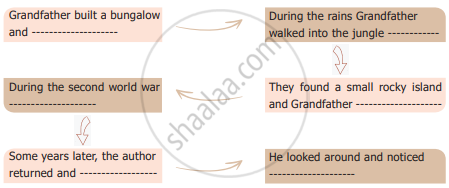
What sight made the farmer thankful?
The dry earth soaked up the moisture as a hungry puppy laps up milk. It means______.
Who was challenged for a race?
Jaswantgarh is named after the Indian soldier ______.
Read scene I of the play carefully and answer the question below.
Match the following.
| Sr.No. | CHARACTER | TRAIT |
| a. | Father Wolf | with a grey nose…feeds her four cubs |
| b. | Tabaqui | the big one from Waingunga River with a lame foot |
| c. | Mother Wolf | the chief of the Wolves |
| d. | Shere Khan | begs for meat and thanks for the meal/warns the wolves about the arrival of Shere Khan |
A robot advised her to______.
_______ is our culture.
Fill in the blank
He has bat ______ ball.
The sparrow solved the problem with her _____.
Read the advertisement and answer the question given below.

When does the offer end?
Do you like this kind of world?
Name the pictures and match it with the rhyming words.
 |
dancer | |
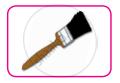 |
floor | |
 |
will | |
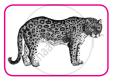 |
rush |
What does she paint?
What did he claim to know?
How did the boy enjoy the company of the tree?
Pick out word which mean the same as
not protected (para 2)
Read the extract and complete the activities given below:
|
The call of the seas has always found an echo in me. Not being rich enough to roam in a private yacht, I have taken the poor man's way out. I swim across them. I have always been fascinated by the Indian ocean, whether at Mumbai, at Puri or at Gopalpur. I have swam in all these places and have felt the thrill. But the idea of swimming the Palk Strait did not occur to me until after I swam in the English channel. Steeped in the history and tradition of this nation, practically unconquered. teaming with hair-raising hazards, the sea between India and Sri Lanka had all the elements of challenge, danger and difficulty that tempted me. By the way, for preparation, I continued a strict and rigorous course of training which began in 1960. I also had to collect a comprehensive range of facts and information about this sea. Neither of these was easy. Despite all the information I had gathered, I soon found that very little was known about the Palk Strait, especially about the tides and currents. Everything about the English channel is known-there is the Channel Swimming Association, there are trained pilots there are wants to be hired, accurate weather forecasts, dependable tide tables and every other form of assistance was readily available. All that one needed was money. Here in the Palk Strait one has to find out firstly from where information could be obtained and then decide how much of it could be incorrect or misleading! |
A1. Rewrite the following as per their sequence in the extract: (2)
- I also had to collect a comprehensive range of facts and information about this sea.
- I have swam in all these places and have felt the thrill.
- All that one needed was money.
- Despite all the information I had gathered, I soon found that very little was known about the Palk Strait.
A2. Explain: (2)
What does the writer man by saving, "Steeped in the history and tradition of this nation, practically unconquered, teeming with hair-raising hazards, the sea between India and Sri Lanka had all the elements of challenge, danger and difficulty that tempted me"?
A3. Give reason: (2)
The narrator had an intense desire to swim in the Palk Strait. Explain the reasons for it.
A4. Personal Response: (2)
Do you like to have an adventurous life? Express your opinion.
A5. Grammar:
Do as directed: (2)
- Very little was known about the Palk Strait. (Rewrite as a negative sentence)
- I had to collect a comprehensive range of facts. (Rewrite the sentence beginning with 'A comprehensive ........)
A6. Vocabulary: (2)
Give the synonyms of the following words:
- rigorous - ______
- thrill - ______
Being a bachelor, the stranger had no patience with children.
Being a bachelor, the stranger had no patience with children.
Read the following sentence.
‘A very wise man once remarked that of the unspoken word, you are a master; of the spoken word, you are a slave.’
The sentence has two pairs of opposites - spoken and unspoken, and master and slave. The contrasting ideas make the sentence more effective. Putting together opposite or contrasting ideas in one sentence is a literary device. It is called antithesis.
Read the following examples of antithesis.
- Give every man thy ear, but few thy voice.
- Man proposes and God disposes.
- Speech is silver, but silence is gold.
- Patience is bitter, but it has a sweet fruit.
