Advertisements
Advertisements
प्रश्न
You know what ‘hide-and-seek’ is. What would ‘hide-and-speak’ mean?
Advertisements
उत्तर
The expression 'hide-and-speak' here expresses the taboo of the dark-skinned people being inferior to those who claim themselves to be 'fair-skinned' and thus, more learned, sophisticated, civilised, and superior.
APPEARS IN
संबंधित प्रश्न
B1. Complete the following statements:
(i) The poet is talking about............................. .
(ii) As a nation weare missing our .................................... .
(iii) Old people havekeys ........................... .
(iv) The elderly remember .......................... .
"Oh the value of the elderly! How could anyone not know? They hold so many keys, so many
things they can show.
We all will read the other side this I firmly believe.
And the elderly are closest oh what clues we could retrieve.
For their characters are closest to how we'll be on high.
They are the ones most developed, you can see it if you try.
They've let go of the frivolous and kept things that are dear.
The memories of so sweet, of loved ones that were near.
As a nation we are missing our greatest true resource,
To get to know our elders and let them guide our course."
B2 Express
State what the underlined words mean:
(i) Oh the value of the elderly! State the value ............. .
(ii) They are the ones most developed. 'They' stand for ............. .
B3: Match the words in Column A with their rhyming word in Column B:
| Column A | Column B |
| (i) Course | (a) Show |
| (ii) Believe | (b) resource |
| - | (c) retrieve |
Read the following extract and then do all the activities that follow :
I rain into a stranger as he passed by
“Oh, excuse me please” was my reply.
He said, “please excuse me too; wasn't even watching for you.”
We were very polite, this stranger and I.
We went on out way and we said good-bye.
But at home a different story is told.
How we treat out loved ones, young and old.
Later that day, cooking the evening meal,
My daughter stood beside me very still.
When I turned, I nearly knoked her down.
“Move out of the way,” I said with a frown.
She walked away, her little heart broken.
I didn't realize how harshly I'd spoken.
While I lay awake in bed,
God's still small voice came to me and said,
“While Dealing with a stranger, common courtesy you use,
But children you love, you seem to abuse.”
A1. Order-
The incidents narrated in the extract are arranged in a jumbled manner here, Rearrange them in a proper order as they occur in the extract:
(i) The poet and the stranger went on their way saying good-bye.
(ii) Seeking excuse politely from the stranger, she went her way.
(iii) The poet ran into a stranger on the road.
(iv) The poet yelled at her daughter.
A2. Poetic device:
Make a list of rhyming pairs from the second stanza and note down the rhyme scheme of the same stanza.
A3. Personal Response:
Understanding and politeness are the essentials of out everyday life. Explain your views in brief.
A4. Creativity -
Frame two poetic lines on the following situation using a rhyming pattern with the help of clues given:
“While introducing great personalities, we praise them highly and talk about their qualities, but while speaking
about our friends we may not follow the same trend.”
While introducing great personalities, — a
------------------------------------ — a
But while speaking about our friends, — b
------------------------------------ — b
The black kite may start a fire because
Does the poem have a consistent rhyme scheme?
Do you think that the ruled always adopts the language of the ruler?
Which are the lines in the poem that impressed you the most and why?
Taking off from Forster’s references to Emily Bronte, Sterne and Proust, discuss the treatment of time in some of the novels you have read.
What makes the urgency of the child's demand seem logical?
“I can see clear bridges between my life experiences and my work in dance.” How does Kumudini Lakhia weave episodes from the two realms in her account?
Make sentence of your own using the following expression.
bargain:
Pick out a word from the poem to complete the sentence meaningfully.
The Government made a ______ (announcement) about their new taxation policy.
‘But the peasant bowed and prayed to God ...........’ What could he have prayed for?
Answer the following question in short.
What do you learn about Pundits of Vijaynagar?
Read the passage and answer the following question:
What is seen on the obverse and reverse of the PVC medal?
Choose the odd one out :
Bottom, Moth, Mustardseed, Cobweb.
Discuss the following question after you have seen a presentation of the ‘ad’.
Why does Didi say ‘No party for me!’?
Now, talk to your friends or elders; refer to books and read about all the objects on which wheels are used. List them. (How many did you miss out on in your first list? Why?)
Write a short note on the following:
Utilization of animal by-products in the ancient world.
Find two examples of the word made by using the following suffix.
-ness
Read the passage and name the following.
He persuaded Helen to elope with him.
Find and read other poems of R. L. Stevenson using the internet. Find other rhythmic poems about trains, in English, or other languages.
Answer in your own words.
What task did Grandpa wish to avoid?
From the poem, find three lines that use comparisons.
• ______ • ______ • ______
Which lines are repeated in the poem? What do they mean?
Put the following events in proper order.
- Holmes and others go to the bank.
- Clay digs a tunnel.
- Ross closes the office of the 'Red-headed League'.
- Holmes catches the criminal Clay.
- Clay and Ross enter the cellar to steal the gold.
- The bank received a lot of gold from the Bank of France.
- Holmes visits the area around Mr. Wilson’s shop.
Sit quietly for some time. Close your eyes and listen carefully to all the sounds that you hear. Can you guess what sounds they are, who or what is making that sound? Note down what you heard.
Guess the meaning of the following word.
fruitless
What did Anshuman’s father compare bad habits to?
Discuss the following in group.
Do’s and Don’ts for young children.
How did the bird try to reach its parents without having to fly?
____________ had provided Prospero formerly with books and provisions.
What conclusions did grandfather jump to when he saw the cops?
Use this passage to play the game. You can collect information on other famous personalities and play too.
Charlie Chaplin was born on April 16, 1889, in London England. His birth name was Charles Spencer Chaplin, though he had many nicknames growing up such as Charlie, Charlot, and The Little Tramp. His father, Charles Chaplin, and his mother, Hannah Chaplin, were inducted into the music hall of fame, leading the way to his exposure even as a young boy. His first onstage moment was when he was 5 years old; he sang a song that was intended to be sung by his own mother; she had become ill at the time of the performance, so little Charlie Chaplin stood instead and performed for his mother.
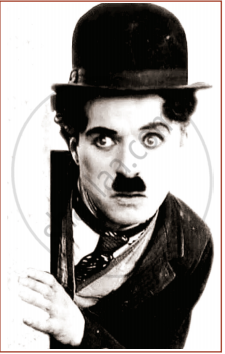
Charlie Chaplin came to the United States in 1910, at the age of 21. He was brought to New York, which was known to be a great place to start out for anyone trying to become a professional actor. Two years later, in 1913, Chaplin signed his very first contract at Keystone and it was no time before he headed to Hollywood. His first movie premiered in 1914, “Making a Living,” and went on to make over 35 movies total in that year alone. Charlie Chaplin grew to become one of the most popular and successful actors of all time. The moment that really kicked off his long career was in 1921 when he starred in, and produced, his first full-length film called “The Kid.” From then on, most people all over the world knew Charlie Chaplin and loved his movies. He had a great career and life, dying on December 25, 1977, in Vevey, Switzerland. He had apparently died of natural causes in his sleep from old age.
What are the disadvantages of speaking harshly?
How can we make our life worth living?
Give a picturesque view through which the train travels.
Turtles are different from tortoises.
The eggs of an Olive Ridley are in the shape and size of a cricket ball.
The teacher asked the children to take their seat because______.
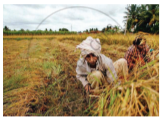
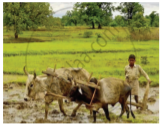
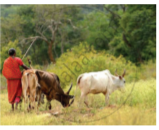
| Mr. Murugan is a farmer. He has a small piece of land and two bulls. He takes good care of his bulls as they help him in farming. Every morning, he takes the bulls for grazing. When it rains he ploughs the land with the bulls. As he has no one to help he starts sowing the seed before sunrise. He irrigates the crop till it grows. He reaps and binds the crop then takes it to thrash the paddy. Finally, with the help of the bulls, he takes the paddy to his house. |
Name the actions of Murugan.
 |
|
 |
|
 |
Where is Jaswantgarh located?
The pigeon flew away for dry twigs.
How did he lose his hand?
Anbu was talented in catching______.
Why was the fish floating on top?
Who is the hero of this story?
What was the age of Robinson Crusoe when he left for sea?
What did the archer want to show to the crowd?
Muthu collected ______ from every house.
The villagers took oath not to harm the _______.
Why did Jana chase the squirrel?
Why did Manju’s parents leave the village?
Let us learn a few more word by joining the dots. Join the dots and fill the table below.
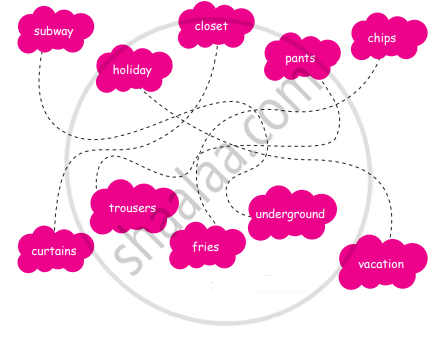
| subway | |
| holiday | |
| closet | |
| pants | |
| chips |
Do we worry when the progress is slow?
Write about the places where the poet wants us to run.
Replace the bold word/words with a word from the quiver and re-write the sentence –
In no time she hit the object she aimed at.
Are these sentence TRUE or FALSE
The poet tells the child to think of friends after it is dark.
Why did the child in the poem like looking at the pictures?
What did Pinocchio say in the end?
