Advertisements
Advertisements
प्रश्न
How the following conversion can be carried out?
Ethyl chloride to propanoic acid.
Write the chemical equation to convert the following:
Ethyl chloride to propanoic acid.
Advertisements
उत्तर
\[\ce{\underset{Ethyl chloride}{CH3CH2Cl} ->[KCN/EtOH-H2O][nucleophilic substitution] \underset{Propanenitrile}{CH3CH2CN} ->[H+/H2O][hydrolysis] \underset{Propanoic acid}{CH3CH2COOH}}\]
संबंधित प्रश्न
What happens when ethyl chloride is treated with aqueous KOH?
SN1 reactions are accompanied by racemization in optically active alkyl halides.
The stability order for carbocation is _______.
(A) 2° > 3° > 1°
(B) 3° > 2° > 1°
(C) 3° > 1° > 2°
(D) 1° > 3° > 2°
What is the action of the following on ethyl bromide
alcoholic solution of potassium hydroxide.
In a coordination entity of the type [PtCl2(en)2]2+ which isomer will show optical isomerism?
Which of the following is optically inactive?
Which one is most reactive towards SN1 reaction?
Which of the following is an optically active compound?
2-Bromopentane is heated with potassium ethoxide in ethanol. The major product obtained is ____________.
The correct order of increasing the reactivity of C–X bond towards nucleophile in following compounds.

(I)

(II)
(CH3)3CCl
(III)
(CH3)2CHCl
(IV)
The reaction of C6H5–CH=CH–CH3 with HBr produces:
How do polar solvents help in the first step in SN1 mechanism?
Optical activity of an enantiomeric mixture is +12.6° and the specific rotation of (+) isomer is +30°. The optical purity is ______ %.
Assertion (A) : Nucleophilic substitution of iodoethane is easier than chloroethane.
Reason (R) : Bond enthalpy of C-I bond is less than that of C-Cl bond.
Discuss the mechanism of alkaline hydrolysis of methyl bromide.
Explain why Grignard reagents should be prepared under anhydrous conditions.
Which one of the following chlorohydrocarbons readily undergoes solvolysis?
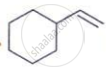 HCI, Major product ______.
Which of the following reactions is an example of nucleophilic substitution reaction?
Assertion (A):  undergoes SN2 reactions faster than
  .
.
Reason (R): Iodine is a better leaving group because of its large size.
In the light of the above statements, choose the correct answer from the options given below:
