Advertisements
Advertisements
प्रश्न
Explain the extended metaphor related to dentistry in the poem.
Advertisements
उत्तर
The poet has compared the skill and precision of the planners with that of a dentist. This comparison starts with the
They erase the flaws,
the blemishes of the past, knock off
useless blocks with dental dexterity.
All gaps are plugged.
with gleaming gold.
The country wears perfect rows
of shining teeth.
Anaesthesia, amnesia, hypnosis.
They have the means.
They have it all so it will not hurt.
so history is new again.
The piling will not stop.
The drilling goes right through
the fossils of the last century.
A comparison of this kind which continues through a series of lines and forms a dominant part of the poem is known as an Extended Metaphor.
The poet says that the planners erase the flaws and blemishes of the past, just like a dentist removes the imperfections and stains from the teeth. The planners even knock off useless blocks the same way a dentist would extract a rotten tooth because it doesn't serve its purpose anymore. The skillful uprooting of the past by the planners has been compared to the expertise possessed by a dentist. The poet goes on to say that like the dentist, the planners, too, plug the gaps of the city with gleaming gold, that is, they build glassy skyscrapers which are so flawlessly aligned, that they resemble perfect rows of shining teeth. The poet further adds that the planners also have the means to anaesthetise the people, so that they don't feel the pain of their history being taken away from them, which is similar to the dentist using anesthesia to numb the sensation during a dental procedure. Even the drilling is done for building new structures is compared to the drilling done by a dentist to remove all that is old and unwanted, just like the planners remove the traces of history by digging right through the fossils of the last century. The planners and the dentists perform similar tasks of replacing the old with the new and substituting imperfections for artificial perfection.
APPEARS IN
संबंधित प्रश्न
Read the following extract carefully and present the information in the form of notes with the help of the given clues :
Sarvepalli Radhakrishnan was the first Vice President and second President of India.
He was a teacher, a philosopher and 'an author. He had introduced the thinking of Western idealist philosophers like Plato, Plontinus, Bergson into Indian thought.
He was born on 5th of September, 1888 in a poor Brahmin family. As his father could not afford his education expenses, Radhakrishnan supported most of his education
through scholarships. He completed his B.A. and M.A. with majors in philosophy. He went on to become a professor of philosophy. He showed that Indian Philosophy, once translated into standard academic jargon, is worthy of being called philosophy by Western standards.
He thus, placed Indian Philosophy on world map.
Sarvepalli Radhakrishnan had established a strong relationship with the Soviet Union when he w Is appointed as the ambassador to the Soviet Union.
He has been honoured with many awards for his achievements nationally and internationally. He was honoured with the Bharat Ratna in 1954. He is also acknowledged with the Templeton Prize, Peace Prize of German Book Trade, Order of Merit and many other honours.
Title : Sarvepalli Radhakrishnan
Birth : 5th September, 1888
Qualifications : B.A. ___________
Introduced thinking of : _________,_________and ____ into Indian thought.
Work : Translated_____________ into standard____________
Ambassador : __________________________________
Honours : National___________
International Order of Merit
Working in pairs, go through the table below that gives you information about the top women tennis players since 1975. Write a short article for your school magazine comparing and contrasting the players in terms of their duration at the top. Mention some qualities that you think may be responsible for their brief or long stay at the top spot.
Top-Ranked Women Players
I. The roll of honour of women who enjoyed life at the summit since everybody’s favourite player, Chris Evert, took her place in 1975.
| Name | Ranked on | Weeks as No. 1 |
| Maria Sharapova (Russia) | 22 August 2005 | 1 |
| Lindsay Davenport (U.S.) |
October 2004 |
82 |
| Amelie Mauresmo (France) | 13 September 2004 | 5 |
|
Justine Henin-Hardenne (Belgium) |
20 October 2003 | 45 |
| Kim Clijsters (Belgium) | 11 August 2003 | 12 |
| Serena Williams (U.S.) | 8 July 2002 | 57 |
| Venus Williams (U.S.) | 25 February 2002 | 11 |
| Jennifer Capriati (U.S.) | 15 October 2001 | 17 |
| Lindsay Davenport (U.S.) | 12 October 1998 | 82 |
| Martina Hingis (Switzerland) | 31 March 1997 | 209 |
| Arantxa Sanchez-Vicario (Spain) | 6 February 1995 | 12 |
| Monica Seles (U.S.) | 11 March 1991 | 178 |
| Steffi Graf (Germany) | 17 August 1987 | 377 |
| Tracy Austin (U.S.) | 7 April 1980 | 22 |
| Martina Navratilova (U.S.) | 10 July 1978 | 331 |
| Chris Evert (U.S.) | 3 November 1975 | 362 |
Your class had to conduct a Morning Assembly. Write an account of how you prepared for it, what your role was and what you gained from the experience.
Your school is hosting an Inter-School Quiz Competition.
Write out a notice to be displayed in your school, giving all the details about the event.
In the following items, sentence A is complete, while sentence B is not. Complete sentence B, making it as similar as possible to sentence A. Write sentence B.
(A) He is so old that be cannot remember events of the past.
(B) He is too ............................................................................
Research the Battle of Blenheim. Then write an essay defending Wilhelmine’s position that the battle was a “wicked thing” or Kaspar’s position that it was a | “great victory.”
Explain and analyse the use of hyperbole in the poem.
Describe in your own words the poet’s feelings when he sees the host of golden daffodils ?
What is the encaged bird fearful of ?
What are the fears of the caged bird? Answer with examples from Maya Angelou’s poem.
Can the poem The Patriot be considered a dramatic monologue? Justify.
There's nobody on the house-tops now...
Just a palsied few at the windows set;
For the best of the sight is, all allow,
At the Shambles' Gate-or, better yet,
By the very scaffold's foot, I trow.
Read the above lines and answer the question that follow.
Explain with reference to the context.
Thus I entered, and thus I go!
In triumphs, people have dropped down dead,
"Paid by the world, what dost thou owe
Me?"....God might question; now instead,
'Tis God shall repay: I am safer so.
Read the above lines and answer the question that follow.
Which line is a contrast to the welcome he had received.
Thus I entered, and thus I go!
In triumphs, people have dropped down dead,
"Paid by the world, what dost thou owe
Me? "....God might question; now instead,
'Tis God shall repay: I am safer so.
Read the above lines and amswer the question that follow.
How did the leader come and go?
The eight other runners pulled up on their heels
The ones who had trained for so long to complete
one by one they all turned around and went back to help him
And brought the young boy to his feet.
Then all the nine runners joined hands and continued
The hundred-yard dash now reduced to a walk
And a banner above that said (Special Olympics)
Could not have been more on the mark.
That's how the race ended, with nine gold medals
They came to the finish line holding hands still
And a standing ovation and nine beaming faces
Said more than these words ever will.
Read the lines given above and answer the following question:
Explain in your own words the meaning of the line ‘the hundred-yard dash now reduced to a walk’.
What is the climax of Ray Bradbury’s “All Summer in a Day?”
You have recently moved to a new neighborhood in your city. Describe the new neighbourhood, comparing it to the one you have just left.
Study the picture given below. Write a short story, description, or account of what the picture suggests to you. Your composition may be about the subject of the picture, or you may take suggestions from it; however, your composition must have a clear connection with the picture.
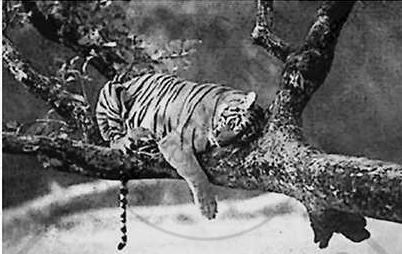
What do you think are the reasons for the extinction of languages?
Why is the image of the engine evoked by the poet?
Combine the following sets of ideas to show the contrast between them.
(i)The Emperor commissions a painting and appreciates its outer appearance.
(ii)The artist reveals to him the true meaning of his work.
How is the cyclic movement of rain brought out in the poem? Compare it with what you have learned in science.
Look for some more poems in the rain and see how this one is different from them.
Discuss with your partners
Reading plays is more interesting than studying science.
A sadist is a person who gets pleasure out of giving pain to others.
Given below are some dictionary definitions of certain kinds of persons.
Find out the words that fit these descriptions.
1. A person who considers it very important that things should be correct or genuine e.g. in the use of language or in the arts: P...
2. A person who believes that war and violence are wrong and will not fight in a war: P...
3.A person who believes that nothing really exists: N...
4. A person who is always hopeful and expects the best in all things: O...
5. A person who follows generally accepted norms of behaviour: C...
6. A person who believes that material possessions are all that matter in life: M...
Your teacher will speak the word given below. Write against two new words that rhyme with it.
young ______ ______
Use the phrase in a sentence of your own, after finding out its meaning.
cheered along
The poet says, “Beauty is heard in …”
Can you hear beauty? Add a sound that you think is beautiful to the sounds the poet thinks are beautiful.
The poet, Keats, said:
Heard melodies are Sweet,
But those unheard are sweeter.
What do you think this means? Have you ever heard a song in your head, long after the song was sung or played?
1. Given below is a page from a dictionary. Look at it carefully an
(i) find a word which means the same as ghastly. Write down the word and its two meanings.
(ii) find a word meaning a part of the school year.
(iii) find a word that means examination.

2. Now make lists of
(i) all the words on the page (plus any more that you can think of) that begin with terr-
(ii) five words that may follow the last word on the page, that.
(iii) write down your own meaning of the word thank. Then write down the meaning given in the dictionary.
Suppose you are Rasheed. Describe in your own words your visit to the fair. Do not refer to the Lucky Shop.
Find out from your grandparents or parents the names of vegetables and fruits they had eaten in their childhood and mention how the vegetables and fruits are different from the one's today.
| Name of the vegetable or fruit | Shape | Colour | Taste |
| 1. | |||
| 2. | |||
| 3. |
State whether the following statement is true or false. Correct the false statement.
There is nothing wrong with being grateful to great men.
The poet is prompted to call the sower an ‘august personality’ which means one who has reached the highest position in his workplace.
Explain this using the following point.
Perseverance
Write a summary of the poem with the help of the points given below:
- Title
- Introductory paragraph (about the poem/type/nature/tone)
- Main body (central idea/gist of the poem)
- Conclusion/opinions/views/appeal.
Let’s compose a poem. Two lines are given. Add two of your own.
There is another sky,
Ever serene and fair
Complete the following sentences.
The factors that have made 'The Jungle Book' a great movie are - _________________.
- It's a fantasy world of wonder.
- _____________________________
- _____________________________
- _____________________________
Now read the beginning and end of a sci-fi story given below and complete the story using your imagination.
|
‘The Magic Glasses’ After ten years of diligent experimenting on ‘light’, Jayant, a brilliant scientist, created a pair of eye-glasses which would enable him to see through all opaque objects, doors, walls, metal structures, etc. On Monday, he put on his ‘magic’ glasses and stepped into the busy street outside ____________________________ ______________________________________________________ ______________________________________________________ ______________________________________________________ ______________________________________________________ And so, Jayant received the ‘State Award for Brave Citizens’ _____________________________________________ |
Imagine that you are the Captain of your team. A famous cricketer is going to visit your school. You are assigned the task to conduct an interview of that famous cricketer. Frame a set of 10 questions that you will ask the cricketer. Take help of the points given below.
- Early life
- Interest in this field
- Inspiration
- Coaching and guidance
- Achievement/Records
- Future plans
- Advice to youngsters
Write a report of the following event in about 100-120 words.
You are the School Pupil Leader. You have been asked to write a report on the Inaugural Ceremony of English Literary Association of your school which was held recently. Write a report on the same in not more than 120 words.
Look at the picture given below and frame your own slogan.

Create a poster for the following.
You are Sita/ Sudhan. Design a poster in not more than 50 words to focus on not wasting water. Be creative.
You are waiting to board a train in a railway station. The train is delayed by an hour. Write a paragraph about the crowded scene in the railway station based on your observation.
| vendors | tea vendors | shops | families | piles of luggage |
| porters | trolley | scroll board | announcement | ticket counter queue |

How do you cook rice in your house?
Fill in the gaps in this recipe for cooking rice. Use the words in the box
|
boil |
water |
heat |
keep |
rice |
lid |
low |
water |
more |
ready |
What you'll need
- 1 cup uncooked white rice
- 2 cups water
- pinch of salt
How to make it
- ______the rice until the ______runs clear.
- Drain the water and ______ aside.
- In a medium sized pan, bring water to ______.
- Add the salt, stir, and then add the rinsed and drained ______.
- Reduce the heat, cover the rice, and let it simmer on ______ heat for 20 minutes.
- Check after 15 minutes to see if all the ______ has evaporated. If it has, the rice is ______.
- If not, replace the ______ and let the rice simmer for 5 ______
- Remove from ______ and serve
Write a short paragraph on 'summer' using the hints given.
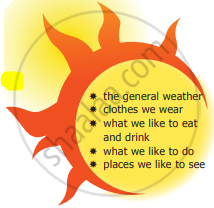
you can begin like this
I live in Chennai. The weather is...
Reference to context.

Draw pictures of the speakers of the above lines.
The child got an ______ for winning the race.
Connect the pairs of sentences below using and or but.
- Sheila got some chocolates for her birthday.
- She got some new clothes too.
Here is a word, morning. Now write down words related to it.

Rewrite the passage below using capital letters where necessary
oh dear said the fir tree I like my old needle-like leaves best for goats don't eat them and no man can steal them
Find one word from the story that means
to think w ______.
Describe the man awaiting the arrival of his friend.
What did Bob share with the cop about their friendship?
The narrator went to the photographer to ______.
The poet immortalizes the tree. Elucidate.
Write a paragraph of about 150 word, on the following topic.
Need for Moral Education in schools
What was the very first thing that the children noticed when it stopped raining on Venus in Ray Bradbury's story. 'All Summer in a Day'?
That special human quality does the poem 'Nine Gold Medals' celebrate?
Write a dialogue between a student and teacher on 'Importance of Yoga'.
Translate the following sentence into your mother tongue.
The third question according to Socrates is - is it useful?
What leads Mathew Arnold to tell his beloved, “Ah, love, let us be true’, in the last stanza of the poem, The Dover Beach? Write your answer in a short paragraph of 100-150 words.
