Topics
Part 1
Fractions in Disguise
Rational Numbers
- Rational Numbers
- Closure Property of Rational Numbers
- Commutative Property of Rational Numbers
- Associative Property of Rational Numbers
- Distributive Property of Multiplication Over Addition for Rational Numbers
- Identity of Addition and Multiplication of Rational Numbers
- Negative Or Additive Inverse of Rational Numbers
- Concept of Reciprocals or Multiplicative Inverses
- Rational Numbers on a Number Line
- Rational Numbers Between Two Rational Numbers
- Multiples and Common Multiples
A Square and A Cube
Linear Equations in One Variable
- Constants and Variables in Mathematics
- Equation in Mathematics
- Expressions with Variables
- Word Problems on Linear Equations
- Solving Equations Which Have Linear Expressions on One Side and Numbers on the Other Side
- Some Applications Solving Equations Which Have Linear Expressions on One Side and Numbers on the Other Side
- Solving Equations Having the Variable on Both Sides
- Some More Applications on the Basis of Solving Equations Having the Variable on Both Sides
- Reducing Equations to Simpler Form
- Equations Reducible to Linear Equations
The Baudhayana-Pythagoras Theorem
Power Play
Part 2
Understanding Quadrilaterals
- Concept of Curves
- Different Types of Curves - Closed Curve, Open Curve, Simple Curve.
- Basic Concept of Polygons
- Classification of Polygons
- Properties of Quadrilateral
- Sum of Interior Angles of a Polygon
- Sum of Exterior Angles of a Polygon
- Quadrilaterals
- Properties of Trapezium
- Properties of Kite
- Properties of a Parallelogram
- Properties of Rhombus
- Property: The Opposite Sides of a Parallelogram Are of Equal Length.
- Property: The Opposite Angles of a Parallelogram Are of Equal Measure.
- Property: The adjacent angles in a parallelogram are supplementary.
- Property: The diagonals of a parallelogram bisect each other. (at the point of their intersection)
- Property: The diagonals of a rhombus are perpendicular bisectors of one another.
- Property: The Diagonals of a Rectangle Are of Equal Length.
- Properties of Rectangle
- Properties of a Square
- Property: The diagonals of a square are perpendicular bisectors of each other.
A Story of Numbers
Proportional Reasoning-2
Exploring Some Geometric Themes
Practical Geometry
- Geometric Tool
- Constructing a Quadrilateral When the Lengths of Four Sides and a Diagonal Are Given
- Constructing a Quadrilateral When Two Diagonals and Three Sides Are Given
- Constructing a Quadrilateral When Two Adjacent Sides and Three Angles Are Known
- Constructing a Quadrilateral When Three Sides and Two Included Angles Are Given
- Some Special Cases
Data Handling
Quadrilaterals
Tales by Dots and Lines
Squares and Square Roots
- Concept of Square Number
- Properties of Square Numbers
- Some More Interesting Patterns of Square Number
- Finding the Square of a Number
- Concept of Square Roots
- Finding Square Root Through Repeated Subtraction
- Finding Square Root Through Prime Factorisation
- Finding Square Root by Division Method
- Square Root of Decimal Numbers
- Estimating Square Root
Number Play
Algebra Play
Cubes and Cube Roots
We Distribute, Yet Things Multiply
Area
Proportional Reasoning-1
Comparing Quantities
- Ratio
- Increase Or Decrease as Percent
- Concept of Discount
- Estimation in Percentages
- Basic Concepts of Profit and Loss
- Calculation of Interest
- Concept of Compound Interest
- Deducing a Formula for Compound Interest
- Rate Compounded Annually Or Half Yearly (Semi Annually)
- Applications of Compound Interest Formula
Algebraic Expressions and Identities
- Algebraic Expressions
- Terms, Factors and Coefficients of Expression
- Classification of Terms in Algebra
- Addition of Algebraic Expressions
- Subtraction of Algebraic Expressions
- Multiplication of Algebraic Expressions
- Multiplying Monomial by Monomials
- Multiplying a Monomial by a Binomial
- Multiplying a Monomial by a Trinomial
- Multiplying a Binomial by a Binomial
- Multiplying a Binomial by a Trinomial
- Concept of Identity
- Expansion of (a + b)2 = a2 + 2ab + b2
- Expansion of (a - b)2 = a2 - 2ab + b2
- Expansion of (a + b)(a - b) = a2-b2
- Expansion of (x + a)(x + b)
Mensuration
Exponents and Powers
Visualizing Solid Shapes
Direct and Inverse Proportions
Factorization
- Factors and Common Factors
- Factorising Algebraic Expressions
- Factorisation by Taking Out Common Factors
- Factorisation by Regrouping Terms
- Factorisation Using Identities
- Factors of the Form (x + a)(x + b)
- Dividing a Monomial by a Monomial
- Dividing a Polynomial by a Monomial
- Dividing a Polynomial by a Polynomial
- Concept of Find the Error
Introduction to Graphs
Playing with Numbers
- Introduction
- Definition: Polygon
- Parts of a Polygon
- Classification of Polygons (Naming)
- Types of Polygons
- Real-LIfe Examples
- Key Points Summary
Introduction
Every day, you see polygons all around you. Think about the shape of your smartphone screen, a stop sign at the crossing, a soccer ball, or even a slice of pizza. These are all polygons – one of the most important shapes in mathematics and in the real world.
Definition: Polygon
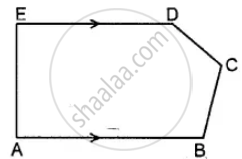
A polygon is any closed, flat shape that is formed by straight line segments (sides).
Example:


Parts of a Polygon
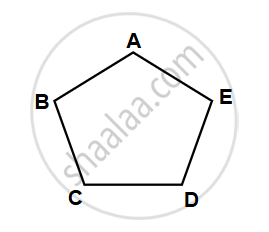
| Part | Definition | Example from the Figure |
|---|---|---|
| Side | The straight line segment that forms the boundary of the polygon. | AB, BC, CD, DE, EA |
| Vertex (Plural: Vertices) | The point where two sides meet, forming a corner. | A, B, C, D, E |
| Angle | The measure of the space between two sides meeting at a vertex. | ∠A, ∠B, ∠C, ∠D, ∠E |
Classification of Polygons (Naming)
|
Illustration |
Number of Sides | Name of Polygon | Example |
|---|---|---|---|
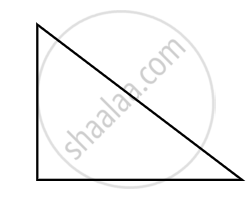 |
3 | Triangle | Shape with 3 sides |
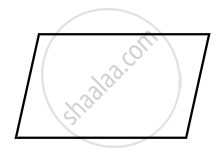 |
4 | Quadrilateral | Rectangle, Square |
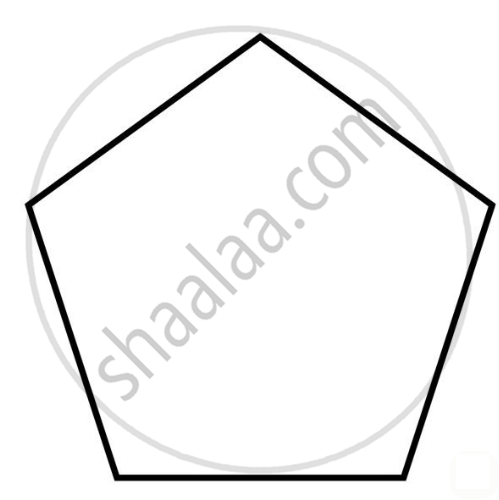 |
5 | Pentagon | Home plate in baseball |
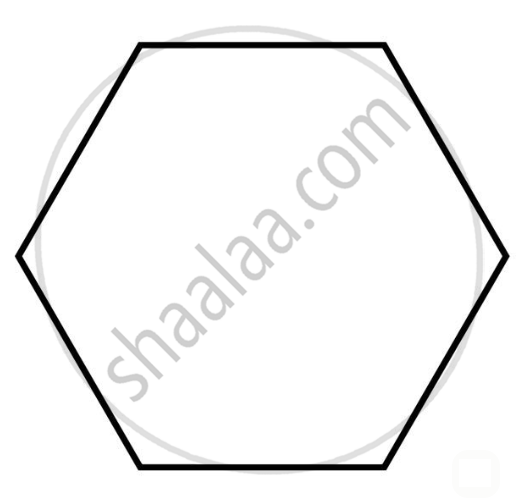 |
6 | Hexagon | Honeycomb cell |
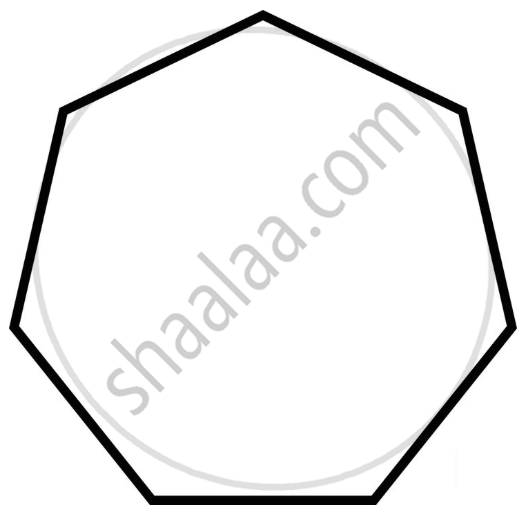 |
7 | Heptagon (Septagon) | Coin edges |
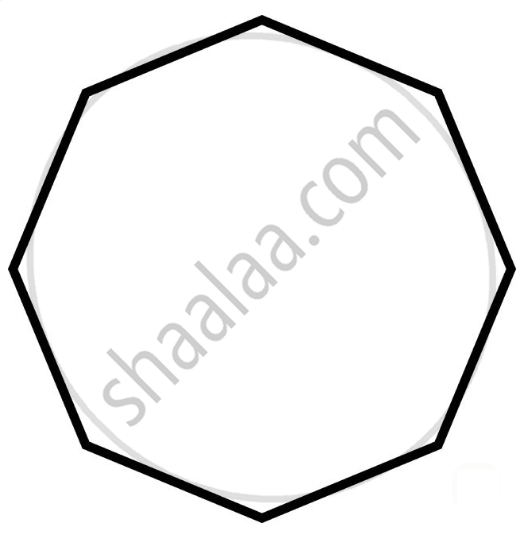 |
8 | Octagon | Stop sign |
Types of Polygons
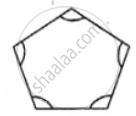
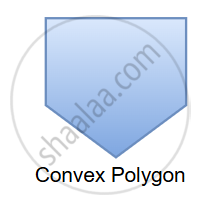
a) Convex Polygon
-
All interior angles are less than 180°.
-
No line joining any two points of the polygon passes outside it.
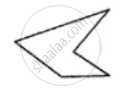
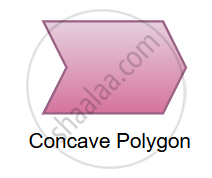
b) Concave Polygon
-
At least one interior angle is greater than 180°.
-
Some parts of the figure "cave inward."
Real-Life Examples
-
Flags and banners
- Slice of pizza
-
Walls of a house
- Some star shapes
Key Points Summary
- Polygon = Closed flat shape with straight sides and at least 3 sides
Must be CLOSED (starts and ends at same point)
Must have STRAIGHT SIDES (no curves)
Must have at LEAST 3 SIDES (minimum is a triangle)
- Convex: All vertices point outward, all angles < 180°
- Concave: At least one vertex points inward, at least one angle > 180°