Advertisements
Advertisements
प्रश्न
Tara, after completing her exams, went to her grandmother's house along with her younger brother Rahul. One day, Rahul came home after playing and switched on the fan and air conditioner. At the same time, his grandmother was preparing a milkshake for him using a mixer. Suddenly, they heard a big sound and the electricity of the house got shut down. Tara is called an electrician. He said the main reason for supply to shut down was overloading.
- What is overloading?
- Is overloading and short the same? When does short-circuiting take place?
- How can the effects of overloading be avoided?
Advertisements
उत्तर
- Overloading is the term used to describe the circuit's current flow when it exceeds the allowed value.
- Short-circuiting and overloading are not the same. When a live wire and a neutral wire are in direct contact with one another, a short circuit occurs.
- Overloading can be avoided by not connecting too many appliances to the same circuit at the same time.
APPEARS IN
संबंधित प्रश्न
Why is the tungsten used almost exclusively for filament of electric lamps?
Name any two effects of electric current.
The safety device based on the heating effect of electric current is called a ______.
Write Joule's law of heating.
Why is a series arrangement not used for connecting domestic electrical appliances in a circuit?
Why does the connecting cord of an electric heater not glow hot while the heating element does?
Explain why, tungsten is used for making the filaments of electric bulbs.
A heating coil has a resistance of 200 Ω. At what rate will heat be produced in it when a current of 2.5 A flows through it?
A resistance of 25 Ω is connected to a 12 V battery. Calculate the heat energy in joules generated per minute.
What is meant by the heating effect of current?
An electric fuse works on the:
(a) chemical effect of current
(b) magnetic effect of current
(c) lighting effect of current
(d) heating effect of current
How does the wire in the filament of a light bulb behave differently to the other wires in the circuit when the current flows?
What property of the filament wire accounts for this difference?
An electric iron is connected to the mains power supply of 220 V. When the electric iron is adjusted at ‘minimum heating' it consumes a power of 360 W but at 'maximum heating’ it takes a power of 840 W. Calculate the current and resistance in each case.
Give Scientific reason.
In practice, the unit kWh is used for the measurement of electrical energy, rather than joule.
An electric iron of 1100 W is operated for 2 hrs daily. What will be the electrical consumption expenses for that in the month of April? (The electric company charges Rs 5 per unit of energy).
Compute the heat generated while transferring 96000 coulombs of charge in two hours through a potential difference of 40 V.
The electricity bill specifies the usage in _______.
These days when current in the circuit suddenly increases _______ switches are used.
Write two devices based on the heating effect of electric current.
True or False – If False give the correct answer
The fuse wire does not melts whenever there is overload in the wiring.
Name any two appliances which work under the principle of heating effect of current.
Mark the correct choice
- Assertion: Electric appliances with a metallic body have three wire connections.
- Reason: Three-pin connections reduce the heating of the connecting wires.
Which of the following gases are filled in electric bulbs?
Assertion: Bending of wire decreases the resistance of the electric wire.
Reason: The resistance of a conductor depends on length, thickness, nature of material and temperature of the conductor.
Three incandescent bulbs of 100 W each are connected in series in an electric circuit. In another circuit another set of three bulbs of the same wattage are connected in parallel to the same source.
- Will the bulb in the two circuits glow with the same brightness? Justify your answer.
- Now let one bulb in both the circuits get fused. Will the rest of the bulbs continue to glow in each circuit? Give reason.
Can we use the same fuse in a geyser and a television set? Explain.
Explain the working of an electric fuse.
It would cost a man Rs. 3.50 to buy 1.0 kW h of electrical energy from the Main Electricity Board. His generator has a maximum power of 2.0 kW. The generator produces energy at this maximum power for 3 hours. Calculate how much it would cost to buy the same amount of energy from the Main Electricity Board.
______ wire is used in the filament of the bulbs.
Fuse is a strip of alloy wire which is made up of lead and tin with a very low ______.
Name a few appliances which work on the basis of the heating effect of current.
An electrochemical cell converts ______ energy into ______ energy.
1 kWh is equal to ______.
In which of the following applications of Iron, rusting will occur most? Support your answer with valid reason.
| A | B | C | D |
 |
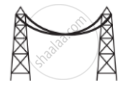 |
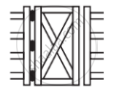 |
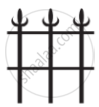 |
In a set up the students coated iron nails with zinc metal and noted that, iron nails coated with zinc prevents rusting. They also observed that zinc initially acts as a physical barrier, but an extra advantage of using zinc is that it continues to prevent rusting even if the layer of zinc is damaged. Name this process of rust prevention and give any two other methods to prevent rusting.
An electric kettle consumes 1 kW of electric power when operated at 220 V. A fuse wire of what rating must be used for it?
An electric iron of resistance 20 Ω draws a current of 5 A. The heat developed in the iron in 30 seconds is ______.
An electric iron is rated 220 V, 2 kW. If the iron is used for 3h daily find the cost of running it for one week if it costs ₹ 4.25 per kWh.
