Advertisements
Advertisements
प्रश्न
Read the following Intros of news items. Choose any ONE of them and write the headline, the dateline and a short continuing paragraph for it.
(i) A shortage of onions in Maharashtra has surged prices by 30 percent. It forced the authorities to import onions from abroad.
(ii) The birth anniversary of the late President Dr. S. Radhakrishnan was celebrated yesterday in Saraswati Kanya Pathshala as Teacher's Day.
Advertisements
उत्तर
APPEARS IN
संबंधित प्रश्न
A1. Information Transfer (Non-verbal to verbal)
'Transfer the following information into a paragraph form.
Manuscripts collected from both students and teachers.
↓
Throughly screened, necessary additions, alterations. omissions are made.
↓
Preparing a rough draft
↓
Manuscripts along with a dummy sent to the printer
↓
Proof correction
↓
Sent for final printing
OR
A2. Here are some tips about keeping healthy as given in a Science magazine. Read and
write in the form of Do's and Don'ts (table):
You must include vegetables and fruits in your diet and drink a lot of water. You should avoid junk food and aerated water. You shouldn't sit for long period of time. Rather you should exercise regularly. You shouldn't ignore the importance of good breathing habits. Try breathing deeply whenever you think of it. See to it that you leep for at least 7 hour a day. In fact, you should avoid irregular timings.
A1.Books have the power to inspire and do many more things. Observe the web diagram and convert the information into a paragraph. Add a few more points to the given information:

A2. Read the given information and fill the table provided:
Acclaimed in Indian classics as the Kalpavriksha, the all giving tree the coconut palm grows in several states in India. The coconut palm is member of the plant family Arecaceae popularly known as palm family. It flourishes on sandy soils requiring high humidity abundant sunlight and high rainfall for optimal growth. All parts of the palm are used in some way or another in the daily life of the people. Coconut water provides a refreshing and nutritious drink. The firm kernel that line the inside is high in calories and the white milk extracted from it is used in many different ways. Oil extracted from dried mature coconuts is used as cooking oil. The leaves are braided to make thatched roof and mats. The mid ribs of the leaves are dried and tied together to make brooms. The coconut shell and husk are good sources of efficient fuel. During religious ceremonies married women are often presented with a coconut along with a few grains of rice as a symbol of fertility and prosperity.
| Name : | |
| Scientific name : | |
| Place where grown : | |
| Climate required : | |
| Uses : | |
| (a) Liquid | |
| (b) Kernel | |
| (c) Leaves | |
| (d) Shell | |
| Symbolises : |
Read the following tree diagram about 'Morphemes' and write a short paragraph on it.

Read the following extract and complete the tree – diagram given below:

Read the following extract and extend it by adding an imaginary paragraph of your own in about 120 words :
Someone was standing in the doorway. An elderly woman,
very fluffy, very pink. Her cheeks were pink, her dress was pink,
her hair was bunched up and white. She was straight out of Agatha Christie.
"Miss Marple!" I exclaimed.
''May I come in?" asked the pink lady.
"Please come in " said my mother. ''Do sit down. Do you
require a room?" '
''Not today, thank you. l'm staying with Padre Dutt. He insisted on putting me up. But I may want a room for a day or two - just for old times' sake."
"You've stayed here before."
"A long time ago. I'm Mrs Green, you know. The missing
Mrs Green. The one for whom you put up that handSome tombstone in the cemetery. I was very touched by it. And I'm glad you didn't add ' Beloved "wife of Henry Green ', because I didn't love him any more than he loved me."
Information Transfer Non-Verbal to Verbal :
Observe the following web-chart carefully and write two short paragraphs of ‘Advantages of watching Television’ with the help of the points given.
Read the following paragraph about ‘The causes of pollution and the possible solutions’ and tabulate the same information.
|
Pollution is the contamination into the natural environment that causes adverse change. Pollution levels are increasing day by day. There are various reasons for it. Air pollution is caused chiefly by industrial pollutants and by increased levels of RSPM due to higher flow of vehicular traffic. Water pollution is caused to a large extent by industrial effluents and the immersion of POP idols. Sound pollution levels have increased due to blaring loudspeakers during festival time and increased volume of traffic. In order to solve the problems of air pollution, the chief method seems to be tree plantation. More and more citizens and NGO’s should take up green causes with civic authorities. We need to protect our forest and conserve our mangroves. In order to solve the problem of water pollution, we need to develop effective waste management techniques. Also eco-friendly idols should be used during festival time. An awareness in general populace is very necessary to solve the problem of sound pollution. Strict enforcement of decibel levels during occasions and festival time by the police is a must. |
Use the following table for your answer.
| Pollution | Caused by | Solution |
Information Transfer: Verbal to Non-verbal
Read the following paragraph and prepare a tree-digram using the information given in the paragraph.
Quite often it is your family and friends who are the only source of solace in times of tension and confusion. Whether it is the time of exams, results and admission, school issues or a misunderstanding with a dear friend, you will notice
that your family members might want you to share your worries with them. One great advantage about sharing problems with your family members is that they actually care about your happiness. Your problem will not go beyond the people whom you are confiding in and will ensure that you are relieved of the stress and worries besides being the source of practical solutions for your problems.The relief it brings is immense not just for you but also for them as they would be the happiest to see you relaxed and calm. This is what makes family bonding
special. Situations such as these can bring you closer to your siblings and make you realise that such oneness is unique and special.
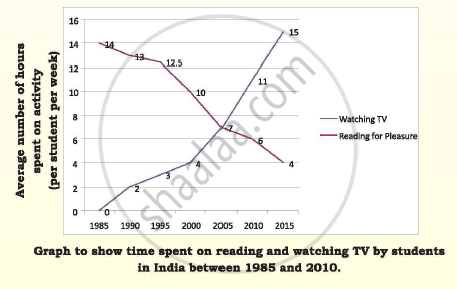
The graph below describes the average number of hours spent by students aged 11-15 years on two activities (per student per week) in India between 1985 and 2010 and gives projections for 2015. Study the information carefully and then write a paragraph interpreting the data. Include the following:
• A comparison of the trends in the two activities
• A comparison of the situation in 1985
• A comparison of the situation between 1985 and 2010
• Predictions for the future
A survey was conducted among the teachers of New Hope High School to find out whether Class X students should be allowed to use mobile phones in the campus. The results of the survey are shown in the pie-chart below.
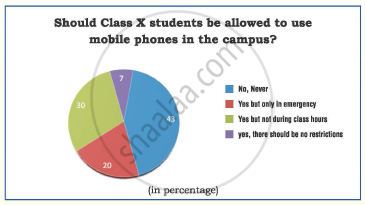
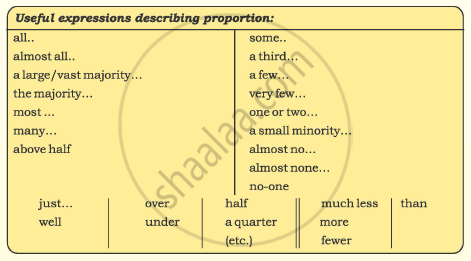
Look at the pie chart and the useful expressions above. Fill in the gaps in the following summary of results.
As can be seen from the above pie-chart, nearly a__________ of the teachers felt that Class X students must not be allowed to use mobile phones in the school campus. However, nearly one____________ believed
the phones should be permitted but not during class hours. About __________were of the opinion that the students may be allowed to use these phones only in times of emergency while a very__________ did not favour any restrictions on their use in the campus.
Read the following extract and complete the table given below about 'Types of Diseases':
Health is defined as not simply the absence of disease. It involves a state of feeling well, both in body and in mind.
The diseases may be classified into the following types, Some diseases are present at birth. They are called congenital diseases. They may develop during pregnancy or are inherited, Some of them may be caused by environmental factors. Examples of congenital diseases are Down's syndrome, sickle cell anaemia, cystic fibrosis, haemophilia, etc.
Some diseases are acquired by humans themselves and hence are called Self-Inflicted or Acquired diseases. Examples of acquired diseases are coronary heart diseases, hypertension.
Some diseases are transmitted from one person to another. They are called as Communicable or Infectious diseases. They are caused by biological agents, Examples of communicable diseases are Cholera, Typhoid, Measles, Malaria, etc.
Non- communicable diseases are caused by exogenous factors like physical, chemical, nutritional deficiencies. The examples are Kwashiorkor, Pellagra, Scurvy, and Rickets, etc.
Title
| Sr.No. | Types | Causes |
Examples |
| 1. | Congenital |
o develop during pregnancy o environmental factors |
|
| 2. | Self-Inflicted Acquired | Coronary heart disease. hypertension | |
| 3. | By biological agents | Cholera, typhoid, measles, malaria | |
| 4. | Non-communicable diseases | Kwashiorkor, Pellagra, Scurvy, and Rickets |
Extend the given extract by adding an imaginary paragraph of your own (about 120 words)
A couple of days later, I was walking around the camp, around the barracks, near the barbed-wire fence where the guards could not easily see. I was alone.
On the other side of the fence, I spotted someone: a little girl with light, almost luminous curls. She was half-hidden behind a birch tree.
I glanced around to make sure no one saw me. I called to her softly in German. 'Do you have something to eat?'
She didn't understand.
I inched closer to the fence and repeated the question in polish. She stepped forward. I was thin and gaunt, with rags wrapped around my feet, but the girl looked unafraid. In her eyes, I saw life.
She pulled an apple from her woollen jacket and threw it over the fence.
I grabbed the fruit and, as I started to run away, I heard her say faintly, 'I'II see you tomorrow."
Read the following tree-diagram and prepare a short paragraph regarding 'Soil Erosion'.

Information Transfer (Non-verbal to Verbal):
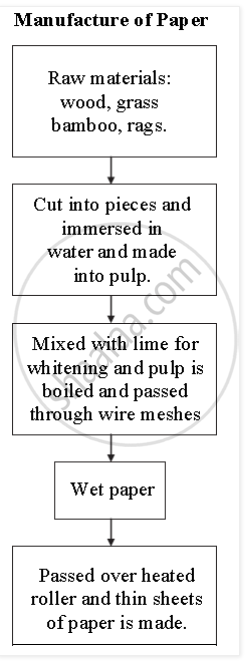
Do anyone of the following activities.
Transfer the given information into a paragraph.
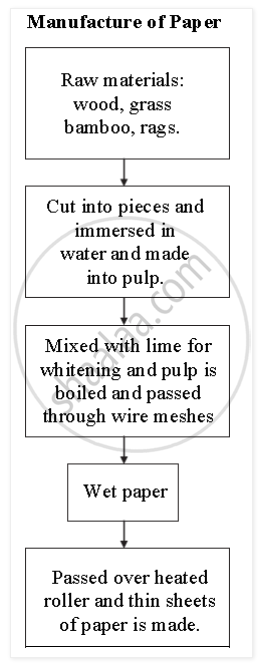
Read the following passage and complete the table
Dialect is a form of a language spoken in one area which may be different from other forms of the same language. Each language has dialects which change every few kilometers. India is a multi-lingual country. Each state follows its own language as official language. For example, Marathi is the official language of Maharashtra, while Ahirani, Wharadi, Konkani and Malwani are its dialects. Several languages in India are spoken but do not have any script. In Karnataka, Kannada is the official language. Tulu is spoken in Karnataka but has no script. In England, English is the official language while Scottish, spoken in Scotland and Welsh spoken in Wales are dialects of English.
| State | Official language | Dialects | Spoken/ Without script |
| Maharashtra | Marathi | ||
| Karnataka | |||
| England |
Look at the table given below and write a short paragraph based on it in about 120 words :
The following table shows irregular rainfall causing low groundwater level in Nashik district, and Talukawise its worst hit villages.
| Drop in water level | Talukas | |||
| 0 to 1 meter | Nashik, Igatpuri, Niphad, Chandwad, Kalwan, Deola, Tryambakeshwar | |||
| 1 to 2 meters | Sinnar, Yeola, Nandgaon, Satana, Malegaon | |||
| Worst Hit Areas | ||||
| Talukas | Situation over coming months | |||
| Oct.-Dec. | Jan-Mar. | Apr.-June | Total | |
| Igatpuri | 01 | 06 | 49 | 56 |
| Malegaon | 31 | 54 | 37 | 122 |
| Nandgaon | 08 | 17 | 37 | 62 |
| Niphad | 01 | 04 | 47 | 52 |
| Source: Times of India, Nashik Times, City Edn. Date: Oct. 18, 2018 |
||||
Read the following text and present the information in a tabular form:
Raja Ram Mohan Roy was a zealous social worker holding modern and progressive views. He firmly stood against social bigotry, conservation, and superstition and advocated English and Western Education for his fellowmen. He knew many languages viz English, Persian, Arabic, Latin, French, and even Hebrew. He was born in 1772 in West Bengal. He joined East India Company in 1805. The title ‘Raja’ was conferred on Ram Mohan Roy by the Mogul Emperor. In 1814 he founded the Atmiya Sabha and in 1828 the ‘Brahmo Samaj’. He abolished ‘sati’, child marriage and the purdah. He is rightly called the ‘father of Indian Renaissance’ or the ‘Father of Indian Nationalism’. He died on 27 Sept. 1833 in England.
| Name: | |
| Date of Birth: | |
| III practices abolished: | |
| Institutions launched: | |
| Languages Known: |
Transfer the information into a paragraph about ‘Average Annual Tea Consumption Per Person’ as shown in the table given below :
| Nation | Turkey | Ireland | United Kingdom | Russia | Morocco | China | India |
| Tea consumption per person ( in Kg) | 3.15 | 2.19 | 1.94 | 1.38 | 1.21 | 0.57 | 0.32 |
Views :
Develop a paragraph on the view by using the points given below :
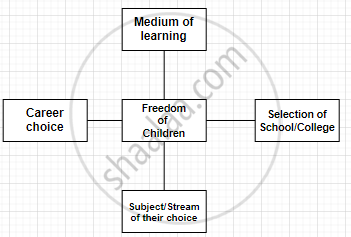
Read the following paragraph and transfer the information in the form of a tree diagram:
|
The United Nations was established at the end of the second world war to maintain international peace and security. The UN has several specialized agencies such as the World Health Organisation (WHO), the Food and Agricultural Organisation (FAO), the International Labour Organization (ILO), the United Nations Educational, Scientific and Cultural Organisation (UNESCO). |
Read the given extract carefully and transfer the following into a flow chart:
Garbage disposal has become a great problem in urban areas. A lot of garbage is being collected from every household. Some cities have come up with innovative ideas to tackle this problem. First of all, the garbage in trucks is segregated into organic waste from recyclable waste. Then it is put in separate containers.
Earthworm culture is added to this organic waste. After a few weeks the conversion process is complete and what we can get is vermicompost which is a very good quality compost that can be mixed with soil and used for better yields.
(i) Read the following tree diagram and find out more information about opportunities in ‘on and off the shore’ the Indian Navy.

(ii) Required qualifications and various fields/opportunities for women to join in the Navy.

(iii) Colleges that provide education in oceanography -
- National Institute of Oceanography, Goa
- National Institute of Oceanography, Mumbai
- MBA (Logistic Shipping Management), IIKM Business School, Calicut, Kerala
- Indira Gandhi College of Distance Education IGCDE Tamil Nadu.
Non-verbal to Verbal:
Transfer the information into a paragraph:
Observe the tree diagram of types of disease and write a paragraph on it. Suggest a suitable title.

Read the information given in the following tree diagram regarding “Types of vitamins” Write a paragraph with the given points and give a suitable title to it.
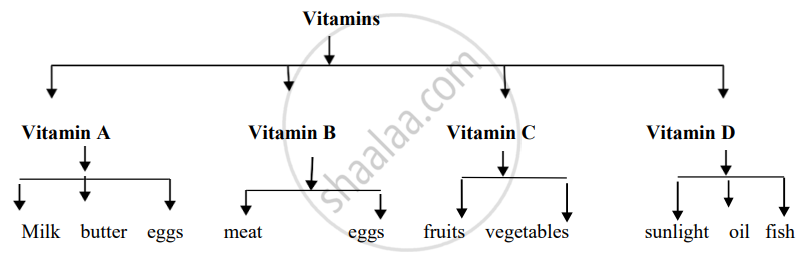
Verbal to Non-verbal:
Write Do’s and Don’ts for ‘In the Examination Hall’. Suggest a suitable title.
You should carry all necessary materials for exam such as pens, pencils, erasers, scale, geometrical box etc. You should not forget your identity card and hall tickets. After you enter the examination hall, keep all required things on your desk. You should follow the instructions given by the invigilator. You must read the question paper carefully. You should avoid observing other students because their tension might disturb you. You need not feel upset even if you notice other students writing very speedily. You stay calm. In any case do not talk to any of the students during the exam. It’s advisable to drink sufficient water before you enter the exam hall. Last but not the least, don’t forget to check all answers in last 10 minutes, before submitting your answer sheet to the invigilator.
Non-verbal to verbal:
Transfer the information into a paragraph.
Observe the web diagram and write a paragraph on it. Suggest a suitable title.

Non-verbal to Verbal
Study the table given below and prepare a paragraph on it.
| Alligators | Crocodiles | |
| 1. | U shaped round snout | V shaped round snout |
| 2. | Live in fresh water | Live in fresh water and saline water |
| 3. | Have wide jaws; upper jaw is wider than the lower jaw | Have narrow jaws; both the jaws are of the same size |
| 4. | Only upper teeth are visible when the mouth is closed | Both the teeth are visible when the mouth is closed. |
| 5. | No functioning salt glands | Very functional salt glands |
| 6. | Sensory pits on scales near the jaw | Sensory pits in every scale of the body |
Study the concept chart from the self-help magazine section of a monthly publication.

Write a paragraph in not more than 120 words, analysing the listed responses to the situation when one faces setbacks.
Read the following information and complete the table given below. Give a suitable title:
|
Turtles and tortoises are closely related. They are both reptiles from the same family (Testudines or Chelonian). The main difference between the two is that turtle is the name given to water-dwellers and tortoise is the name given to land-dwellers. They are easily identified by the presence of a shell, from which their head and limbs protrude. Turtles are found in Africa and America. Its shell is lighter and more streamlined than that of a tortoise. To enable swimming, it has webbed feet with long claws. Turtles are omnivores, eating both vegetation and meat. Their lifespan is shorter than that of the tortoise with an average of 20-40 years and a maximum of 86 years. Tortoises are found mainly in Asia and Africa, but also in America. It has a rounder, bumpier, heavier shell than a turtle. Its bent legs are short and sturdy. Tortoises are usually herbivores, but some eat meat, their lifespan is longer than that of the turtle with an average of 80-150 years and a maximum of 188 years. |
| FEATURES | TURTLES | TORTOISE |
| (i) Habitat | ||
| (ii) Places found in | ||
| (iii) Shell | ||
| (iv) Lifespan |
Transfer the information into a paragraph:
Observe the chart and write a paragraph on it. Suggest a suitable title:

Transfer the given information in the form of a paragraph.
THE WATER CYCLE PROCESS

Non-Verbal to Verbal:
Write the given information in the form of a paragraph:
Distribution of working children by type of work in 2011
| Area of work | Percentage | Number (in millions) |
| Cultivators | 26.0 | 2.63 |
| Agricultural labourers | 32.9 | 3.33 |
| Household workers | 5.2 | 0.52 |
| Other workers | 35.8 | 3.62 |
Non-verbal to verbal:
The following diagram shows important factors to be considered while choosing a career. Write a paragraph based on it. Give a suitable title to it:

Gurmeet Kaur is an aspiring candidate for a public- funded engineering college in the suburbs. She belongs to a nearby village, has minimal technological skills and exposure, has the required cut-off percentage and is looking for a complete or partial scholarship.
Write a paragraph in about 100-120 words analysing her SWOT notes to support your stand on whether she should /not join the college.
|
STRENGTH
|
WEAKNESS
|
|
OPPORTUNITIES
|
THREAT
|
A survey was conducted in the National Capital in over twenty schools about 40 different activities that interest the children in the age group of 13 years to 15 years. Write a paragraph in not more than 120 words, analyzing the following information.

Verbal to Non - Verbal
Read the following information and write it into Do's and Don'ts. Give a suitable title for it:
Outside "The Central Library" there is a board displaying some rules and regulations for the members.
They are as follows:
- You should enter your name and registered number in the register, before entering in the library.
- You should pay your monthly/annual membership on time.
- You are not allowed to write anything in the book/magazine you have taken.
- You should not take any book or magazine out of the library without prior permission and registration.
- You should maintain pin-drop silence in the library.
- You are not allowed to eat, drink, chat or smoke inside the library.
- You should return the books or magazines you have taken on time.
- You should not disturb other members and the librarian when you are in the library.
Non-Verbal to Verbal
Write a paragraph of 100 words based on the information given in the following table and give a suitable title for it:
| Types of Forests | Plants | Animals | |
| (1) |
Equatorial Evergreen |
Mahogany, Rosewood, Ironwood, Oil palm |
Different types of monkeys, snakes, lizards, bats, tse-tse flies |
| (2) | Marshes |
Mangraove, Creepers, Numerous tall trees like Mahogany |
Different types of insects, snakes, crocodiles, tse-tse and other flies |
Given below is a web diagram containing information about the different means of electronic devices of entertainment-some audio, some visual and some audio-visual.
Write a short paragraph based on information from the web. Give a suitable title to it.

Draw a table of comparison (tabular form) between Amir and Anita that includes the information given below. Give a suitable title:
|
Amir and Anita are good neighbours. They are cooperative and have happy families. Amir, an 18-year young chap is in std. 12 and goes to a famous college in the city. Anita, a 16-year charming girl will appear for her 10th class Board Exam this year. Amir’s father a big businessman in the city and Anita’s father is a government officer. Amir’s mother, a housewife, helps his father in their family business also. Anita’s mother is a doctor and has her own clinic. Amir is a good sportsman who likes to play outdoor games on the contrary Anita likes to remain indoors and enjoys indoor games. Amir is strong and dynamic. Though strong Anita is sensitive also. Photography and bird-watching are my interests of Amir. Anita spends her time in her hobbies of singing and painting. Amir after his 12th exam wants to pursue his career in wild-life photography. Anita would like to join Arts stream after her Board Exams. |
| Amir | Anita | |
| (1) Age | ||
| (2) Class | ||
| (3) Father’s occupation | ||
| (4) Mother's occupation | ||
| (5) His/Her qualities | ||
| (6) His/Her hobbies/interest | ||
| (7) His/Her ambitions/future plans |
(A1) Verbal to Non-Verbal:
Read the following information and complete the flowchart for the same, and give a suitable title.
|
Sugar beet grows through the summer and is harvested in autumn and winter. When it arrives on site, the sugar beet is washed. The sugar beet is sliced into thin strips called cossettes.‘These thin strips are mixed with hot water to extract the sugar and a lime solution is added to the raw juice to remove any impurities. |
