Advertisements
Advertisements
प्रश्न
Pollen grains from anther are transferred to the stigma.
विकल्प
True
False
Advertisements
उत्तर
True
APPEARS IN
संबंधित प्रश्न
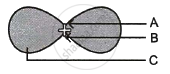
Name the parts A, B and C shown in the diagram and write their functions.

How does fertilisation occur in flowers? Name the parts of the flower that develop into (i) seed, and (ii) fruit after fertilisation.
A student has to perform the experiment "To identify the different parts of an embryo of a dicot seed." Select from the following an appropriate group of seeds:
(a) Pea, gram, wheat
(b) Red kidney bean, maize, gram
(c) Maize, wheat, red kidney bean
(d) Red kidney bean, pea, gram
Give one example of a unisexual flower.
Name the male part of the flower.
Explain the terms 'cross-pollination'?
What is meant by ‘unisexual flowers’?
How does pollination occur?
Draw a neat diagram of a flower showing its various parts. In this diagram mark stem, receptacle, sepals, petals, stamen and carpel.
Which of the following statements are true for sexual reproduction in flowering plants?
(i) it requires two types of gametes
(ii) fertilisation is a compulsory event
(iii) it always results in the formation of zygote
(iv) offsprings formed are clones
(a) (i) and (iv)
(b) (i), (ii) and (iv)
(c) (i), (ii) and (iii)
(d) (ii), (iii) and (iv)
In what ways is fertilisation in a plant different from fertilisation in a human?
Mention the function of Stigma.
Give one example each of unisexual and bisexual flowers. Differentiate between the two types of pollination that occur in flowers. What happens when a pollen lands on a suitable stigma? Write about the events that occur till the seed formation in the ovary.
A student is asked to study the different parts of an embryo of pea seeds. Given below are the essential steps for the experiment :
(I) Soak the pea seeds in plain water and keep them overnight.
(II) Cut open the soaked seed and observe its different parts.
(III) Take some pea seeds in a petri dish.
(IV) Drain the excess water. Cover the seeds with a wet cotton cloth and leave them as it is for a day.
The correct sequence of these steps is
(A) III, I, IV, II
(B) III, IV, I, II
(C) III, I, II, IV
(D) III, II, I, IV
(a) Identify A, B and C in the given diagram and write their functions.
(b) Mention the role of gamete and zygote in sexually reproducing organisms.
Describe an activity to demonstrate phototropism.
Which of the following is not an unisexual flower?
a) Coconut
b) Papaya
c) Gulmohor
d) Maize
Sketch the labelled diagram.
Flower with its sexual reproductive organs.
Explain sexual reproduction in plants.
Differentiate between self-pollination and cross-pollination.
Find an odd one out.
Calyx : Sepals : : Corolla : ________________
What does germination mean?
Explain the sexual reproduction process in plants with a diagram.
Observe the figure below. Write functions of the labelled parts.

The male reproductive part of a flower is ______.
In which part of the flower germination of pollen grains takes place?
Which type of development is observed in male gametophytes of plants?
Length of pollen tube depends on the distance between ______
Is the chromosome number of zygote, embryonal cells and adult of a particular organism always constant? How is the constancy maintained in these three stages?
Draw the diagram of a flower and label the four whorls. Write the names of gamete producing organs in the flower.
Trace the path a male gamete takes to fertilise a female gamete after being released from the penis.
What is the structural unit of sexual reproduction in plant?
Sexual maturation of reproductive tissues and organs are necessary link for reproduction. Elucidate.
Type of sexual reproduction is ______.
Given below is a diagram of a germinating seed. Label the parts that:
- gives rise to future shoot.
- gives rise to future root system.
- stores food.
The number of pollen sacs in a dithecous anther is ______.
