Advertisements
Advertisements
प्रश्न
Pollen grains from anther are transferred to the stigma.
पर्याय
True
False
Advertisements
उत्तर
True
APPEARS IN
संबंधित प्रश्न
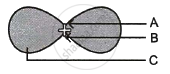
Name the parts labelled as A, B, C and D in the diagram given below:-

What is pollination?
Mention the changes a flower undergoes after fertilisation.
Explain what you understand by sexual reproduction.
What is the name of female part of a flower?
Where is the male gamete formed in flowering plants?
Where is the female gamete formed in flowering plants?
Fill in the following blank with suitable word :
Ovules contain ......... gametes of a plant.
Fill in the following blank with suitable word :
The name of the structure in the flower in which the male gamete is formed is...........
Fill in the following blank with suitable word :
The term used to refer to the transfer of pollen from the stamen of one flower to the carpel of another flower of the same species is...........
What is made in anther of a flower?
Name the part of a seed which contains stored food.
In tobacco plant, the male gametes have 24 chromosomes.
What is the number of chromosomes in the female gamete?
Which of the following is the correct sequence of events of sexual reproduction in a flower?
(a) pollination, fertilisation, seed, embryo
(b) seed, embryo, fertilisation, pollination
(c) pollination, fertilisation, embryo, seed
(d) embryo, seed, pollination, fertilisation
Which of the following statements are true for sexual reproduction in flowering plants?
(i) it requires two types of gametes
(ii) fertilisation is a compulsory event
(iii) it always results in the formation of zygote
(iv) offsprings formed are clones
(a) (i) and (iv)
(b) (i), (ii) and (iv)
(c) (i), (ii) and (iii)
(d) (ii), (iii) and (iv)
The correct sequence of reproductive stages occurring in flowering plants is ______.
In a bisexual flower, inspite of the young stamens being removed artificially, the flower produces fruit. Explain.
Fill in the blank:
Seeds are formed from________.
(a) Identify A, B and C in the given diagram and write their functions.
(b) Mention the role of gamete and zygote in sexually reproducing organisms.
List any two differences between pollination and fertilization.
Which of the following is not an unisexual flower?
a) Coconut
b) Papaya
c) Gulmohor
d) Maize
Identify the odd. Stigma, Style, Pollen, Ovary.
Prepare a slogan for campaign against female foeticide.
A student is observing the temporary mount of a leaf peel under a microscope. Draw a labelled diagram of the structure of stomata as seen under the microscope
Find the odd one out:
Accessory whorls : Calyx and corolla : : essential whorls : ______________
Define.
Inflorescence
The male reproductive part of a flower is ______.
In which of the following manner the arrangement of megaspores in a tetrad is observed in angiosperms?
What would be the number of chromosomes of the aleurone cells of a plant with 42 chromosomes in its roots tip cells?
In a flowering plant, archesporium gives rise to ______.
The flower of the Hibiscus plant is ______
Variations occur as a result of ______
Which among the following statements are true for unisexual flowers?
- They possess both stamen and pistil
- They possess either stamen or pistil
- They exhibit cross pollination
- Unisexual flowers possessing only stamens cannot produce fruits
Give reason for the following:
Fertilization cannot take place in flowers if pollination does not occur.
Trace the path a male gamete takes to fertilise a female gamete after being released from the penis.
What is the structural unit of sexual reproduction in plant?
The figure below shows the concept of double fertilization. Complete the flow chart showing the progress at each step:

In flowering plants, the pollen grains are transferred to stigma by pollination but the female germ cells are present in the ovary.
Explain with the help of a labelled diagram (only concerned parts), how the male germ cell reaches the ovary.
Given below is a diagram of a germinating seed. Label the parts that:
- gives rise to future shoot.
- gives rise to future root system.
- stores food.