Advertisements
Advertisements
प्रश्न
Name the male part of the flower.
What is the name of the male part of a flower?
Advertisements
उत्तर
The stamen is the male part of the flower.
APPEARS IN
संबंधित प्रश्न
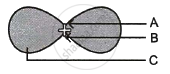
Name the parts A, B and C shown in the diagram and write their functions.

What is pollination?
A student identified the various parts of an embryo of a gram seed and listed them as given below :
(I) Testa
(II) Plumule
(III) Radicle
(IV) Cotyledon
(V) Tegmen
Out of these the actual parts of the embryo are :
(A) I, II, III
(B) II, III, IV
(C) III, IV, V
(D) II, IV, V
You are asked by your teacher to study the different parts of an embryo of a gram seed. Given below are the steps to be followed for the experiment:
I. Soak the gram seeds in plain water and keep them overnight.
II. Cut open a soaked seed and observe its different parts.
III. Take some dry gram seeds in a petri dish.
IV. Drain the excess water.
V. Cover the soaked seeds with a wet cotton cloth and leave them for a day.
The correct sequence of these steps is :
(A) III, I, V, IV, II
(B) III, I, II, IV, V
(C) III, IV, V, I, II
(D) III, I, IV, V, II
State the function of flowers in the flowering plants.
The process of fusion of the male and female gametes is called ______.
Where is the male gamete formed in flowering plants?
Where is the female gamete formed in flowering plants?
Fill in the following blank with suitable word :
Pollen grains contain ............ gametes of a plant.
Fill in the following blank with suitable word :
The ovary of a flower becomes ....... after fertilisation.
Fill in the following blank with suitable word :
The.......... at the base of the carpel contains egg cells.
Draw a neat diagram of a flower showing its various parts. In this diagram mark stem, receptacle, sepals, petals, stamen and carpel.
Which of the following statements are true for flowers?
(i) Flowers are always bisexual.
(ii) They contain sexual reproductive organs.
(iii) They are produced in all groups of plants.
(iv) after fertilization they give rise to fruits.
The correct sequence of reproductive stages occurring in flowering plants is ______.
In what ways is fertilisation in a plant similar to fertilisation in a human?
Put a tick mark (✓) against the correct alternative in the following statement
Reproductive whorls of a flower are:
Fill in the blanks:
A carpel consists of ________ , ________ and ________.
Mention the function of Anther.
Mention the function of Stigma.
Write one main difference between asexual and sexual mode of reproduction. Which species is likely to have comparatively better chances of survival – the one reproducing asexually or the one reproducing sexually? Give reason to justify your answer.
Explain the process of fertilisation in flowers.
A student is asked to study the different parts of an embryo of pea seeds. Given below are the essential steps for the experiment :
(I) Soak the pea seeds in plain water and keep them overnight.
(II) Cut open the soaked seed and observe its different parts.
(III) Take some pea seeds in a petri dish.
(IV) Drain the excess water. Cover the seeds with a wet cotton cloth and leave them as it is for a day.
The correct sequence of these steps is
(A) III, I, IV, II
(B) III, IV, I, II
(C) III, I, II, IV
(D) III, II, I, IV
Explain sexual reproduction in plants.
Prepare a slogan for campaign against female foeticide.
Fill in the blank by selecting suitable word:
Transfer of pollen grains from the anther to the stigma is known as______________.
Differentiate between self-pollination and cross-pollination.
Answer the following question.
List two agents of pollination?
Find the odd one out:
Pollen grains are formed by _________ division in locules of anthers.
__________ is present in unisexual flower.
Pollen tube reaches the embryo sac via style.
What does germination mean?
Explain the sexual reproduction process in plants with a diagram.
Observe the figure below. Write functions of the labelled parts.

Where does the endothecium layer of anther lobes is present?
The anther wall consists of four wall layers where ______
Antipodal cells are present towards the ______ in an anatropous ovule.
The flower of the Hibiscus plant is ______
Pollen grains are produced by ______
Which out of the following processes does not lead to the formation of clones.
Which among the following statements are true for unisexual flowers?
- They possess both stamen and pistil
- They possess either stamen or pistil
- They exhibit cross pollination
- Unisexual flowers possessing only stamens cannot produce fruits
Which among the following statements are true for sexual reproduction in flowering plants?
- It requires two types of gametes
- Fertilisation is a compulsory event
- It always results in formation of zygote
- Offspring formed are clones
Give reason for the following:
Fertilization cannot take place in flowers if pollination does not occur.
Draw the diagram of a flower and label the four whorls. Write the names of gamete producing organs in the flower.
Double fertilization is exhibited by ______
Double fertilization is essential for formation of ______.
Double fertilization means ______.
What are the agents for pollination?
Sexual maturation of reproductive tissues and organs are necessary link for reproduction. Elucidate.
The pollen tube usually enters the embryo sac ______.
Consider the following three flowers namely X, Y and Z. Which flower(s) would develop into a fruit?
| Flower X | Flower Y | Flower Z |
 |
 |
 |
Given below is a diagram of a germinating seed. Label the parts that:
- gives rise to future shoot.
- gives rise to future root system.
- stores food.
- Assertion: Primary endosperm nucleus is diploid.
- Reason: It is the product of double fertilisation.
In male reproductive whorl of a flower the archesporial cells are formed by ______.
