Advertisements
Advertisements
प्रश्न
What is pollination?
What is meant by pollination?
Advertisements
उत्तर
Pollination is the transfer of pollen grains from the anther (the male part) of a flower to the stigma (the female part) of the same flower or another flower of the same species.
APPEARS IN
संबंधित प्रश्न
Name the parts A, B and C shown in the diagram and write their functions.


(i) Name the part marked 'A' in the diagram.
(ii) How dose 'A' reachese part 'B'?
(iii) State the importance of the part 'C'.
(iv) What happens to the part marked 'D' after fertilisation is over?
A student while observing an embryo of a pea seed in the laboratory listed various parts of the embryo as given below:
Testa, Tegmen, Radicle, Plumule, Micropyle, Cotyledon.
On examining the list the teacher remarked that only three parts are correct. Select three correct parts from the above list:
(a) Testa, Radicle, Cotyleddon
(b) Tegmen, Radicle, Micropyle
(c) Cotyledon, Plumule, Testa
(d) Radicle, Cotyledon, Plumule
"The chromosomal number of the sexually producing parents and their offspring is the same." Justify this statement.
How is the process of pollination different from fertilization?
How does the process of fertilisation take place in flowers?
Mature ovary forms the ______.
Where are a plant's sex organs located?
Fill in the following blank with suitable word :
Pollen grains contain ............ gametes of a plant.
Fill in the following blank with suitable word :
The name of the structure in the flower in which the male gamete is formed is...........
Fill in the following blank with suitable word :
The term used to refer to the transfer of pollen from the stamen of one flower to the carpel of another flower of the same species is...........
How do the insects help in cross-pollination?
In tobacco plant, the male gametes have 24 chromosomes.
What is the number of chromosomes in the zygote?
Describe the process of fertilisation in a flower with the help of labelled diagrams.
The length of pollen tube depends on the distance between :
(a) pollen grain and upper surface of stigma
(b) pollen grain on upper surface of stigma and ovule
(c) pollen grain in anther and upper surface of stigma
(d) upper surface of stigma and lower part of style
One of the following occurs in the reproductive system of flowering plants as well as that of humans. This is :
(a) vas deferens
(b) anther
(c) ovary
(d) style
Which among the following statements are true for unisexual flowers?
(i) They possess both stamen and pistil
(ii) They possess either stamen or pistil
(iii) They exhibit cross pollination
(iv) Unisexual flower possessing only stamens cannot produce fruits
(a) (i) and (iv)
(b) (ii), (iii) and (iv)
(c) (ii) and (iii)
(d) (i), (iii) and (iv)
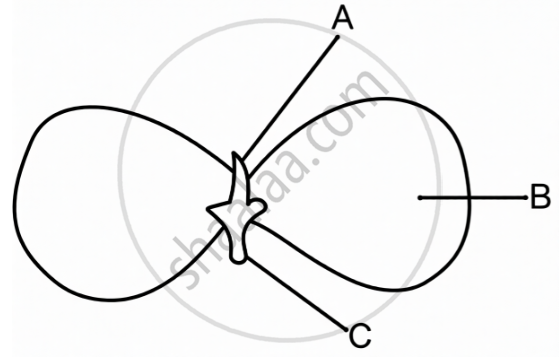
In the figure given alongside, the parts marked A, B and C are sequentially:
Put a tick mark (✓) against the correct alternative in the following statement
Pollen is produced in the:
Put a tick mark (✓) against the correct alternative in the following statement
Reproductive whorls of a flower are:
Fill in the blank by selecting suitable word:
A flower bearing only male or female parts is known as __________ flower.
Multiple choice question. Tick (✓) the correct choice:
Unisexual flowers are found in
- mulberry
- mustard
- pea
- sunflower
Fill in the blanks:
A stamen consists of ______ and ________.
Fill in the blank:
Seeds are formed from________.
State whether the following statement is true (T) or false (F):
Flowers which possess stamens and carpel are called unisexual.
Mention the function of Flower.
Mention the function of Anther.
Mention the function of Stigma.
Draw a diagram of the longitudinal section of a flower and label on it sepal, petal, ovary and stigma.
Fill in the blank by selecting suitable word:
Transfer of pollen grains from the anther to the stigma is known as______________.
What is cleistogamy? Write one advantage and one disadvantage of it, to the plant.
What is meant by pollination?
Pollen grains are formed by _________ division in locules of anthers.
Find an odd one out.
Pollen tube reaches the embryo sac via style.
Observe the figure below. Write functions of the labelled parts.

The male reproductive part of a flower is ______.
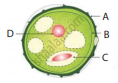
Identify the parts A, B, C, and D?
Antipodal cells are present towards the ______ in an anatropous ovule.
Which of the following is the outermost protective layer of anther?
Which type of development is observed in male gametophytes of plants?
Identify the female gametophyte in angiosperms.
In a flowering plant, archesporium gives rise to ______.
Pineapple fruit develops from ______.
What would be the number of chromosomes in the cells of the aleurone layer in a plant species with 8 chromosomes in its synergids?
Variations occur as a result of ______
Length of pollen tube depends on the distance between ______
Give reason for the following:
Fertilization cannot take place in flowers if pollination does not occur.
Is the chromosome number of zygote, embryonal cells and adult of a particular organism always constant? How is the constancy maintained in these three stages?
Where is the zygote located in the flower after fertilization?
Double fertilization is exhibited by ______
Sketch and label the essential and accessory whorls of flower.
Give any two examples of agents of pollination.
In a plant flower the female whorl is ______.
What are the agents for pollination?
Sexual maturation of reproductive tissues and organs are necessary link for reproduction. Elucidate.
Name the reproductive parts of an angiosperm. Where are these parts located? Explain the structure of its male reproductive part.
Type of sexual reproduction is ______.
Given below is a diagram of a germinating seed. Label the parts that:
- gives rise to future shoot.
- gives rise to future root system.
- stores food.
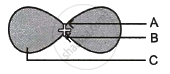
The number of pollen sacs in a dithecous anther is ______.
