Please select a subject first
Advertisements
Advertisements
Given below is an experimental demonstration.
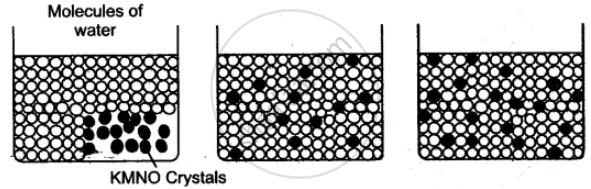
(i) Which phenomenon has been demonstrated in the given figure?
(ii) What is the solute and what is solvent in the above experiment?
(iii) Define the phenomenon in Q. (i) above.
(iv) Give one example from your daily life experiences based on this principle.
Concept: undefined >> undefined
Give Technical Term for the following.
Phenomenon of absorption of water by surface attraction.
Concept: undefined >> undefined
Advertisements
Name the following:
Water is absorbed from the soil by which part.
Concept: undefined >> undefined
Name the following:
The kind of cells that constitute the cortex of a root.
Concept: undefined >> undefined
Name the following:
Root hairs are the extension of which cells.
Concept: undefined >> undefined
Give Technical Term for the following.
Tissue which transports manufactured food from leaves to other parts of the plant.
Concept: undefined >> undefined
Give Technical Term for the following.
The tissue responsible for the ascent of sap in plants.
Concept: undefined >> undefined
Name the following:
The solution outside the cell having lower solute concentration than the fluids.
Concept: undefined >> undefined
Name the following:
Name the process by which intact plants lose water in the form of droplets.
Concept: undefined >> undefined
Fill in the Blank
Leaves get wilted if _________ is removed from the plant.
Concept: undefined >> undefined
Mention, if the following statement is True or False. If false rewrite the wrong statement in its correct form:
Xylem is the water-conducting tissue in plants.
Concept: undefined >> undefined
Column ‘II’ is a list of items related to ideas in Column ‘I’. Match the term in Column ‘II’ with a suitable idea given in Column ‘I’.
| Column I | Column II |
| (i) Diffusion | (a) The exit or flow of water from the cell to the outer environment. |
| (ii) Xylem | (b) The shrinkage of protoplasm when the cell is kept in a hypertonic solution. |
| (iii) Root pressure | (c) The tissue through which water and mineral salts move upward in a plant. |
| (iv) Isotonic solution | (d) Two solutions which have equal osmotic pressure. |
| (v) Exosmosis | (e) The process by which the molecules of perfume spread in the room when the bottle is open. |
| (vi) Osmosis | (f) The process by which roots absorb water from the soil. |
| (vii) Plasmolysis | (g) The pressure by which water rises up to some feet in a lofty tree. |
| (viii) Hypotonic solution | (h) The concentration of the solution when lower than that of the cell sap. |
Concept: undefined >> undefined
Multiple Choice Question:
Process of endosmosis stops:
Concept: undefined >> undefined
Multiple Choice Question:
Water will be absorbed by the root hairs when:
Concept: undefined >> undefined
What are the basic requirements of photosynthesis?
Concept: undefined >> undefined
Name the membrane that connects thylakoid of one granum With the other granum.
Concept: undefined >> undefined
What do you mean by endocrine system?
Concept: undefined >> undefined
What are endocrine glands?
Concept: undefined >> undefined
What is the chemical nature of hormone?
Concept: undefined >> undefined
