Science (English Medium)
Academic Year: 2024-2025
Date & Time: 25th March 2025, 10:30 am
Duration: 3h
Advertisements
General Instructions:
Read the following instructions carefully and follow them:
- This question paper contains 33 questions. All questions are compulsory.
- Question paper is divided into FIVE sections - Section A, B, C, D and E.
- Section A - Questions number 1 to 16 are multiple choice type questions. Each question carries 1 mark.
- Section B - Questions number 17 to 21 are very short answer type questions. Each question carries 2 marks.
- Section C - Questions number 22 to 28 are short answer type questions. Each question carries 3 marks.
- Section D - Questions number 29 and 30 are case-based questions. Each question carries 4 marks. Each question has sub-parts with internal choice in one of the sub-parts.
- Section E - Questions number 31 to 33 are long answer type questions. Each question carries 5 marks.
- There is no overall choice. However, an internal choices have been provided in some questions. A student has to attempt only one of the alternatives in such questions.
- Kindly note that there is a separate question paper for Visually Impaired candidates.
- Wherever necessary, neat and properly labelled diagrams should be drawn.
What type of ecological pyramid would be obtained from the following data?
Secondary consumer: 120 gm
Primary consumer: 60 gm
Primary producer: 10 gm
Inverted pyramid of biomass
Pyramid of energy
Upright pyramid of numbers
Upright pyramid of biomass
Upright pyramid of energy
Chapter:
Flowers which have single ovule in the ovary and are packed into inflorescence are usually pollinated by ______.
Wind
Bat
Bee
Water
Chapter: [1] Sexual Reproduction in Flowering Plants
The diagram given below shows labelling of four parts of a dicot embryo during its development as P, Q, R and S.
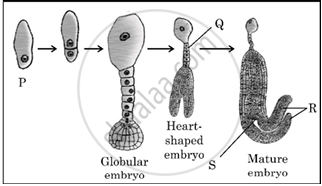
Choose the option that indicates correct labelling of ‘P’, ‘Q’, ‘R’ and ‘S’ of embryo in different stages of its development:
P - Egg, Q - Suspensor, R - Radicle, S - Cotyledon
P - Zygote, Q - Suspensor, R - Cotyledon, S - Plumule
P - Egg, Q - Radicle, R - Suspensor, S - Cotyledon
P - Zygote, Q - Suspensor, R - Cotyledon, S - Radicle
Chapter:
Evolution of modern man involves the following man-like primates.
Choose the correct series of human evolution.
Dryopithecus → Homo erectus → Australopithecines → Homo sapiens
Australopithecines → Homo erectus → Neanderthal → Homo sapiens
Australopithecines → Ramapithecus → Dryopithecus → Homo sapiens
Homo erectus → Australopithecines → Homo sapiens → Neanderthal
Chapter:
A man whose father was colour-blind marries a woman who had a colour- blind mother and a normal father. What percentage of the male children of this couple will be colour-blind?
25%
0%
50%
75%
Chapter:
Endosperm is completely consumed by the developing embryo in which of the following?
Maize and Castor
Castor and Groundnut
Maize and Pea
Pea and Groundnut
Chapter:
GEAC stands for ______.
Genome Engineering Action Committee
Ground Environment Action Committee
Genetic Engineering Approval Committee
Genetic and Environment Approval Committee
Chapter:
Transplantation of tissues/organs to save certain patients often fails due to rejection of such tissues/organs by the patient. Which type of immune response is responsible for such rejections?
Auto-immune response
Humoral immune response
Physiological immune response
Cell-mediated immune response
Chapter:
Amplification of gene of interest by using DNA polymerase may go upto ______.
0.1 million times
1 million times
1 billion times
1 trillion times
Chapter:
RNA interference (RNAi) helps in making tobacco-plant resistant to a nematode (Meloidegyne incognitia)
Choose the correct option that shows how RNAi is achieved:
Preventing the process of translation of mRNA of the nematode.
Preventing the process of replication of DNA of the nematode.
Preventing the process of transcription of DNA of the plant.
Preventing the process of replication of DNA of the plant.
Chapter:
The sequence of nitrogenous bases in a segment of a coding strand of DNA is 5'-AATGCTAGGCAC-3'.
Choose the option that shows the correct sequence of nitrogenous bases in the mRNA transcribed by the DNA.
5'-UUACGAACCGAG-3'
5'-AAUGCUAGGCAC-3'
5'-UUACGUACCGUG-3'
5'-AACGUAGGCAGC-3'
Chapter:
Which of the following is correct for the condition when plant YyRr is back crossed with the double recessive parent?
9 : 3 : 3 : 1 ratio of phenotypes only
9 : 3 : 3 : 1 ratio of genotypes only
1 : 1 : 1 : 1 ratio of phenotypes only
1 : 1 : 1 : 1 ratio of phenotypes and genotypes
Chapter:
Assertion (A): The mammary glands secrete milk for the nourishment of the young ones.
Reason (R): These are modified sweat glands.
Both (A) and (R) are true and (R) is the correct explanation of (A).
Both (A) and (R) are true, but (R) is not the correct explanation of (A).
(A) is true, but (R) is false.
(A) is false, but (R) is true.
Chapter:
Assertion (A): Scaffold proteins are non-histone chromosomal proteins.
Reason (R): They are rich in lysine and arginine.
Both (A) and (R) are true and (R) is the correct explanation of (A).
Both (A) and (R) are true, but (R) is not the correct explanation of (A).
(A) is true, but (R) is false.
(A) is false, but (R) is true.
Chapter:
Assertion: When the two genes in a dihybrid cross are situated on the same chromosome, the proportion of parental gene combinations is much higher than the nonparental type.
Reason: Higher parental gene combinations can be attributed to crossing over between two genes.
Both A and R are true and R is the correct explanation of A.
Both A and R are true and R is not the correct explanation of A.
A is true but R is false.
A is false but R is true.
Chapter: [4] Principles of Inheritance and Variation
Assertion (A): A bioreactor provides the optimal conditions for achieving the desired product by providing optimum growth conditions.
Reason (R): The most commonly used bioreactors are of stirring type.
Both (A) and (R) are true and (R) is the correct explanation of (A).
Both (A) and (R) are true, but (R) is not the correct explanation of (A).
(A) is true, but (R) is false.
(A) is false, but (R) is true.
Chapter:
Study the pedigree analysis given below:
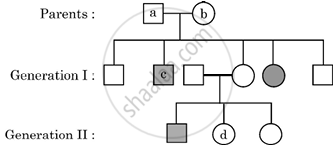
Answer the following questions:
- Write genotypes of c and d.
- Identify whether the trait is:
- Sex-linked or autosomal
- Dominant or recessive
Chapter:
Study the two different crosses given below:
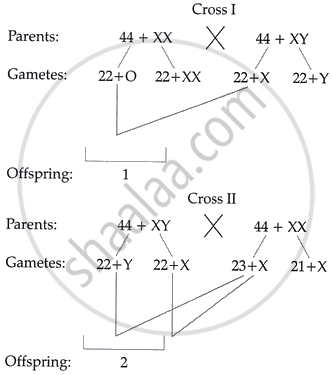
Identify the abnormalities ‘1’ and ‘2’ in the offsprings of given crosses and distinguish between them.
Chapter:
Advertisements
Mention the effect of morphine and heroin on the human body.
Chapter:
Name an alcoholic drink which is produced by the help of microbes with distillation.
Chapter:
Name an alcoholic drink which is produced by the help of microbes without distillation.
Chapter:
Explain how cyanobacteria can be used as a bio-fertilizer.
Chapter:
Analyse the following ecosystems and discuss, which will be more productive in terms of primary productivity:
A young forest, a natural old forest, a shallow polluted lake.
Chapter:
Differentiate between gross primary productivity and net primary productivity.
Chapter:
A patient with ADA deficiency requires periodic infusion of genetically engineered lymphocytes. Explain why such periodic infusion is required and also suggest a permanent cure for such ADA deficiency.
Chapter:
Describe in brief any two techniques that can be utilised to transfer recombinant DNA into the host cell directly without using any vector.
Chapter:
Compare and contrast convergent and divergent evolution.
Chapter:
Shyam and Radha are expecting their first child with Radha being in her second month of pregnancy with no complications. Shyam’s family has a history of cystic fibrosis while Radha’s family has a history of Down’s syndrome, leading to a concern that the baby may have one of these conditions.
- Suggest and explain a way of testing if their baby is at risk for any genetic disorders.
- In case of presence of one or both of the abnormalities and posing a risk to the mother’s health, mention one possible option for them to consider. Is that option safe for Radha at the current gestational age? Justify.
- Under what conditions is the process mentioned in (b) illegal?
Chapter:
Write the palindromic nucleotide sequence for the following sequence of DNA segment:
5'-GAATTC-3'
Chapter:
Name the restriction endonuclease that recognizes the 5'-GAATTC-3' sequence.
Chapter:
Study a part of life cycle of Plasmodium given below:
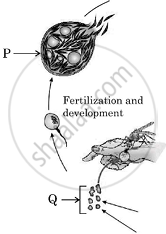
Answer the following questions:
- Name the infective stage of Plasmodium that is stored in the female Anopheles mosquito.
- Where does fertilization and development of parasite take place?
- Identify labels P and Q in the given diagram.
- Asexual and sexual phase of the life cycle of the Plasmodium takes place in two different hosts. Write their names.
Chapter:
Study the diagram given below and answer the questions that follows:
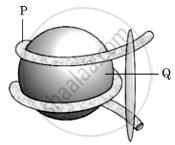
- Identify the structure shown in the above figure.
- Identify the labels P and Q.
- Write the nature of histone proteins.
- Distinguish between Euchromatin and Heterochromatin.
Chapter:
Who is having more species diversity - Columbia or Greenland and why?
Chapter:
Advertisements
Differentiate between Recombinant DNA and cDNA.
Chapter:
Explain the method to increase the competency of the bacterial cell membrane to take up recombinant DNA.
Chapter:
Read the following passage and answer the questions that follow:
| In nature, we rarely find isolated, single individuals of any species; majority of them live in groups in a well-defined geographical area, share or compete for similar resources, potentially interbreed and thus constitute a population. The population has certain attributes whereas, an individual organism does not. A population at a given time is composed of individuals of different ages. The size of the population tells us a lot about its status in the habitat. Whatever ecological processes we wish to investigate in a population, be it the outcome of competition with another species, the impact of the predator or the effect of pesticide application, we always evaluate in terms of any change in the population size. The size, in nature, could be low or go into millions. Population size, technically called population density (N) need not necessarily be measured in numbers only. The size of a population for any species is not a static parameter. It keeps on changing with time depending on various factors including food availability, predation pressure and adverse weather. |
- The Monarch butterfly is highly distasteful to its predator because of a special chemical present in its body. How does the butterfly acquire this chemical?
- If population density at a time t + 1 is 800, Emigration = 100, Immigration = 200, Natality = 200 and Mortality = 150, calculate the population density at time t and comment upon the type of age pyramid that will be formed in this case.
- What is the difference in a method of measuring population density in an area if there are 200 carrot grass plants to only single huge banyan tree?
OR - Name two methods to measure the population density of tigers.
Chapter:
Study the graphs given below for Case 1 and Case 2 showing different levels of certain hormones and answer the question that follows:
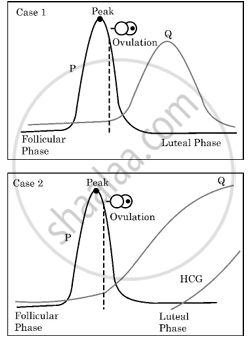
- Which hormone is responsible for the peak observed in Case 1 and Case 2? Write one function of that hormone.
- Write changes that take place in the ovary and uterus during follicular phase.
- Name the hormone Q of Case 2. Write one function of hormone Q.
OR - Which structure in the ovary will remain functional in Case 2? How is it formed?
Chapter:
You are given axial pea flowers with violet colour whose genotypes are unknown. How would you find the genotype of these plants? Explain with the help of cross.
Chapter:
Explain the haplo-diploid method of sex determination in the honey bee.
Chapter: [4] Principles of Inheritance and Variation
Explain the steps of DNA fingerprinting that will help in processing of the two blood samples R and S picked up from the crime scene.
Chapter:
State what do you understand by “MALT”? Where it is located inside our body?
Chapter:
Name the diagnostic test for AIDS. On what principle does it work?
Chapter:
Bone marrow plays an important role in the human immune system. Explain how it is able to achieve this.
Chapter:
Thymus plays an important role in the human immune system. Explain how it is able to achieve this.
Chapter:
Study the following table & fill ‘H’, ‘I’, ‘J’, ‘K’, ‘L’ and ‘M’ in the following table with suitable words:
| Chemical/Bioactive Molecule | Micro-organism | Category | Use | |
| (a) | Butyric acid | H | I |
Important applications in food, chemical & pharma industry |
| (b) | J | Monoscus purpureus | K | Inhibit cholesterol biosynthesis pathway |
| (c) | Cyclosporin A | L | Fungus | M |
Chapter:
Why are baculoviruses considered good biocontrol agents?
Chapter: [8] Microbes in Human Welfare
Distinguish between the two cells enclosed in a mature male gametophyte of an angiosperm.
Chapter:
Study the diagram given below showing the modes of pollination. Answer the questions that follow.
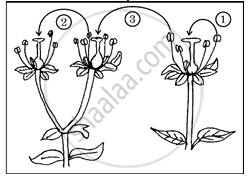
- The given diagram shows three methods of pollen transfer in plants. Examine them carefully and write the technical terms used for pollen transfer methods ‘1’, ‘2’, and ‘3’.
- How do the following plants achieve pollination successfully?
- Water lily
- Vallisneria
- Write the advantages of pollen transfer in method ‘3’.
Chapter:
Given below is the diagram of human ovum surrounded by a few sperms. Observe the diagram and answer the questions that follows:
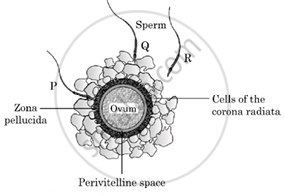
- Compare the fate of sperms ‘P’, ‘Q’ and ‘R’ shown in the diagram.
- Write the role of Zona pellucida in this process.
- Analyse the changes occurring in the ovum after the entry of sperm.
- How acrosome and middle piece of a human sperm are able to play an important role in human fertilization?
Chapter:
Other Solutions
Submit Question Paper
Help us maintain new question papers on Shaalaa.com, so we can continue to help studentsonly jpg, png and pdf files
CBSE previous year question papers Class 12 Biology with solutions 2024 - 2025
Previous year Question paper for CBSE Class 12 -2025 is solved by experts. Solved question papers gives you the chance to check yourself after your mock test.
By referring the question paper Solutions for Biology, you can scale your preparation level and work on your weak areas. It will also help the candidates in developing the time-management skills. Practice makes perfect, and there is no better way to practice than to attempt previous year question paper solutions of CBSE Class 12.
How CBSE Class 12 Question Paper solutions Help Students ?
• Question paper solutions for Biology will helps students to prepare for exam.
• Question paper with answer will boost students confidence in exam time and also give you an idea About the important questions and topics to be prepared for the board exam.
• For finding solution of question papers no need to refer so multiple sources like textbook or guides.
