English
Karnataka Board PUCPUC Science 2nd PUC Class 12

Which of the following compounds is most reactive towards nucleophilic addition reactions? - Chemistry

Advertisements
Advertisements

Question

Which of the following compounds is most reactive towards nucleophilic addition reactions?

Options

  • \[\begin{array}{cc}
    \phantom{...}\ce{O}\\
    \phantom{...}||\\
    \phantom{}\ce{CH3 - C - H}
    \end{array}\]

  • \[\begin{array}{cc}
    \phantom{.}\ce{O}\\
    \phantom{.}||\\
    \phantom{}\ce{CH3 - C - CH3}
    \end{array}\]
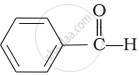
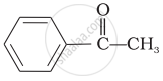
MCQ
Advertisements

Solution

\[\begin{array}{cc}
\phantom{...}\ce{O}\\
\phantom{...}||\\
\phantom{}\ce{CH3 - C - H}
\end{array}\]

Explanation:

\[\ce{CH3CHO}\] is most reactive towards nucleophilic addition reactions. Carbonyl compounds are polar with positive charge on carbon atom which is attacked by nucleophiles. Two electron releasing alkyl groups in ketones make carbonless electron deficient than aldehydes. Benzene ring exhibits + R-effect which thereby decreases the ease of nucleophilic addition reaction in benzaldehyde and acetophenone. Hence the reactivity order is

\[\begin{array}{cc}
\phantom{...}\ce{H}\phantom{..........}\ce{H}\phantom{.........}\ce{R}\phantom{.......}\\
\phantom{......}\backslash\phantom{...........}\backslash\phantom{.........}\backslash\phantom{........}\\
\phantom{.......}{\overset{δ+}{\ce{C}} = \overset{δ-}{\ce{O}} > \phantom{..}\overset{δ+}{\ce{C}} = \overset{δ-}{\ce{O}} > \phantom{..}\overset{δ+}{\ce{C}} = \overset{δ-}{\ce{O}}}\phantom{}\\
\phantom{.......}/\phantom{...........}/\phantom{...........}/\phantom{........}\\
\phantom{.....}\ce{H}\phantom{..........}\ce{R}\phantom{..........}\ce{R}\phantom{.........}\\
\end{array}\]

shaalaa.com
  Is there an error in this question or solution?
Chapter 12: Aldehydes, Ketones and Carboxylic Acids - Multiple Choice Questions (Type - I) [Page 168]

APPEARS IN

NCERT Exemplar Chemistry [English] Class 12
Chapter 12 Aldehydes, Ketones and Carboxylic Acids
Multiple Choice Questions (Type - I) | Q 2 | Page 168

RELATED QUESTIONS

Predict the products of the following reactions:


Write the structures of the main products when acetone (CH3 − CO − CH3) reacts with the following reagent :

H2N − NHCONH2/H+


Write the products formed when CH3CHO reacts with the following reagents : HCN


Write the products formed when CH3CHO reacts with the following reagents : H2N – OH


Predict the product of the following reaction:


What is meant by the following term? Give an example of the reaction in the following case.

Ketal


Predict the products formed when cyclohexanecarbaldehyde reacts with the following reagents.

PhMgBr and then H3O+


Complete the synthesis by giving missing starting material, reagent or product.


Give a simple chemical test to distinguish between 


Write the main product formed when propanal reacts with the following reagents: 
2 moles of 3 CH OH in presence of dry HCl 


Benzaldehyde can be obtained from benzal chloride. Write reactions for obtaining benzalchloride and then benzaldehyde from it.


Alkenes   and carbonyl compounds , both contain a π bond but alkenes show electrophilic addition reactions whereas carbonyl compounds show nucleophilic addition reactions. Explain.


The pH of blood does not appreciably change by a small addition of acid or base because


Arrange the following in the increasing order of their property indicated:

Ethanal, Propanone, Propanal, Butanone (reactivity towards nucleophilic addition)


Write the structure of the product formed when acetone reacts with 2, 4 DNP reagent.


Draw the structure of the following derivative.

The ethylene ketal of hexan-3-one


Draw structure of the following derivative.

The ethylene ketal of hexan-3-one


Draw the structure of the following derivative.

Acetaldehydedimethylacetal


Draw structure of the following derivative.

The ethylene ketal of hexan-3-one


Share
Notifications

Englishहिंदीमराठी


      Forgot password?
Use app×