Advertisements
Advertisements
Question
Out of p-tolualdehyde and p-nitrobenzaldehyde, which one is more reactive towards nucleophilic addition reactions, why?
Advertisements
Solution
P-nitrobenzaldehyde is more reactive towards the nucleophilic addition reaction than p- tolualdehyde as Nitro group is electron withdrawing in nature. Presence of nitro group decrease electron density, hence facilitates the attack of nucleophile. The presence of \[\ce{-CH3}\] leads to +I effect as \[\ce{-CH3}\] is electron releasing group.
APPEARS IN
RELATED QUESTIONS
Acetaldehyde, when treated with which among the following reagents does NOT undergo addition reaction?
(A) Ammonia
(B) Hydroxylamine
(C) Ammoniacal silver nitrate
(D) Semicarbazide
Predict the products of the following reactions:

Write the structures of the main products when acetone (CH3 − CO − CH3) reacts with the following reagent :
H2N − NHCONH2/H+
What is meant by the following term? Give an example of the reaction in the following case.
Cyanohydrin
Acetone, Acetaldehyde, Benzaldehyde, Acetophenone – reactivity towards addition of HCN.
Which of the following is the correct representation for intermediate of nucleophilic addition reaction to the given carbonyl compound (A):
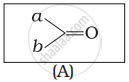
(i) 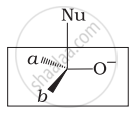
(ii) 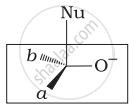
(iii) 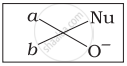
(iv) 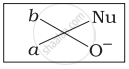
The most stable reagent for the conversion of R – CH2OH → RCHO is
Write the structure of the product formed when acetone reacts with 2, 4 DNP reagent.
Draw structure of the following derivative:
Acetaldehydedimethylacetal
Draw structure of the following derivative.
The ethylene ketal of hexan-3-one
